
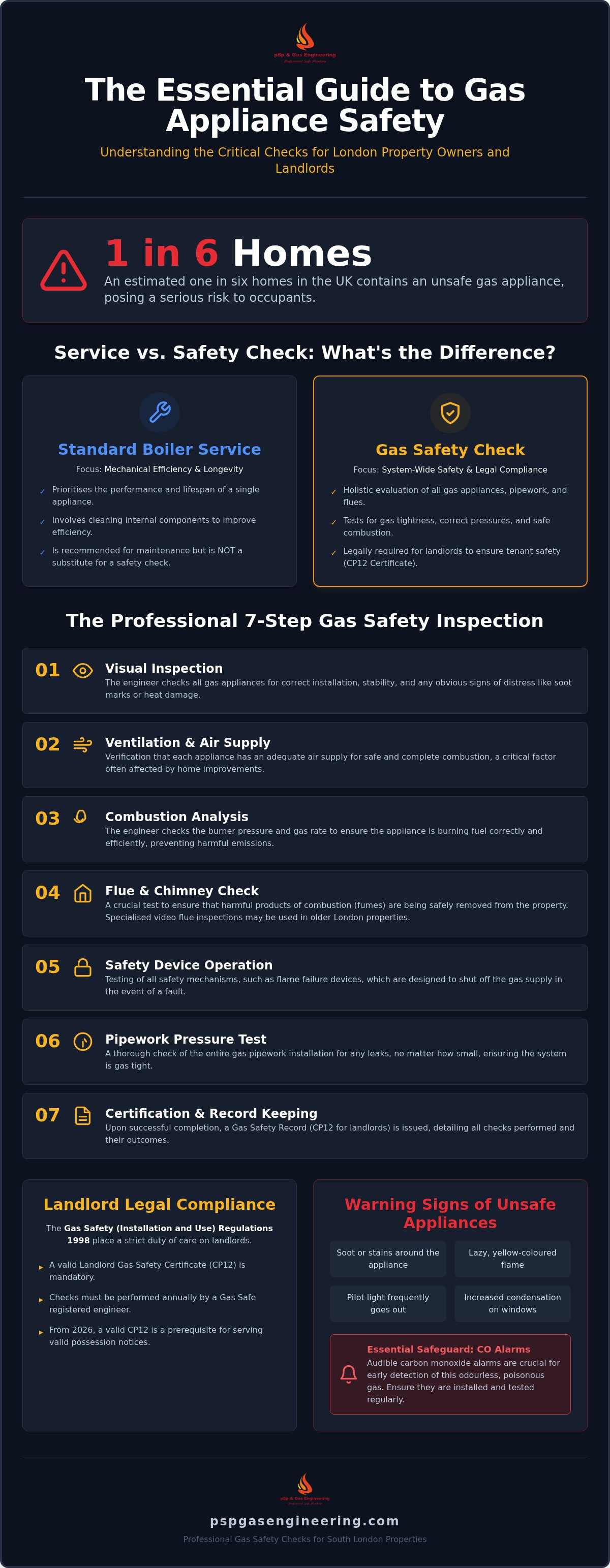
Did you know that an estimated one in six homes in the UK currently contains an unsafe gas appliance? For property owners managing older conversions or Victorian terraces across South London, this statistic isn't just a figure; it represents a serious responsibility toward tenant welfare and technical integrity. You likely recognise the pressure of staying compliant with evolving regulations, yet finding a truly methodical gas appliance safety check London specialist can still feel like a daunting task amidst the noise of the city.
It's natural to feel some confusion regarding the distinction between a standard boiler service and a formal safety inspection. This guide clarifies that exact difference, promising to show you precisely what happens when a Gas Safe registered engineer examines your property. We'll move beyond simple checklists to explore the precision required for pressure testing and flue diagnostics. By the end of this article, you'll understand how to secure full legal compliance for 2026 and gain genuine peace of mind regarding the technical health of your gas pipework and appliances.
Key Takeaways
- Understand the technical distinctions between a standard boiler service and the comprehensive gas appliance safety check London property owners require for full regulatory compliance.
- Learn the rigorous seven-step inspection process used by Gas Safe registered engineers to verify appliance ventilation, combustion, and pipework integrity.
- Clarify the 2026 legal mandates for Landlord Gas Safety Certificates (CP12) and why valid documentation is now a prerequisite for valid possession notices.
- Identify the critical physical warning signs of gas appliance malfunction and the essential role of audible carbon monoxide alarms in maintaining a secure home.
- Discover why specialised technical diagnostics, such as video flue inspections, offer a superior level of protection for older or complex London property conversions.
Understanding Gas Appliance Safety Checks in London Properties
A formal gas safety assessment is a rigorous technical procedure conducted by a Gas Safe registered engineer to ensure every component of your gas system operates within safe tolerances. It's a precise diagnostic that goes far beyond a simple visual inspection. This requirement is legally underpinned by the Gas Safety (Installation and Use) Regulations 1998, which place a strict duty of care on property owners to maintain gas fittings and flues in a safe condition. As of May 2026, local housing authorities have been granted increased statutory powers to enforce these regulations, making compliance more critical than ever for London landlords.
Many homeowners often confuse a standard boiler service with a gas appliance safety check London specialists perform. While a service prioritises the mechanical efficiency and longevity of a single unit, a safety check is a holistic evaluation of risk. It involves testing the gas tightness of the entire system, verifying correct operating pressures, and ensuring that products of combustion are being safely exhausted from the building. This distinction is vital; a boiler might run efficiently whilst simultaneously suffering from a compromised flue that poses a carbon monoxide risk.
The Unique Challenges of London’s Ageing Gas Infrastructure
Properties in South London, particularly within the Victorian and Edwardian terraces of Croydon and Thornton Heath, present specific technical hurdles. These buildings often feature original lead or copper pipework that has undergone decades of gradual degradation. In these older conversions, shared flue systems are common, meaning a fault in one flat's ventilation can potentially impact neighbouring units. Professional engineers must perform meticulous pipework pressure testing to identify microscopic leaks that a less thorough "quick-check" might overlook. This level of technical diagnostic is essential for maintaining the integrity of multi-occupancy buildings where gas infrastructure is often complex and interconnected.
Why an Annual Safety Check is More Than Just a Legal Box
Proactive inspections serve as an early warning system for your property’s health. By identifying "at-risk" appliances before they reach a point of critical failure, you can often avoid the high costs and stress associated with an emergency boiler repair in Croydon. A professional safety check provides several key benefits:
- Early Detection: Spotting hairline cracks in heat exchangers or slight blockages in flues before they become hazardous.
- Ventilation Verification: Ensuring that modern home improvements, like double glazing or insulation, haven't inadvertently choked the air supply needed for safe combustion.
- Technical Validation: Receiving a physical record of your system's health, signed off by a seasoned professional.
Ultimately, this process transitions your home maintenance from a reactive burden to a managed state of security. It offers a "safe pair of hands" approach, ensuring that your property remains a protected environment for your family or tenants.
The 7-Step Professional Gas Safety Inspection Process
A professional gas appliance safety check London engineers provide is a methodical sequence designed to leave no variable to chance. The process begins with a comprehensive visual inspection of all gas-burning equipment, including boilers, cookers, and gas fires. This initial phase ensures that every appliance is correctly positioned and that there are no obvious signs of distress, such as soot marks, scorching, or heat damage. Following the official HSE guidance for landlords, we also verify that the air supply for each unit is sufficient to sustain safe combustion. Restricted ventilation is a primary cause of incomplete combustion, which can lead to the production of carbon monoxide.
Beyond visual checks, our engineers rigorously test individual safety components. This includes verifying the operation of flame failure devices, which are designed to cut off the gas supply automatically if the pilot light or burner is extinguished. We also check stability brackets on hobs and the mechanical soundness of every connection. This technical scrutiny ensures that safety features are not just present, but fully functional and capable of protecting the occupants in the event of a malfunction.
Pipework Pressure Testing and Leak Detection
One of the most critical technical phases is the "tightness test." This involves isolating the property’s gas meter and using a precision manometer to monitor the pressure within the entire pipework system. If the gauge shows even a minor drop in pressure over a set duration, it indicates a leak. Whilst a slight drop might seem negligible to a layperson, it requires an immediate diagnostic investigation to locate the breach. In older Croydon properties, where pipework may be hidden behind floorboards or within walls, this technical rigour is the only way to ensure the system’s total integrity.
Flue Integrity and Combustion Analysis
Engineers use specialised electronic analysers to measure the ratio of gases within the flue, ensuring that harmful fumes are being efficiently discharged outside the property. We look for blockages caused by debris or nesting birds, which can cause lethal gases to spill back into living areas. For properties with complex or hidden chimneys, we often recommend CCTV flue inspections to verify the internal condition of the masonry. This level of detail is a hallmark of a "safe pair of hands" approach to property maintenance.
Once the seven-step process is complete, we issue a formal safety report, either in digital or physical format. This document acts as your legal proof of compliance and a detailed health record of your property's gas infrastructure. If you require a thorough assessment of your home’s system, you can book a professional inspection with our Croydon-based team today to ensure your property remains secure for the year ahead.
Landlord CP12 Certificates vs. Residential Safety Checks
The CP12, or Landlord Gas Safety Record, is the recognised industry standard for verifying that a rental property’s gas infrastructure is safe for habitation. Whilst the term "CP12" originates from the era when CORGI was the regulatory body, it remains the shorthand used by professionals and local authorities today. For anyone managing a tenancy, obtaining a gas appliance safety check London engineers certify is a non-negotiable annual requirement. Under the 2026 regulatory framework, the stakes for non-compliance have increased. Following the abolition of Section 21 evictions, a valid safety certificate is now a strict prerequisite for serving a Section 8 notice. Without this document, regaining possession of a property becomes legally complex and potentially impossible.
For property managers, the consequences of a missed inspection extend beyond eviction hurdles. Local housing authorities now have a statutory duty to enforce gas safety regulations, and failure to produce a valid certificate can lead to substantial fines. This technical diagnostic serves as your primary evidence that you've fulfilled your duty of care, ensuring that every appliance, from the boiler to the kitchen hob, operates within safe parameters. It represents a "safe pair of hands" approach to property management that protects both your investment and your residents.
Legal Obligations for London Landlords
Landlords must provide a copy of the landlord gas safety certificate in London to their tenants within 28 days of the inspection. For new tenancies, this documentation must be provided at the start of the agreement. You're also required to maintain these records for at least two years. When dealing with tenant access issues, it's vital to keep a detailed record of all attempts to organise the inspection. If a tenant refuses entry, demonstrating that you've taken all reasonable steps to facilitate the check is your primary legal protection against enforcement action.
Why Homeowners Should Prioritise Annual Gas Checks
Homeowners often fall into a safety gap because they aren't legally compelled to have an annual check in the same way landlords are. However, treating a gas appliance safety check London as an optional task is a significant risk to your family's security. Carbon monoxide is colourless and odourless; a professional inspection is the only reliable way to detect its presence before it reaches lethal levels. Beyond physical safety, your home insurance policy likely requires you to maintain your property to a safe standard. If a gas-related incident occurs and you cannot prove the system was professionally inspected, your insurer may refuse to payout. Regular checks also ensure your appliances operate at peak efficiency, which helps to lower energy bills by preventing technical degradation.
Recognising the Warning Signs of Unsafe Gas Appliances
While an annual gas appliance safety check London specialists perform is the most reliable way to ensure your property remains secure, you shouldn't wait for your next scheduled inspection if you suspect a fault. Gas appliances often exhibit subtle physical symptoms when they begin to malfunction. Recognising these early indicators allows you to take decisive action before a minor technical issue escalates into a hazardous situation. If you identify any of the signs listed below, you must stop using the appliance immediately and isolate the gas supply at the meter if you feel it's necessary to do so.
When a Gas Safe registered engineer identifies a high-risk fault, they're legally required to apply a "Danger Do Not Use" label to the equipment. These are categorised as either "Immediately Dangerous" (ID), where the appliance poses an immediate risk to life, or "At Risk" (AR), where a fault exists but isn't yet life-threatening. These labels are a critical safety mechanism; they aren't merely suggestions, but formal instructions to prevent the use of unsafe equipment until it has been professionally repaired or replaced.
The Silent Killer: Carbon Monoxide Awareness
Carbon monoxide (CO) is a highly toxic gas produced by the incomplete combustion of fossil fuels. Because it's colourless, odourless, and tasteless, it's virtually impossible to detect without specialised equipment. Symptoms of CO poisoning are often mistaken for the flu or general fatigue, including persistent headaches, dizziness, nausea, and breathlessness. You cannot rely on your senses to stay safe. It's essential to install audible carbon monoxide alarms near every gas-burning appliance in your home. These devices should be tested monthly and replaced according to the manufacturer’s expiry date to ensure they remain a reliable last line of defence.
Visual Red Flags on Boilers, Hobs, and Fires
A healthy gas flame should be crisp and blue. If you notice a lazy, yellow, or orange flame on your hob or gas fire, it's a primary indicator that the gas isn't burning correctly. Other visual red flags include:
- Staining and Soot: Dark brown or black soot marks around the casing of your boiler or the edges of your gas fire.
- Pilot Light Issues: A pilot light that frequently blows out or is difficult to relight, suggesting a fault with the thermocouple or gas pressure.
- Excessive Condensation: An unusual build-up of moisture on windows in the room where the appliance is located, which can indicate that combustion products aren't being vented correctly.
If you observe any of these warning signs, don't delay in seeking professional assistance. You can schedule an urgent safety inspection with our Croydon-based experts to identify the root cause of the malfunction and restore your property’s safety.
Secure Your Home with PSP & Gas Engineering
Choosing a provider for your gas appliance safety check London requires more than just finding a technician with a toolkit. It requires a partner who understands the high stakes of residential and rental compliance in 2026. At PSP & Gas Engineering, we position ourselves as a "safe pair of hands" for complex urban properties. Our commitment to technical excellence is rooted in our Gas Safe registration and a methodical approach to every diagnostic procedure. We don't just perform a visual sweep; we integrate advanced technology, such as video inspections, to provide a comprehensive guarantee of your system’s integrity. This thoroughness ensures that hidden faults within ageing pipework or obscured flues are identified before they become critical safety risks.
Why Local Expertise in Croydon and London Matters
Our base in Croydon allows us to serve Greater London with a depth of knowledge that national platforms simply cannot match. We're intimately familiar with the specific challenges of South London’s housing stock, from large Victorian conversions in Thornton Heath to modern developments in the city centre. This local insight means we anticipate the nuances of older heating systems and can offer faster response times when emergency safety concerns arise. By choosing an independent specialist, you're supporting a business that prides itself on professional calm and a safety-first mentality. We treat every property as if it were our own, prioritising the welfare of the community we live and work in.
Booking Your Gas Safe Inspection with Confidence
Scheduling your 2026 inspection is a straightforward, methodical process designed to minimise the stress of home maintenance. You can request a free quote and book an appointment through our online portal, where you'll select a time that suits your schedule. On the day of the inspection, you can expect punctuality, precision, and a respectful presence in your home. Our engineers arrive fully equipped to handle complex diagnostics, ensuring your certification is handled with professional care. For business owners and property managers overseeing larger portfolios, we also provide commercial plumbing services London, offering the same level of technical rigour for office blocks, retail units, and industrial spaces. Securing your property with us means moving away from the anxiety of maintenance and toward a feeling of total protection by qualified experts.
Prioritising Technical Integrity for Your London Property
Maintaining a secure gas system is an ongoing commitment to safety rather than a one-off administrative task. By understanding the rigorous seven-step inspection process and the legal nuances of CP12 certification, you've taken the first step toward safeguarding your residents and your investment. Whether you're managing a complex Victorian conversion in Croydon or a modern apartment in the city centre, a professional gas appliance safety check London specialists provide is your most effective tool for early fault detection and long-term peace of mind.
Our team of Gas Safe Registered Engineers offers the technical precision required to navigate London's unique infrastructure challenges. We provide 24/7 emergency support and specialise in the deep diagnostics needed for older property safety. Don't leave your compliance to chance in 2026. Book your expert Gas Safe inspection with PSP & Gas Engineering today to ensure your home remains a protected environment. We look forward to providing the reliable expertise your property deserves.
Frequently Asked Questions
How much does a gas appliance safety check cost in London for 2026?
The cost of a professional safety check in London varies depending on the number of appliances being inspected and the complexity of the property’s pipework. Factors such as the location within Greater London and the requirement for specialised technical diagnostics like video flue inspections can also influence the final quote. Property owners should ensure they receive a clear breakdown of costs that covers all gas-burning equipment to maintain full compliance with current regulations.
Is a gas safety check the same as a boiler service?
No, these are distinct technical procedures with different objectives. A boiler service focuses on the mechanical efficiency and performance of the unit to ensure it runs reliably. In contrast, a gas appliance safety check London engineers perform is a formal assessment of the entire system's safety. It verifies that gas is burning correctly, ventilation is sufficient, and harmful products of combustion are being safely exhausted from the property to prevent carbon monoxide risks.
How long does a professional gas safety inspection take to complete?
A standard residential inspection typically takes between 30 and 60 minutes to complete. This duration can increase if the property has multiple gas appliances, such as hobs, fires, and boilers, or if the pipework is located in difficult-to-access areas. Our engineers follow a methodical seven-step process to ensure every component is tested with precision. We prioritise technical thoroughness over speed to ensure your property remains a protected environment for your family or tenants.
Do I need a gas safety certificate if I am selling my house in London?
Whilst there is no strict legal mandate for homeowners to provide a certificate when selling, it's highly recommended to facilitate a smooth transaction. Providing a recent safety record gives prospective buyers confidence in the property’s technical integrity and proves the system has been maintained by a Gas Safe registered professional. Most solicitors will request information regarding the service history of gas appliances, and having a valid certificate can prevent delays during the conveyancing process.
What happens if my gas appliance fails the safety inspection?
If an appliance is deemed unsafe, the engineer will apply a Danger Do Not Use label and provide a report explaining the specific fault. Depending on the severity, the fault is categorised as Immediately Dangerous or At Risk. In these instances, the gas supply to the appliance must be isolated until a professional repair is completed. Our team provides clear guidance on the necessary remedial works to restore your system to a safe and compliant standard.
Can any plumber carry out a gas safety check in the UK?
No, only engineers who are currently on the Gas Safe Register are legally permitted to work on gas appliances in the UK. It is a criminal offence for an unregistered individual to perform a safety check. You should always verify an engineer’s credentials by checking their ID card, which lists the specific types of gas work they're qualified to undertake. This ensures that high-stakes technical tasks are handled with the precision and regulatory compliance required for your security.
How often should I have my gas appliances checked for safety?
Landlords are legally required to arrange a gas appliance safety check London every 12 months for all rental properties. For homeowners, whilst not mandated by law, an annual check is the industry-standard recommendation for maintaining family safety. Regular inspections are the only reliable way to detect silent hazards like carbon monoxide leaks. Sticking to a 12-month schedule also ensures that your home insurance remains valid and that your appliances continue to operate at peak efficiency.
What is pipework pressure testing and is it included in a standard check?
Pipework pressure testing, often called a tightness test, involves using a manometer to ensure there are no leaks within the gas system. It's a core component of a standard professional safety inspection. The engineer monitors the pressure at the meter to verify that the entire network of pipes is sealed correctly. This technical diagnostic is particularly vital in older South London properties where original copper or lead lines may have suffered from gradual degradation over several decades.


