
Could the invisible lining of your London chimney be the only thing standing between your family and a silent carbon monoxide leak? For many residents living in the capital's historic period properties, the chimney is a cherished architectural feature, yet its internal health is often a source of significant anxiety. You might feel uncertain about whether your ageing flue meets current safety standards or worry that essential repairs will involve messy, invasive building work. Investing in professional flue relining services London provides a definitive solution, ensuring your gas appliances operate at peak efficiency whilst maintaining the highest levels of safety.
It's completely understandable to feel overwhelmed by technical distinctions between Gas Safe and HETAS requirements, especially with the 2022 amendments to Approved Document J now in full effect. We'll show you how a certified relining process protects your home and keeps you compliant with the Renters' Rights Act 2025. By utilising advanced CCTV video inspections, it's possible to restore your flue's integrity with minimal disruption to your property's decor. This article provides a clear, expert overview of how modern engineering can secure your property's safety and provide the long-term peace of mind you deserve.
Key Takeaways
- Understand why a secondary flue liner is essential for protecting London’s historic masonry chimneys against hazardous carbon monoxide leaks.
- Discover how high-definition CCTV video inspections identify internal structural faults without the need for invasive or disruptive building work.
- Learn the technical differences between 316 and 904 grade stainless steel liners to ensure your heating system operates at peak efficiency.
- Recognise why professional flue relining services London are vital for maintaining compliance with the latest Gas Safe regulations and landlord safety requirements.
- Gain insight into the meticulous installation process that ensures a seamless, certified connection between your gas appliance and the chimney terminal.
What is Flue Relining and Why is it Essential for London Homes?
A flue liner serves as a vital secondary conduit installed inside an existing chimney stack to safely transport combustion by-products to the outside atmosphere. What is a Flue Liner? Essentially, it creates a continuous, gastight path that protects the building's structure from heat and corrosive elements. For many homeowners seeking flue relining services London, this upgrade is the most effective way to modernise a traditional chimney without undertaking extensive masonry work. It ensures that the chimney remains a functional part of the home's heating system rather than a safety liability.
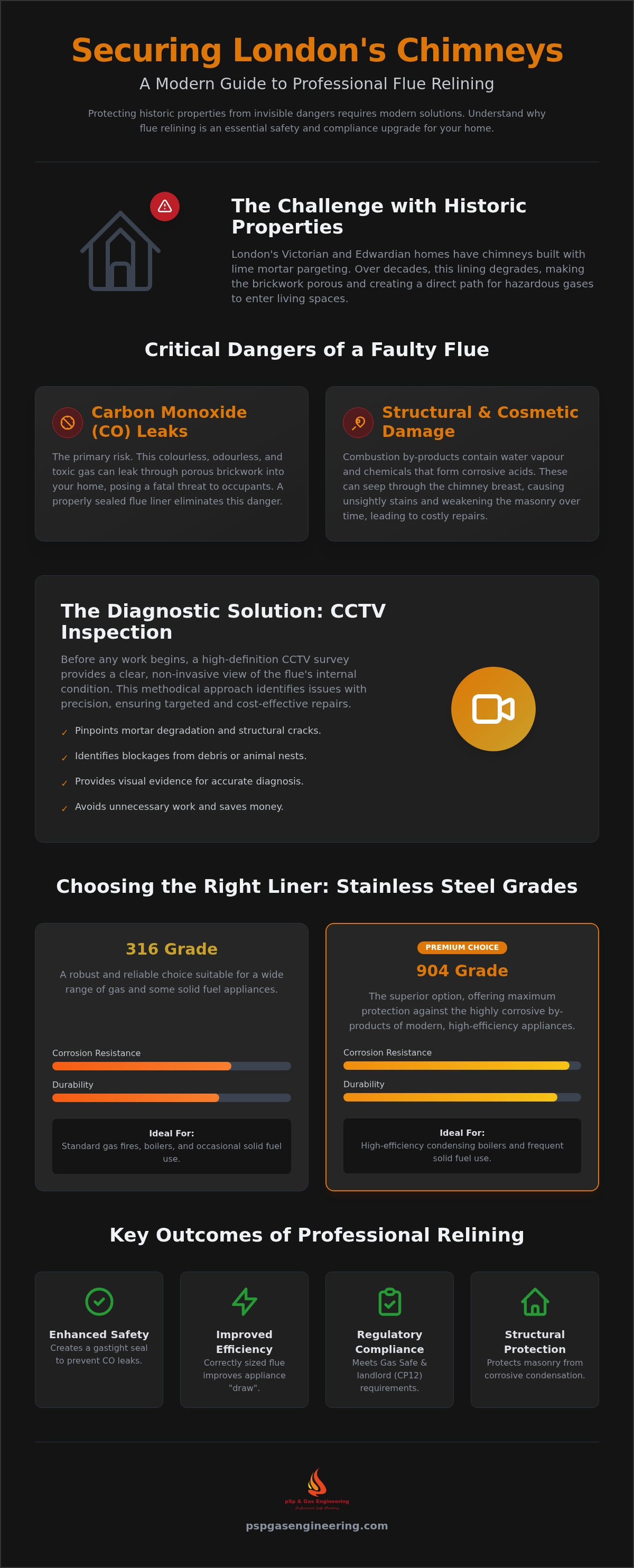
London's architectural heritage, particularly its vast stock of Victorian and Edwardian properties, presents unique challenges for modern heating. These older chimneys were originally constructed with lime mortar pargeting, which naturally degrades over decades of use. As this lining perishes, the brickwork becomes porous, allowing hazardous gases to migrate through the walls and into living spaces. By installing a modern liner, you create a smooth, appropriately sized channel that improves the "draw" of the appliance, ensuring that waste products are evacuated quickly and efficiently whilst reducing the risk of downdraughts.
The Dangers of an Unlined or Faulty Flue
The primary risk of a compromised flue is the leakage of carbon monoxide, a colourless and odourless gas that can be fatal if it enters the home. Beyond immediate safety concerns, an unlined chimney is susceptible to damage from acidic condensation. Flue gas is the gaseous byproduct of combustion, containing water vapour and chemicals that can turn into corrosive acids if allowed to cool and settle against chimney walls. Without a proper seal, these acids can eventually bleed through the chimney breast, resulting in unsightly staining and weakened masonry that's costly to repair.
When is Relining Legally Required?
Current Gas Safe regulations often mandate relining when a new gas fire or high-efficiency boiler is installed into an existing masonry chimney. This is because modern appliances often require a specific flue diameter to maintain the correct pressure and temperature for safe operation. For property owners, flue relining services London are frequently necessary to achieve a valid CP12 Gas Safety certificate, particularly if the original chimney fails a smoke leakage test.
Landlords must pay particular attention to "Flue in Voids" legislation, which is especially relevant for modern London apartments where flues run through ceiling or floor spaces. If these flues aren't accessible for inspection or fail a pressure test, relining with a continuous, certified material is often the only compliant solution to ensure the property meets legal safety standards. This methodical approach to safety ensures that your gas appliances operate at peak performance without compromising the integrity of the building.
Identifying Faults: The Role of CCTV Video Inspections
A simple visual inspection from the hearth or the roofline is rarely sufficient to confirm the safety of a chimney. Internal defects, often hidden deep within the masonry, can compromise the entire system and put residents at risk. Professional flue relining services London rely on high-definition CCTV technology to bridge this gap, providing a clear view of the internal chimney walls without the need for destructive testing. By using specialised cameras, engineers can pinpoint exact areas of mortar degradation, structural cracks, or stubborn blockages that would otherwise remain invisible to the naked eye.
This level of precision is essential for maintaining Gas Safe Compliance, as it ensures that every potential hazard is documented before any remedial work begins. Video surveys ultimately save homeowners money by preventing unnecessary lining of healthy flues or, conversely, identifying critical failures before they lead to emergency repairs. It's a methodical approach that prioritises accuracy over guesswork, ensuring that every penny spent on your home's infrastructure is backed by visual evidence.
The Diagnostic Process in Thornton Heath and Croydon
In areas like Thornton Heath and Croydon, where many properties feature original chimneys from the Victorian era, bird nests and accumulated soot debris are frequent culprits for poor performance. Our engineers perform a step-by-step video inspection to identify "spillage" issues, where hazardous combustion gases are pushed back into the room rather than escaping safely through the stack. This process is vital for ensuring that the chimney is completely clear and structurally sound before a new liner is introduced. If you suspect your chimney isn't drawing correctly, a professional video inspection can provide the clarity needed to proceed safely.
Providing Evidence for Landlords and Insurers
For landlords and property managers, having a digital record of the flue's condition is an invaluable asset for long-term maintenance planning. Following a technical diagnostic survey, we provide detailed reporting that includes high-resolution footage and a professional summary of findings. This evidence is crucial when justifying the costs of flue relining services London to insurers or when fulfilling legal obligations for tenant safety under the latest regulations. Crucially, the use of CCTV avoids the need to break into chimney breasts to locate a fault, preserving the property's decor whilst delivering a definitive diagnosis. It's the most responsible way to manage a high-stakes safety requirement.
Choosing the Right Materials: Flexible Steel vs Non-Metallic Liners
Selecting the appropriate material for a chimney is a critical engineering decision that dictates the safety and longevity of the entire venting system. When providing flue relining services London, we assess the specific thermal demands of the gas appliance alongside the physical constraints of the existing chimney structure. The most frequent choice involves flexible stainless steel, which is typically available in 316 and 904 grades. Grade 316 is the standard requirement for most gas appliances, whilst 904 grade offers enhanced resistance to acidic corrosion, making it a superior choice for homeowners seeking maximum durability or for systems where high-efficiency boilers generate significant amounts of condensate.
The choice of liner is never a "one size fits all" approach. It depends heavily on the specific appliance type, whether it's a decorative gas fire, a high-efficiency boiler, or a traditional stove. Each material offers a different balance of heat resistance, installation complexity, and long-term durability. By matching the material to the specific technical requirements of the home, we ensure that the system operates at peak performance whilst providing a robust barrier against hazardous gases.
Flexible Stainless Steel Liners
This material remains the most common solution for gas fire relining in London due to its versatility and ability to navigate traditional masonry stacks. These liners are manufactured from a single continuous strip of steel, providing a seamless internal surface that minimises friction and improves gas evacuation. Most high-quality stainless steel liners carry longevity expectations of 10 to 20 years, provided they are correctly installed and maintained. They are particularly well-suited for the varied chimney diameters and heights found in the capital, as they can be precisely cut to length and navigated through slight offsets without compromising the gastight seal.
Advanced Relining Solutions
Whilst flexible steel is highly effective, certain architectural scenarios require more specialised materials. Non-metallic liners, such as thermosetting resins, are increasingly utilised for complex, heavily offset flue routes where a metal liner might struggle to pass. These materials are inserted in a flexible state and then cured with steam or UV light, creating a rigid, glass-smooth interior that is exceptionally resistant to corrosion. In South London terraces, where flues are often narrow and tightly packed, these advanced materials ensure a perfect fit that maximises the available cross-sectional area. Additionally, we may recommend double-wall insulated liners for specific high-performance applications. This design helps maintain higher internal temperatures, preventing flue gases from cooling too quickly and reducing the risk of condensation within the chimney breast. This methodical approach to material selection is a hallmark of professional flue relining services London, ensuring every installation is tailored for safety and efficiency.
The Installation Process: Ensuring Gas Safe Compliance
The physical installation of a chimney liner is a precise engineering task that follows a strict sequence of safety protocols. Successful flue relining services London begin with a rigorous preparation phase. This involves a professional chimney sweep to remove accumulated soot, bird nests, and loose masonry that could obstruct the liner or cause damage during insertion. Clearing the stack ensures that the new stainless steel conduit rests against a clean surface, preventing the corrosive effects of trapped moisture between the old chimney wall and the new liner.
Once the flue is clear, the liner is carefully introduced into the stack. Depending on the property's height and access, engineers typically "drop" the liner from the chimney pot or "pull" it through from the hearth using a specialised nose cone and guide rope. This process requires a delicate touch to avoid kinking the metal, especially in the narrow, winding flues common in South London. Following insertion, the system is secured at both ends. We install a register plate at the base to seal the chimney opening and a termination at the top, often finished with a high-quality cowl to prevent rain ingress and nesting birds from compromising the new system.
Final safety verification is the most critical part of the day. We use smoke pellets to visually confirm that the entire length of the liner is gastight and that no "spillage" occurs at the appliance end. A draught test follows to measure the vertical pull of the chimney, ensuring that combustion gases will be evacuated at the correct velocity. If you need to ensure your home meets these rigorous standards, you can arrange a certified flue installation with our expert team today.
Gas Safe Commissioning and Certification
A gas flue system is only legally compliant when it's commissioned by a Gas Safe registered engineer. Upon completion, we provide a "Notice Plate" which is usually fixed near the appliance or in the gas meter cupboard. This plate is a mandatory requirement that informs future service engineers about the type of liner installed and the dates of the work. For property owners, this step is vital for updating the Landlord Gas Safety Record (CP12), ensuring the property remains fully insured and legally let.
Minimising Disruption to Your Property
We understand that major property works can be daunting, so we use comprehensive dust control measures, including industrial vacuum systems and heavy-duty sheeting, to protect your interior decor. In the busy streets of Greater London, we often utilise specialised ladder systems or cherry pickers to avoid the cost and inconvenience of full scaffolding where possible. Most domestic relining projects are completed within a single working day, allowing you to return to a safe and warm home by evening. This methodical approach ensures that flue relining services London provide a "safe pair of hands" for your home's most critical safety infrastructure.
Professional Flue Services in Croydon and Greater London
Providing flue relining services London requires a deep understanding of the capital's diverse building stock, ranging from sprawling Victorian villas to compact Edwardian terraces. At PSP & Gas Engineering, we recognise that a chimney in Croydon or Thornton Heath often possesses unique structural characteristics that modern, generic solutions might overlook. Our commitment to meticulous workmanship ensures that every project is handled with the technical precision necessary to guarantee long-term gas safety and appliance efficiency. We don't just install a product; we restore a critical safety system to its peak operational state.
We understand that safety concerns don't always follow a standard working schedule. For this reason, we maintain 24/7 emergency assistance for urgent flue safety inspections, providing a rapid response when you suspect a leak or a structural failure. For both residential landlords and private homeowners, our transparent, project-based pricing removes the uncertainty often associated with chimney repairs. You'll receive a clear, detailed breakdown of the required works, ensuring you're fully informed before any engineering begins. This methodical approach reflects our identity as a dependable local partner in property safety.
Serving Croydon, Thornton Heath, and Beyond
Our engineers are frequently on-site across South London postcodes, including CR0, CR4, and CR7. This local presence allows us to offer rapid response times and a thorough knowledge of local authority building control requirements in the London area. Whether you're managing a single property or a large portfolio, we provide the documentation and certified sign-offs required to meet your legal obligations. Our local presence ensures that flue relining services London remain accessible and reliable for every resident in the south of the city. If you're planning an upgrade or have concerns about an existing flue, contacting us for a free, no-obligation quote is the first step toward a safer home.
Why a "Safe Pair of Hands" Matters
In a high-stakes industry where gas safety is paramount, the value of an expert engineer cannot be overstated. We position ourselves as a "safe pair of hands", prioritising the integrity of your home's venting system over quick, temporary fixes. Our focus remains on delivering a certified, reliable solution that stands the test of time and protects your family from the dangers of carbon monoxide. When you choose a specialist with local expertise, you're investing in peace of mind and the continued health of your property’s infrastructure. To ensure your system is compliant and secure, you can Request a Flue Inspection from PSP & Gas Engineering today.
Securing Your Home’s Future with Expert Flue Care
Ensuring the long-term safety of your property requires more than just reactive repairs; it demands a proactive approach to your home's internal infrastructure. By choosing professional flue relining services London, you're investing in a gastight seal that eliminates carbon monoxide risks and enhances the peak performance of your gas appliances. Our use of specialised CCTV diagnostic equipment allows us to identify structural faults with absolute precision, ensuring that any remedial work is both necessary and non-invasive. This methodical process preserves your property's decor whilst providing a definitive solution to ageing masonry issues.
At PSP & Gas Engineering, our Gas Safe Registered Engineers provide the meticulous workmanship needed to maintain compliance with modern safety regulations. We understand the importance of reliability, which is why we offer 24/7 emergency support across London to address urgent safety concerns whenever they arise. Protecting your household from silent hazards is our primary objective, and we take immense pride in being a trusted partner for landlords and homeowners alike. Book a Professional Flue Inspection in London Today to secure your home’s safety and efficiency. We look forward to providing the peace of mind that comes from knowing your technical requirements are in expert hands.
Frequently Asked Questions
Do I really need a liner for my gas fire if the chimney looks fine?
Yes, a liner is essential because the external appearance of a chimney breast doesn't reveal the condition of the internal masonry. Over time, lime mortar pargeting degrades, allowing hazardous combustion gases to seep through porous brickwork into your living spaces. Modern flue relining services London ensure a gastight seal that meets current Building Regulations. This upgrade is particularly vital when installing a new gas fire, as modern appliances require specific draught conditions to operate safely.
How long does a typical flue relining job take in a London terrace?
Most domestic relining projects in a standard London terrace are completed within a single working day. This timeline includes the initial chimney sweep, the insertion of the liner, and the final safety commissioning. Whilst complex chimneys with multiple offsets might require additional time, our methodical approach prioritises efficiency without compromising safety. We use dust control measures to ensure your home remains clean, allowing you to use your heating system by the evening.
Can a Gas Safe engineer reline a chimney that was previously used for coal?
A Gas Safe engineer can certainly reline a former coal chimney, provided it undergoes a rigorous professional cleaning first. Decades of coal use leave behind soot and corrosive tar deposits that must be removed to prevent them from damaging the new stainless steel liner. Once the stack is clear, we install a liner that creates a dedicated, clean conduit for gas combustion products. This process effectively modernises your property's infrastructure whilst maintaining its historic character.
What is the cost difference between a flexible liner and a rigid system?
Flexible liners are typically the most cost-effective solution for London properties because they navigate winding masonry flues without the need for structural alterations. Rigid sectional systems involve higher material costs and a more complex installation process, often requiring access through chimney walls. Whilst rigid systems offer exceptional durability for specific architectural requirements, most homeowners find that a high-grade flexible stainless steel liner provides the best balance of safety, longevity, and project value.
Is a CCTV flue inspection necessary before every relining project?
A CCTV video inspection is a vital diagnostic step that we recommend before every relining project begins. This specialised survey identifies internal blockages, bird nests, or structural collapses that could snag or damage a new liner during installation. By visualising the entire length of the flue, we can plan the most effective insertion route and avoid unexpected complications. It's a precise engineering practice that ensures the work is done correctly the first time and avoids unnecessary disruption.
Will relining my flue improve the efficiency of my gas boiler?
Relining your flue can significantly improve the operational efficiency of your gas boiler by providing the exact diameter required for optimal draught. When a flue is correctly sized and sealed, waste gases are evacuated more effectively, which prevents the boiler from working harder than necessary. This upgrade reduces heat loss through the chimney structure and ensures the appliance operates at the peak performance levels specified by the manufacturer, potentially lowering your long-term energy consumption and carbon footprint.
How often should a relined gas flue be inspected for safety?
You should have your relined gas flue inspected and tested at least once every twelve months. This safety check is usually performed alongside your annual boiler service or as part of a landlord’s Gas Safety Inspection (CP12). Regular monitoring ensures that the terminations remain clear and that the liner continues to provide a gastight seal. These routine inspections are essential for maintaining your warranty and ensuring the continued safety of your household over the years.
Can you reline a flue in a block of flats or a maisonette?
Relining is possible in many blocks of flats and maisonettes, though it often requires specific access arrangements to reach the roofline safely. These installations must comply with "Flue in Voids" regulations, which ensure that any part of the flue system passing through ceiling or wall cavities can be inspected for safety. Our engineers are experienced in navigating the technical requirements of multi-occupancy buildings, providing a certified solution that meets both building regulations and management company standards.


