
Could your current approach to home maintenance be overlooking the one technical audit that stands between your family and a silent, invisible threat? For many landlords and homeowners in Croydon, the annual gas safety check is often viewed as a mere administrative hurdle rather than the rigorous forensic inspection it needs to be. It's natural to feel a sense of anxiety regarding potential repair costs or the complexity of legal compliance dates, especially when the safety of your tenants or loved ones is at stake.
We understand that you want to move beyond the stress of maintenance toward a feeling of total security. This guide will help you master the technical requirements and safety protocols of your annual gas safety check to protect your property and remain fully compliant with Regulation 36. By following our professional checklist, you'll ensure your appliances operate at peak efficiency, which can lead to lower energy bills and, most importantly, provide you with unwavering peace of mind.
We'll provide a step-by-step breakdown of what a qualified engineer examines, including the latest in video flue diagnostics and pressure testing, to ensure your home remains a safe environment throughout 2026.
Key Takeaways
- Understand why a professional annual gas safety check is a forensic technical audit of your entire system's integrity, rather than a basic visual inspection.
- Learn how to prepare your property to streamline the engineer’s visit, ensuring all gas-burning appliances are accessible and the inspection is completed efficiently.
- Discover the critical role of CCTV video flue inspections in identifying structural defects within hidden chimneys that standard visual checks might overlook.
- Recognise your legal obligations as a landlord and the importance of verifying an engineer’s Gas Safe credentials for total peace of mind.
- Identify how rigorous technical assessments can improve appliance performance, leading to lower energy bills and enhanced safety for your household.
Understanding the Purpose of an Annual Gas Safety Check
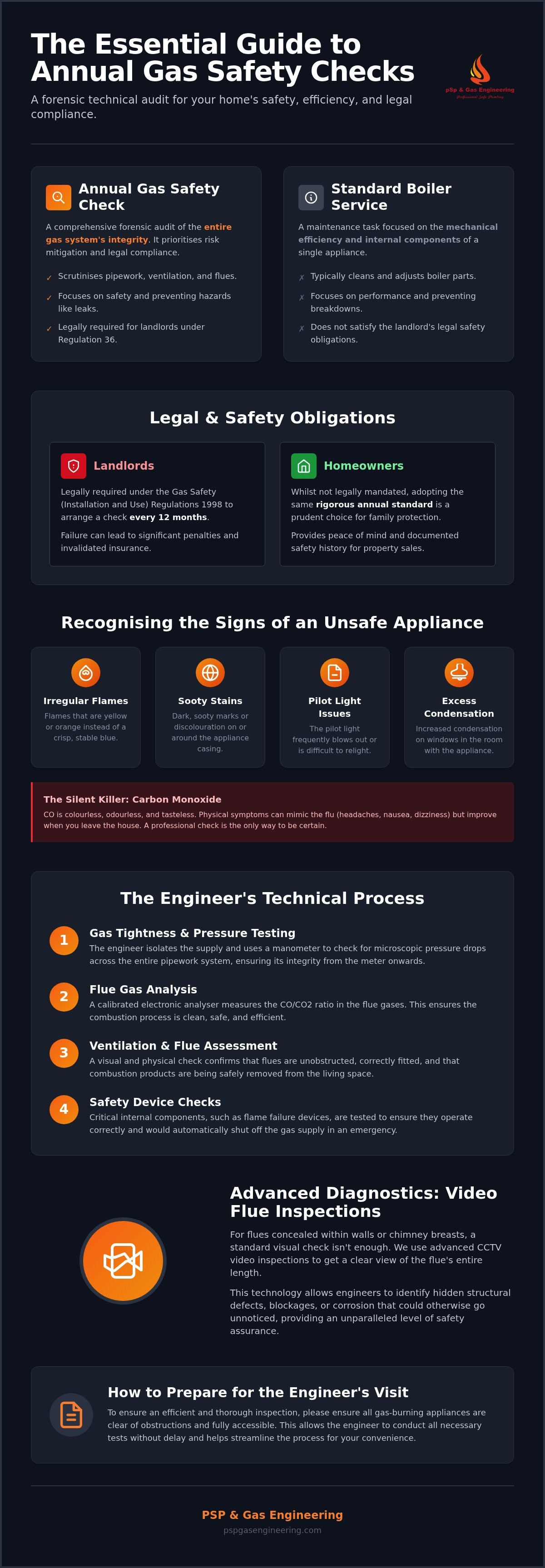
An annual gas safety check is a comprehensive technical audit designed to ensure every gas-burning appliance in a property operates safely and within regulated parameters. Unlike a standard boiler service, which focuses primarily on the mechanical efficiency and internal components of the heating unit, a safety inspection scrutinises the entire installation. This includes the gas pipework, the ventilation systems, and the flues that carry waste gases away from the living space. It's a forensic examination that prioritises risk mitigation over simple maintenance. By identifying minor leaks or blockages early, these checks contribute to the long-term durability and efficiency of your heating system, preventing costly emergency repairs later.
Legal Obligations for UK Landlords vs Homeowners
Under the Gas Safety (Installation and Use) Regulations 1998, landlords are legally required to arrange an inspection every 12 months. While homeowners aren't legally mandated to possess a certificate, adopting the same rigorous standards is a prudent choice for family protection. A missing landlord gas safety certificate London can lead to significant legal penalties, invalidated insurance policies, and the inability to legally let a property. For those living in their own homes, regular inspections provide a documented history of safety that is invaluable during property valuations or sales.
Recognising the Signs of an Unsafe Appliance
Carbon monoxide is often called the silent killer because it's colourless, odourless, and tasteless. Detecting it requires more than just human senses. However, certain visual indicators suggest an appliance is struggling to burn gas correctly:
- Sooty stains or dark brownish marks on or around the appliance casing.
- Yellow or orange flames instead of a crisp, stable blue cone.
- Pilot lights that frequently blow out or struggle to stay ignited.
- Excessive condensation on the windows of the room where the appliance is located.
Physical symptoms of CO poisoning often mimic a common cold or the flu, including persistent headaches, nausea, and dizziness that miraculously improve when you leave the house. During an annual gas safety check, an engineer may categorise an installation as "At Risk" (AR) or "Immediately Dangerous" (ID). An AR classification means the appliance has a fault that could become a danger; whilst ID indicates an immediate risk to life, requiring the engineer to disconnect the appliance for your safety until it's repaired.
Technical Breakdown: What the Engineer Does During the Check
When a professional engineer arrives to conduct your annual gas safety check, they follow a methodical sequence of technical tests. This isn't a cursory glance; it's a forensic examination of your property's gas infrastructure. The priority is always "gas tightness". This involves checking the entire system from the meter to the appliances to ensure there are no microscopic leaks. They also calculate the "gas rate" by timing the meter to see how much gas an appliance uses per hour. If an appliance is burning too much or too little fuel, it indicates an underlying fault that could compromise safety or efficiency. Engineers also inspect internal safety devices, such as flame failure valves, to ensure they automatically shut off the gas if the flame goes out.
Pipework Pressure Testing and Meter Checks
Engineers start by isolating the gas supply at the meter and using a manometer to check for pressure drops. This test confirms the integrity of the pipework throughout the building. They'll also ensure the emergency control valve is easy to reach and operates smoothly. If a pressure drop is detected, it may signal the need for professional gas pipe repair London to prevent a hazardous leak before it becomes critical. Ensuring these systems are sound is the foundation of a safe home. Our engineers at PSP & Gas Engineering take pride in this precision-led approach, ensuring every joint and valve meets current safety standards.
Flue Gas Analysis and Ventilation Assessment
Modern safety standards, as defined by the Gas Safe Register, require the use of calibrated electronic flue gas analysers. These devices measure the ratio of carbon monoxide (CO) to carbon dioxide (CO2), ensuring the combustion process is clean and efficient. The engineer also checks that flues are unobstructed and that "combustion products" are being safely expelled from the property. They'll verify that ventilation bricks and grilles aren't blocked by furniture or debris, as a lack of fresh air can lead to incomplete combustion and the buildup of toxic gases. It's a vital part of the process that guarantees the air inside your home remains clean and safe for your family.
The Property Owner’s Preparation Checklist
Preparing for your annual gas safety check is a vital step that ensures a professional engineer can work with precision and efficiency. When a property is properly prepared, it reduces the time an engineer needs to spend on-site, allowing them to focus entirely on technical diagnostics rather than moving household clutter. Accessibility isn't merely a matter of convenience; it's a regulatory safety requirement. If an engineer cannot inspect a specific component, they cannot certify it as safe. By organising your space beforehand, you demonstrate a commitment to safety that helps the engineer perform their duties to the highest possible standard.
Ensuring Full Access to Appliances and Meters
The most common delay during an inspection is restricted access to the gas meter or the boiler itself. Boilers are often located in utility cupboards or kitchens where household items, coats, or cleaning supplies accumulate over time. You should clear these spaces entirely before the engineer arrives. Similarly, gas meters located in cupboards under the stairs or in external boxes must be easily accessible. The engineer needs enough room to use their testing equipment without obstruction. Don't forget that the inspection covers every gas-burning appliance in the property, including gas fires, cookers, and water heaters. If your boiler flue terminates at height, ensure there is a clear path for the engineer to use a ladder. Without a visual check of the external flue terminal, the integrity of the ventilation system cannot be fully verified, whilst any obstructions could lead to a failed inspection.
Safety Records and Previous Certification
Documentation plays a significant role in the technical audit of your home. Having your previous gas safe compliance certificate ready for review allows the engineer to understand the system's history and any previous advisory notes. This continuity is essential for identifying recurring issues or tracking the wear of specific components. It's also helpful to note down any intermittent faults or unusual noises you've observed, such as banging from the pipes or a pilot light that occasionally flickers. This information provides a starting point for the engineer's investigation. Finally, if you use a prepayment gas meter, ensure there's sufficient credit on the card. An annual gas safety check cannot be completed if the gas supply is cut off, as the engineer must see the appliances in operation to test gas rates and flue integrity.
Advanced Diagnostics: The Role of Video Flue Inspections
A standard annual gas safety check involves a visual inspection of the flue terminal, but what's happening inside the chimney remains a mystery without specialised tools. Many property owners don't realise that a flue can appear perfectly functional from the outside whilst harbouring dangerous structural failings within. Professional engineers now use high-definition CCTV equipment to conduct forensic internal audits of these hidden pathways. These video surveys identify hidden blockages such as birds’ nests, fallen masonry, or internal collapses that would otherwise go unnoticed. By integrating these digital findings into the final safety report, we provide a more robust certification that leaves no room for doubt regarding your property's safety.
When to Request a CCTV Flue Survey
If you own an older property or a building where chimneys have been out of use for long periods, a standard inspection might not be sufficient. Dormant flues are prone to internal degradation and cracks in the lining. These fractures are particularly hazardous because they allow carbon monoxide to seep into bedrooms or loft spaces through porous brickwork. Before undergoing flue relining services London, a video diagnostic is essential to map the internal state of the duct. This ensures the new lining is installed correctly and that the structural integrity of the chimney stack is sound. It's a vital step for any property with a complex or aged venting history.
Solving Complex Venting Issues
Video diagnostics significantly reduce the need for "exploratory" building work that often involves breaking into walls or ceilings to find a suspected leak. The technical process involves threading a flexible, high-resolution camera through the flue system, allowing the engineer to view every inch of the internal surface on a digital monitor. This methodical approach allows us to pinpoint the exact location of a blockage or breach with millimetre precision. Video inspections provide visual proof of compliance that standard checks cannot. If you're concerned about the integrity of your chimney, you can book a specialist video inspection with our Croydon-based team to ensure your home remains a safe environment.
Booking Your Gas Safety Check in Croydon and London
Finalising your annual gas safety check requires more than just picking the first name that appears in a search result. It's a technical commitment to the safety of your property, requiring an engineer who understands both the regulatory landscape and the specific nuances of London's diverse housing stock. Before you book, it's helpful to review the latest 2026 benchmarks regarding how much is a gas safety certificate. This ensures you're receiving a fair, fixed-fee service that covers all necessary appliances without hidden surcharges. A professional inspection should be a transparent process that leaves you with a valid Landlord Gas Safety Record and total peace of mind.
Verifying Credentials and Safety Licences
When the engineer arrives at your door, your first priority is to verify their Gas Safe ID card. This isn't a lack of trust; it's a vital safety protocol. You should look at the back of the card to check the specific categories they're qualified to inspect. An engineer might be registered for boilers but not for gas fires or cookers. The Gas Safe Register logo is the only valid hallmark of gas safety in the UK. Using "handymen" for gas-related tasks is not only illegal but incredibly dangerous. Only a registered specialist possesses the calibrated equipment and technical training to identify the subtle signs of system failure or carbon monoxide leakage that an unqualified person would overlook.
Why Local Expertise Matters in South London
Choosing a local Croydon specialist offers distinct advantages over national call centres. London's property landscape is unique, often featuring Victorian terraces with aged pipework alongside modern, high-density flats with complex communal venting systems. A local engineer understands the common issues associated with these specific building types, from the integrity of old chimney stacks to the requirements of modern flue-in-void regulations. At PSP & Gas Engineering, we position ourselves as a "safe pair of hands" for our community. We provide the benefit of local knowledge backed by 24/7 support, ensuring that if an issue is found during your annual gas safety check, we're already nearby to provide a professional solution.
If your property fails the inspection, don't panic. The engineer will provide a clear report detailing why the installation is "At Risk" or "Immediately Dangerous". The process then moves into the repair and re-test phase. We prioritise these remedial works to ensure your gas supply is restored safely and your compliance is brought back up to standard as quickly as possible. This methodical approach ensures that your property remains a protected environment for tenants and family alike throughout the year.
Securing Your Property's Future with Professional Oversight
Maintaining a safe home or rental property requires more than just meeting legal minimums; it demands a methodical approach to technical safety. By clearing access to your appliances and ensuring your documentation is ready, you facilitate a more thorough and efficient inspection. Remember that advanced diagnostics such as CCTV video flue surveys provide a level of security that standard visual checks cannot match, whilst identifying hidden risks within your chimney before they escalate into dangerous faults.
Your annual gas safety check is the most effective tool you have for preventing carbon monoxide incidents and ensuring long-term appliance efficiency. Don't leave your safety to chance. As a local specialist, we understand the specific requirements of London’s housing stock and are committed to providing the highest standards of technical care. Book your professional annual gas safety check with PSP & Gas Engineering today. Our Gas Safe Registered Engineers are specialists in CCTV video flue inspections, serving Croydon and Greater London 24/7. We're ready to protect your home. You can trust our team to provide the peace of mind you deserve, keeping your property a safe and compliant environment.
Frequently Asked Questions
Is an annual gas safety check a legal requirement for homeowners?
An annual gas safety check is not a legal requirement for homeowners in the same way it is for landlords. However, neglecting this audit can lead to safety risks and may invalidate your home insurance policy. We strongly recommend that homeowners in Croydon adopt the landlord standard to ensure their heating systems remain efficient; more importantly, this protects your family from the dangers of carbon monoxide leaks.
How long does a typical gas safety inspection take to complete?
A standard inspection usually takes between 30 and 60 minutes to complete. The exact duration depends on the number of gas appliances in your property and how easily the engineer can access the meter and flues. If you have prepared the area by clearing cupboards and ensuring all appliances are accessible, the process is typically very efficient. More complex systems requiring advanced video diagnostics may take longer.
What happens if my boiler or gas cooker fails the safety check?
If an appliance fails, our engineer will categorise the fault as either "At Risk" or "Immediately Dangerous". In the case of an "Immediately Dangerous" classification, the gas supply to that specific appliance must be disconnected for your safety until repairs are made. We will provide a detailed report explaining the technical failure and offer a fixed-fee quote for the necessary remedial work to bring your system back into compliance.
Can a plumber carry out a gas safety check if they are not on the Gas Safe Register?
No, it is illegal for anyone to work on gas appliances or conduct a safety inspection unless they are on the Gas Safe Register. Whilst many plumbers are highly skilled in water systems, they must possess specific gas qualifications and a valid ID card to legally perform this work. Always verify the engineer’s credentials on the back of their card to ensure they are licensed for your specific appliances.
How much does an annual gas safety check cost in London for 2026?
Costs for a gas safety certificate in London typically vary based on the number of appliances and the complexity of the system. In 2026, property owners often find that prices are influenced by location and the specific technical requirements of the building. We provide fixed-fee inspections for Croydon residents, ensuring you receive a transparent price. This approach allows you to plan your maintenance budget with total confidence.
Do I need a gas safety check if I only have an electric boiler but a gas hob?
Yes, an inspection is necessary if your property has any gas-burning appliances, regardless of your main heating source. Even if you use an electric boiler, your gas hob and the associated pipework must be tested for "gas tightness" and correct combustion. The engineer will examine the hob’s safety devices and ensure the ventilation in your kitchen meets current standards, preventing the buildup of harmful gases whilst you cook.
Will the engineer turn off my gas supply during the inspection?
The engineer will need to turn off your gas supply briefly at the meter to perform a pressure drop test. This procedure is the only way to confirm that your entire pipework system is "gas tight" and free from microscopic leaks. This interruption is usually very short, and the engineer will relight your pilot lights and ensure all appliances are functioning correctly before they leave your property at the end of the annual gas safety check.
How often should I have my gas flue inspected with a video camera?
While not a standard requirement for every annual gas safety check, we recommend a CCTV video flue inspection if you live in an older Croydon property or if your chimney has been dormant. A video audit should also be conducted if you suspect a blockage or before you invest in flue relining. This advanced diagnostic provides visual proof of internal structural integrity, identifying cracks or collapses that a standard visual inspection cannot detect.


