
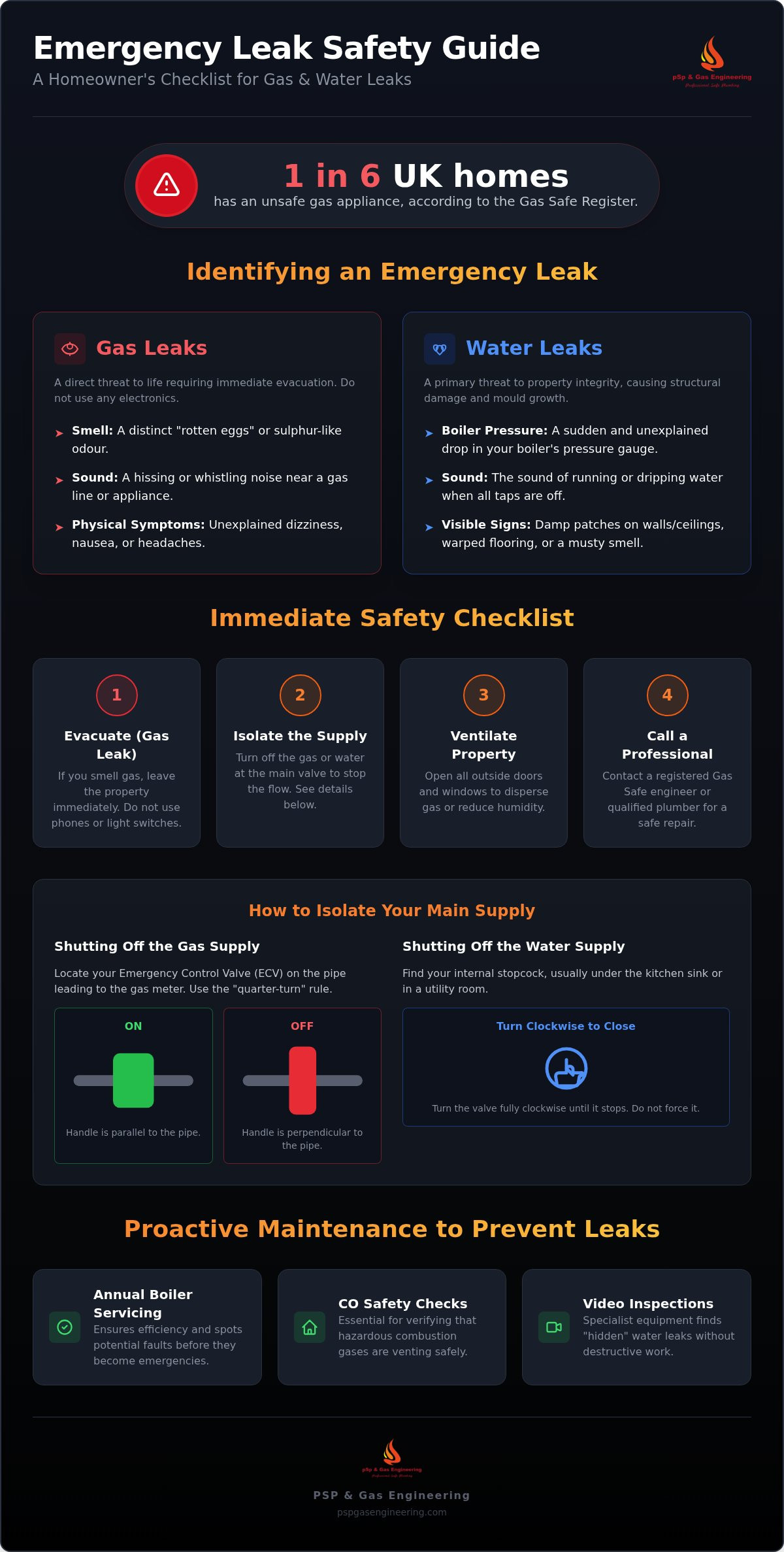
Did you know that according to the Gas Safe Register, one in every six homes in the UK contains an unsafe gas appliance? In a residential hub like Croydon, the sudden hiss of a pipe or the faint smell of gas can quickly turn a quiet evening into a high-stakes crisis. Emergency leaks don't just threaten your property's structure; they compromise the safety of your family and neighbours. It's a situation that demands a methodical response and a safety-first mindset to prevent escalating damage.
We understand the anxiety that comes with water pooling under floorboards or the uncertainty of whether a leak is your responsibility or the water company's. You need a "safe pair of hands" to restore security to your home. This guide provides you with a definitive checklist to manage these urgent situations safely whilst protecting your Croydon property. We'll walk you through the immediate steps to stop the flow of water or gas, clarify legal responsibilities under Awaab's Law, and explain how the latest 2026 gas tightness regulations ensure your home remains compliant and secure.
Key Takeaways
- Learn to distinguish between minor plumbing issues and critical emergency leaks by recognising the specific signs of gas escapes and uncontrolled water flow.
- Follow a methodical safety protocol to isolate your mains supply and evacuate the premises correctly when a technical hazard is detected.
- Clarify your legal position by understanding the property boundary rules that dictate whether you or the utility company are responsible for a repair.
- Identify the essential maintenance steps, such as annual boiler servicing and video inspections, required to prevent sudden system failures.
- Understand the specific safety obligations for Croydon landlords to ensure full compliance with the Gas Safety (Installation and Use) Regulations 1998.
Identifying an Emergency Leak: Water vs. Gas
In the context of Croydon's diverse housing stock, distinguishing between a minor nuisance and a genuine crisis is the first step toward safety. We define emergency leaks as any uncontrolled release of gas or water that presents an immediate threat to the occupants or the structural integrity of the building. Whilst a dripping tap is an inconvenience, a burst pipe or a gas escape requires a professional, technical response to mitigate risk. Identifying these issues early is the only way to prevent a manageable repair from becoming a catastrophic loss.
Gas and water emergencies require different protocols. A gas leak is a direct threat to life, whereas a water leak is primarily a threat to the property. Understanding the specific indicators for each allows you to prioritise your actions correctly. Under the new 2026 gas tightness testing regulations, engineers now use an installation volume-based system to ensure even the smallest leaks are identified with zero tolerance. This precision is necessary because even a minor gas escape can reach explosive concentrations in enclosed spaces.
The Dangers of Gas Leaks
Natural gas is naturally odourless, so suppliers add a distinctive "rotten egg" scent to aid detection. If you notice this smell, hear a hissing sound near your boiler, or experience physical symptoms like dizziness and nausea, you must act immediately. Understanding Gas Leaks involves recognising that even a small spark can trigger a disaster. You shouldn't flip a light switch, use a phone inside the property, or light a match if you suspect gas is present. Beyond the risk of fire, the threat of carbon monoxide is a silent danger. This is why we recommend an annual carbon monoxide safety check to ensure your flues and appliances are venting hazardous combustion gases safely outside the home.
Water Leaks and Property Integrity
Water damage is often deceptive and cumulative. A sudden drop in boiler pressure or the sound of running water when all taps are closed are clear indicators of emergency leaks. However, "hidden" leaks behind plasterboard or under floorboards often go unnoticed until damp patches appear on ceilings or floorboards begin to warp. These leaks can weaken timber joists and encourage rapid mould growth, which impacts the health of everyone in the building. Professional plumbing leak detection London services use specialised video inspection equipment to pinpoint these issues without the need for destructive investigation. By finding the source quickly, you protect the long-term value and safety of your Croydon home.
Immediate Actions for Emergency Leaks
When you're faced with emergency leaks, the first sixty seconds are the most critical. Your immediate response should follow a methodical sequence to ensure life safety and minimise structural damage. If you suspect a gas escape, you must prioritise evacuation before attempting any technical intervention. Don't use mobile phones, light switches, or any electrical appliances inside the property, as these can act as ignition sources. Once everyone is safely outside, you can move to the next steps of isolation and professional notification.
For water-based emergencies, the risk is primarily to the building's fabric. However, the speed of your action determines whether you'll be facing a simple pipe repair or a full-scale renovation. Following this checklist provides the professional calm needed to manage the situation effectively:
- Step 1: Evacuate the premises immediately if you smell gas or hear a loud hissing sound.
- Step 2: Locate and turn off the primary isolation valves for gas or water.
- Step 3: Ventilate the property by opening all doors and windows to disperse gas or reduce humidity.
- Step 4: Contact a registered Gas Safe engineer to perform a technical inspection and repair.
How to Shut Off Your Gas Supply
Every resident should know the location of their gas meter and the Emergency Control Valve (ECV). In most Croydon properties, the meter is located in an external box, a hallway cupboard, or under the stairs. The ECV is the handle located on the pipework leading into the meter. To stop the flow, apply the "quarter-turn" rule: move the handle until it's at a right angle to the pipe. When the handle is parallel to the pipe, the gas is on; when it's perpendicular, it's off. If the valve is seized or inaccessible, don't force it. In such cases, move to a safe distance and call for professional assistance immediately.
Stopping a Water Leak at the Source
To stop an internal water leak, you need to find the internal stopcock. This is usually found under the kitchen sink, in a ground-floor utility room, or tucked under the stairs. Turn the valve clockwise firmly to shut off the mains supply. Once the supply is off, you should drain the system by opening the lowest taps in the house, such as the kitchen or garden taps. This relieves the remaining pressure in the pipes and stops water from continuing to spray out of the leak point. For Croydon residents requiring technical assistance, engaging a local Gas Safe specialist ensures the repair meets all current safety standards and provides long-term peace of mind.
Managing emergency leaks with precision prevents minor faults from escalating into dangerous situations. By taking these intentional steps, you act as a "safe pair of hands" for your property until a qualified engineer arrives to resolve the underlying technical issue.
Responsibility and Compliance: Who Fixes What?
Understanding where your legal responsibility begins is essential when dealing with emergency leaks. In the UK, the "Property Boundary" rule serves as the definitive line of demarcation. Water companies are typically responsible for the water mains and the communication pipe that links the mains to your property boundary. However, once the pipework crosses that boundary, the homeowner assumes full responsibility for the supply pipe, internal plumbing, and all connected appliances. For gas, the responsibility for internal pipework and appliances rests entirely with the owner or landlord from the outlet of the gas meter onwards.
Homeowners must maintain their internal systems to prevent damage to their own property and neighbouring premises. If a leak occurs within your boundary, you're responsible for the cost and coordination of the repair. It's also vital to maintain a comprehensive record of all maintenance and emergency work. These documents serve as technical proof of your property's integrity, which is often required during property sales or when filing insurance claims after a major incident.
Landlord Specific Requirements
Landlords face stricter regulatory scrutiny under the Gas Safety (Installation and Use) Regulations 1998. With the introduction of Awaab's Law in 2025, landlords in Croydon must now investigate and make safe any emergency hazards, such as major leaks near electrical fittings, within 24 hours. Failure to meet these timelines can result in significant legal penalties. Following any emergency intervention, a new landlord gas safety certificate London is often required to confirm the system is safe for continued use. All such work must be performed by a Gas Safe registered engineer to ensure legal compliance and tenant safety.
Insurance and Emergency Repairs
Documenting emergency leaks is a prerequisite for a successful insurance claim. You should take photographs of the damage before and after the repair and retain all invoices from your specialist. It's a common pitfall to hire uncertified "handymen" for gas-related tasks; however, this will almost certainly void your buildings and contents insurance policy. Insurers require work to be completed by regulated professionals who can provide a certificate of competence. Utilising professional pipework pressure testing provides the verified data needed to prove the system has been restored to a safe, leak-free condition, ensuring your policy remains valid and your property is protected.
Preventing Emergency Leaks: Proactive Maintenance
Prevention is always more cost-effective than crisis management. Whilst emergency leaks are often viewed as random occurrences, they are frequently the result of gradual system degradation that a routine technical inspection could have identified. By shifting your focus from reactive repairs to a safety-first maintenance schedule, you protect your property from the structural and financial impact of sudden failures. Modern engineering solutions now allow for non-destructive monitoring, providing homeowners with a clear overview of their system's health before a fault develops.
One of the most effective tools for early detection is a blocked flue video inspection. This technology identifies internal obstructions or corrosion that could lead to dangerous gas venting issues. Additionally, installing smart leak detectors can provide an extra layer of security. These devices monitor water flow through your pipes and send immediate mobile alerts if they detect unusual patterns, allowing you to isolate the supply before a minor drip becomes a major flood.
Boiler and Flue Health
A faulty boiler is often the root cause of pressure-related emergency leaks within a heating circuit. If the expansion vessel or pressure relief valve fails, the resulting strain can cause joints to fail across the entire system. Regular servicing ensures these components are functioning within their specified tolerances. We utilise CCTV flue inspection to check for internal cracks or misaligned segments that aren't visible to the naked eye. If your system is over fifteen years old and requires frequent repairs, a new boiler installation Croydon may be the most reliable way to ensure long-term safety and compliance with 2026 efficiency standards.
Pipework and Radiator Maintenance
In many older London properties, original pipework can be susceptible to pinhole leaks caused by internal corrosion. Bleeding your radiators regularly doesn't just improve heating efficiency; it reduces the air-related system strain that leads to these leaks. You should also ensure that any external pipework is properly insulated before the winter months to prevent the expansion and bursting that occurs during sudden temperature drops. For total peace of mind, you can schedule a comprehensive gas safety inspection with a local expert to verify the integrity of your entire network. This proactive approach ensures your home remains a "safe pair of hands" for your family, backed by professional technical precision.
Professional Emergency Leak Repair in Croydon
When you're dealing with emergency leaks, the proximity of your engineer is a decisive factor in the outcome. For residents in Thornton Heath and central Croydon, choosing a local specialist isn't just about convenience; it's about reducing the window of risk. We prioritise local call-outs to ensure that technical assistance arrives before a minor escape becomes a major hazard. We approach every emergency with a methodical, professional calm that's designed to reassure you whilst we secure the property.
Our engineers arrive equipped with specialised detection tools to identify the exact source of the failure. Once the immediate hazard is isolated, we perform the necessary repairs using high-grade materials that meet current regulatory standards. Resolving emergency leaks is only the first stage of our process. We conclude every visit with comprehensive tightness testing and pressure verification to ensure the entire system is safe for continued operation. This rigorous approach provides you with the technical certainty that the underlying issue has been fully rectified.
24/7 Emergency Support
Accessing technical assistance shouldn't be a challenge during a crisis. We provide 24/7 emergency availability to ensure that Croydon homeowners and landlords have a reliable point of contact at any hour. Our commitment to safety-first engineering means we don't just patch a problem; we provide a durable solution that restores the integrity of your gas or water systems. Whilst our primary focus remains on South London communities like Croydon, we serve the wider Greater London area with the same dedication to professional precision and rapid response.
Why Choose a Gas Safe Registered Specialist?
In the UK, it's a legal requirement for anyone performing work on gas appliances or pipework to be on the Gas Safe Register. This regulation exists to protect the public from the life-threatening risks associated with poorly executed repairs. When our specialist arrives, they'll always carry their Gas Safe ID card, which you can verify against the official register. This certification is your guarantee that the engineer possesses the specific qualifications needed to handle high-stakes technical tasks safely. Choosing a "safe pair of hands" ensures your repair is compliant with the latest 2026 gas tightness standards and protects your property's insurance validity. We take pride in our craftsmanship and our commitment to maintaining the highest safety standards for every client in our community.
Securing Your Croydon Property with Confidence
Managing emergency leaks effectively requires a combination of immediate individual action and professional technical expertise. By following the fast action checklist, you've learned how to isolate hazards, distinguish between water and gas risks, and navigate the complexities of property boundaries and landlord compliance. Remember that whilst your initial response stops the immediate flow, only a certified specialist can provide the comprehensive testing needed to guarantee long-term safety and system integrity.
Protecting your home is about more than just reactive repairs; it's about prioritising the safety of your family and neighbours through informed choices. Our Gas Safe Registered Engineers provide 24/7 Emergency Assistance across South London, acting as Local Croydon Specialists who understand the technical intricacies of the area's housing stock. Don't leave your property's safety to chance when expert help is a phone call away.
Contact PSP & Gas Engineering for 24/7 Emergency Leak Support to restore security to your home today. We're here to ensure your plumbing and gas systems remain a reliable foundation for your household.
Frequently Asked Questions
What should I do if I smell gas in my home?
If you smell gas, your priority is to evacuate the property immediately without using any electrical switches, mobile phones, or naked flames. Open all doors and windows to facilitate ventilation if it's safe to do so. Once outside, you should contact the National Gas Emergency Service and a local Gas Safe registered engineer to investigate. Taking these steps ensures you manage emergency leaks with a safety-first mindset that protects your household and neighbours.
How do I find the main water stopcock in an emergency?
You will typically find the internal water stopcock under the kitchen sink, in a hallway cupboard, or tucked under the stairs. It's the point where the main supply pipe enters your property. To stop the flow of water, turn the valve handle firmly clockwise. If you live in a flat, the stopcock might be located in a communal area or near the water meter. Knowing this location is vital for managing water-based emergencies effectively.
Is a water leak the responsibility of the council or the homeowner?
Homeowners are legally responsible for all internal plumbing and the supply pipe that runs from the property boundary into the house. If the leak is on the public highway or the communication pipe outside your boundary, it's the responsibility of the local water company. Croydon Council tenants should contact the council's emergency repair line, which prioritises making properties safe within 4 to 24 hours depending on the severity of the incident.
Can I fix a gas leak myself if it seems small?
You must never attempt to repair a gas leak yourself, regardless of how minor it appears. In the UK, it's a legal requirement for any work on gas appliances or pipework to be carried out by a Gas Safe registered engineer. DIY attempts can lead to fire, explosions, or carbon monoxide poisoning. Professional engineers use calibrated equipment to ensure the system meets the 2026 tightness testing regulations, providing a verified guarantee of safety.
How much does an emergency plumber in Croydon typically cost?
The cost of an emergency plumber in Croydon depends on the time of day, the complexity of the repair, and the materials required. Most professionals charge a fixed call-out fee plus an hourly rate for labour. Whilst we don't provide specific pricing here, choosing a local specialist often reduces travel time and ensures a faster response. We recommend requesting a clear breakdown of charges before work commences to ensure transparency and peace of mind.
What are the most common causes of burst pipes in London?
Burst pipes in London are frequently caused by sudden temperature drops that cause water to freeze and expand within the pipes. Other common factors include excessive water pressure and the natural degradation of older lead or copper pipework found in many Croydon properties. Regular maintenance, such as insulating external pipes and scheduling professional inspections, is the most effective way to prevent these emergency leaks from causing significant structural damage to your home.
Do I need a new gas safety certificate after an emergency repair?
Landlords are legally required to ensure their properties remain compliant with the Gas Safety (Installation and Use) Regulations 1998. If an emergency repair involves the gas supply or a primary appliance, a new Gas Safety Record (CP12) is often necessary to verify the system is safe for continued use. This documentation is essential for insurance purposes and provides tenants with the assurance that their home is being managed by a "safe pair of hands."
What happens if I cannot turn off the gas valve?
If the Emergency Control Valve (ECV) is seized, broken, or inaccessible, you shouldn't attempt to force it with tools. Instead, evacuate the building immediately and move to a safe distance. Contact the National Gas Emergency Service and inform them that you cannot isolate the supply. Professional engineers have the specialised equipment and training required to manage uncontrolled gas escapes safely, ensuring that the risk to the community is minimised through technical precision.


