

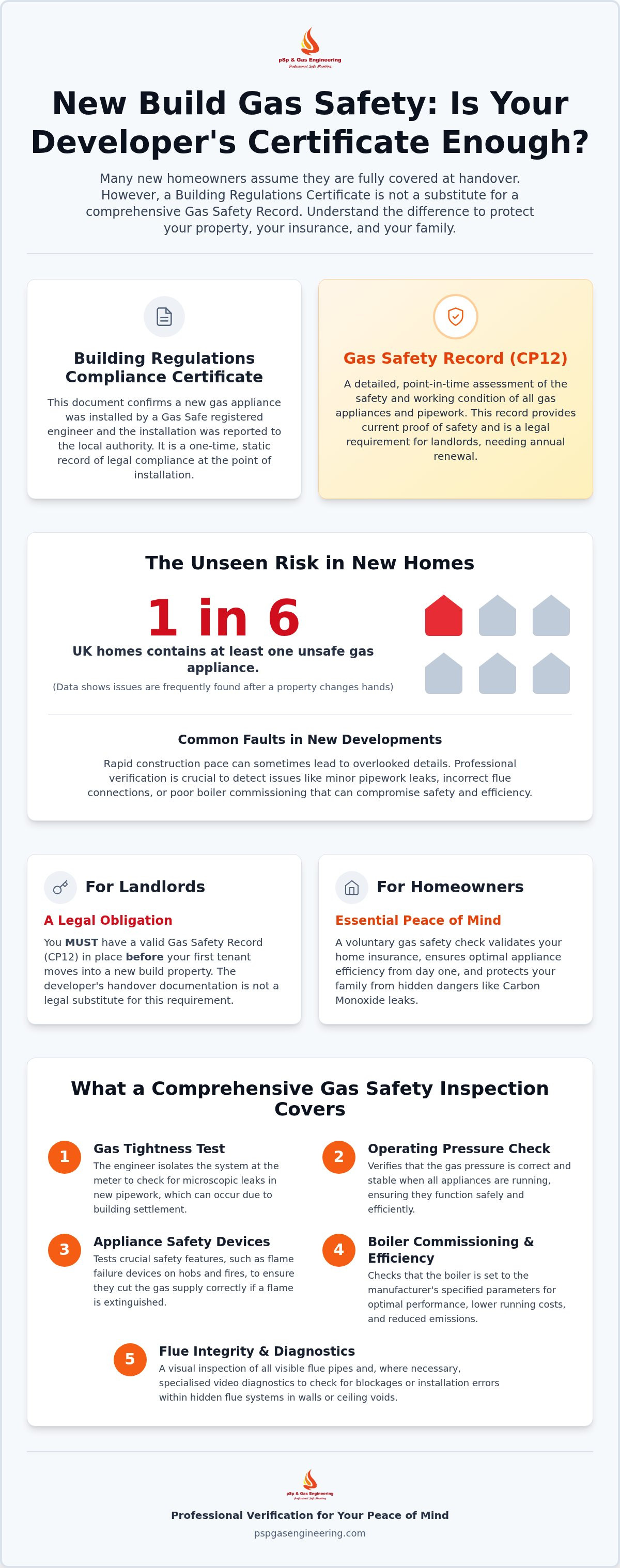
What if the official documentation provided with your brand new home is not actually enough to protect your insurance or your tenants? Many homeowners in Croydon and across Greater London assume that a developer sign-off covers every legal base, but the reality is more complex. Whilst your property should come with a Building Regulations Compliance Certificate, this is not the same as a dedicated gas safety certificate for new build properties. In fact, industry data shows that one in six UK homes contains at least one unsafe gas appliance, and these issues are frequently discovered shortly after a property changes hands.
We understand that moving into a new home should be a period of security rather than a time of administrative anxiety. This 2026 guide explains the essential differences between installation compliance and ongoing safety records to ensure your property is fully protected. You will learn how to secure your home insurance validity, meet your legal obligations as a landlord, and gain peace of mind that your new installation is genuinely safe. We will break down the specific requirements for Landlord Gas Safety Records and why professional verification is your best defence against hidden installation faults.
Key Takeaways
- Understand the critical distinction between a Building Regulations Compliance Certificate and a formal gas safety record to avoid common legal and insurance pitfalls.
- Learn why obtaining a gas safety certificate for new build is a vital step for landlords to ensure full compliance before a tenant occupies the property.
- Discover the methodical steps a Gas Safe registered engineer takes to verify that new appliances are correctly commissioned and safe for daily use.
- Identify how to prepare your property for an inspection by locating hidden flue hatches and ensuring unobstructed access to the gas meter.
- Recognise the importance of professional video flue diagnostics in detecting installation errors or blockages that can occur during the construction phase.
Navigating Gas Safety Requirements for New Build Properties in 2026
Entering a new build property often feels like the pinnacle of safety and efficiency. However, the documentation you receive at handover serves a different legal function than an annual safety check. The Gas Safe Register requires installers to notify them of any new gas appliance installation within 30 days. This notification triggers the issuance of a Building Regulations Compliance Certificate. Whilst this confirms the installation was reported to the local authority, it doesn't offer a comprehensive diagnostic of the system’s current health or its ongoing safety for occupants.
Building Compliance vs. Gas Safety Records
A Building Regulations certificate is a record of legal installation, proving the work was completed by a qualified professional. It's essentially a static document for your records. In contrast, a Gas Safety Record, often called a CP12, is a dynamic, point-in-time assessment of appliance health. If you are a landlord, it's vital to understand that the developer's paperwork isn't a substitute for a legal safety check. You still need a specific gas safety certificate for new build properties before a tenant moves in. Your handover pack should contain the compliance certificate, but it won't contain a CP12 unless specifically arranged by an independent specialist.
The Silent Risks in Modern New Build Homes
Modern developments move at a rapid pace. This speed can occasionally lead to overlooked details, such as improper flue termination or minor leaks in the internal pipework. High-efficiency condensing boilers, which are standard in 2026, require precise installation to manage acidic condensate and ensure safe combustion. Current safety standards prioritising carbon monoxide prevention now demand even stricter adherence to ventilation and flueing requirements during the construction phase. These systems are complex, and even a small error in the flue assembly can lead to dangerous levels of CO within the property.
Research indicates that one in six UK homes contains at least one unsafe gas appliance, frequently in properties that have recently changed ownership. This statistic highlights why "newly installed" doesn't always equate to "currently safe" amongst modern housing developments. Verifying gas tightness and ensuring inspection hatches are accessible for hidden flues are critical steps for any new homeowner. Securing a gas safety certificate for new build provides the validation you need to ensure your home insurance remains valid and your household stays protected from the moment you receive the keys.
What Happens During a Gas Safety Inspection for a New Installation?
A Gas Safe registered engineer doesn't just look for a blue flame. They follow a rigorous protocol to ensure every component of the gas system is commissioned correctly. For a gas safety certificate for new build properties, this process begins at the gas meter. We use digital manometers to verify operating pressures, ensuring the pipework can handle the combined load of the boiler, hob, and any gas fires simultaneously. This methodical approach identifies issues that a simple visual check might miss.
The Engineer’s Step-by-Step Checklist
Checking gas tightness is the first priority. We isolate the system to ensure there are no microscopic leaks in the fresh pipework. It's a common misconception that new joints are infallible; the natural settling of a building or thermal expansion can occasionally stress connections. We then move to the appliances. Every brand new hob or fire must have its flame failure devices tested. These safety features are designed to cut the gas supply if the flame goes out, and their correct operation is a non-negotiable requirement. Finally, we verify that the boiler is set to the manufacturer's preferred efficiency parameters. Even a small deviation in commissioning can increase running costs and carbon emissions over time.
Specialised Flue Integrity and Video Diagnostics
Modern new build developments, especially apartment blocks in areas like Croydon, often feature complex flue systems hidden within ceiling voids. Visual checks are rarely sufficient for these installations. We prioritise sharing Gas Safety Information for Home Buyers & Sellers to ensure owners understand why access hatches are mandatory for hidden flues. If these hatches are missing, the installation cannot be fully verified as safe.
Using high-definition video diagnostics, we can inspect the entire length of a concealed flue. This process confirms that flue brackets were correctly fitted during the construction phase and that no construction debris, such as insulation or plasterboard dust, is amongst the ventilation system. If you're moving into a multi-storey development, our video flue inspections provide the technical certainty that your extraction routes meet the stringent 2026 building standards. This level of detail ensures that your gas safety certificate for new build is more than just a piece of paper; it's a comprehensive guarantee of your home’s safety.
Landlords vs. Homeowners: Identifying Your Certification Needs
The distinction between owning a home and letting one is critical when managing gas documentation. While a developer provides a handover pack, the legal responsibility for ongoing safety shifts the moment the keys are exchanged. For those managing multi-occupancy residential buildings in London, the complexity of shared flues and integrated systems makes professional verification even more vital. Compliance is not optional. It's the foundation of a safe property management strategy that protects both the asset and its inhabitants.
Legal Obligations for Letting New Build Homes
If you intend to rent out your property, you must recognise that a Building Regulations certificate isn't sufficient for a tenancy agreement. Whilst that document confirms the installation was reported, it doesn't satisfy the legal duties defined under the Gas Safety (Installation and Use) Regulations 1998. Landlords are legally required to provide a Landlord Gas Safety Record (CP12) to their tenants before they move in. This record must be renewed every 12 months to remain compliant.
Obtaining a gas safety certificate for new build properties is a legal prerequisite that shouldn't be delayed. Under the Renters' Rights Act 2025, which came into force on May 1, 2026, possessing a flawless history of compliance is essential for any possession claims. Failing to provide these records can lead to significant penalties and may invalidate your ability to manage the property effectively. For a deeper look at these requirements, see our Landlord Gas Safety Certificate London: The 2026 Compliance & Safety Guide.
Voluntary Records for Private Homeowners
Private homeowners aren't legally mandated to hold an annual safety certificate, but ignoring this documentation is a significant risk. Most modern home insurance policies for new builds require proof that gas appliances are maintained according to manufacturer standards. Without a recorded service history from day one, you may find your insurance invalid in the event of a claim. Furthermore, regular checks are the only way to maintain the validity of your manufacturer's boiler warranty, which often requires an annual service by a Gas Safe registered engineer.
Building a service history provides peace of mind for families moving into a previously unoccupied space. It ensures that any minor installation faults amongst the new pipework are caught before they become costly repairs. Securing a gas safety certificate for new build homes allows you to document the health of your system from the very beginning. This proactive approach protects your investment and ensures your household remains a safe environment for years to come.
Preparing Your New Build for a Gas Safe Inspection
Preparing for an inspection in a new property involves more than just clearing the kitchen counter. Whilst the building is fresh, the gas systems are often complex and integrated into the structure. Ensuring your engineer can work efficiently is the first step toward securing your gas safety certificate for new build. This preparation saves time and ensures that every safety check can be performed without obstruction or delay.
Accessibility and Flue Inspection Hatches
Modern construction often hides flues within ceiling voids or behind boxing. These voids must have accessible inspection hatches at specific intervals. If you've recently moved into a South London development, identify these hatches amongst your ceilings and walls. Clear any furniture or storage that might block them. Similarly, the gas meter and boiler must be easily reachable. We often find that new homeowners fill cupboards around the boiler with packing boxes, which must be moved before we arrive. External flue terminals should also be free from obstruction; ensure new landscaping, sheds, or decorative trellis don't block the exit of combustion gases. For a complete list of requirements, see our Gas Safe Compliance Certificate: The 2026 Property Owner’s Checklist.
Documentation and Commissioning Records
Your developer should have provided a 'Benchmark' commissioning checklist within the boiler manual. This document is a record of how the system was initially set up. Having this ready allows the engineer to compare current operating pressures with the original installation data. It's also helpful to note any unusual behaviour you've spotted, such as minor vibrations or delayed ignition, during the first weeks of occupancy. Additionally, check for the presence of carbon monoxide alarms. In 2026, these are mandatory in any room containing a fixed combustion appliance. They should be correctly positioned according to current regulations to provide the necessary protection for your family.
Testing cannot happen if the utilities aren't active. Ensure both gas and electricity supplies are turned on. If you're moving into a property that has been vacant for a period, check that the credit on pre-payment meters is sufficient for the appliances to be run at full load. Without a live supply, the engineer cannot verify the tightness of the system or the safety of the flames. This verification is essential for maintaining the validity of your manufacturer's warranty and your home insurance.
If you're ready to validate your new installation, you can book your new build gas safety inspection today to ensure your home meets every technical standard.
Securing Expert Gas Safety Services in Croydon and South London
Selecting a provider for a gas safety certificate for new build properties requires more than just a search for the lowest price. It demands a partner with specific technical knowledge of modern construction methods. Local knowledge is indispensable when dealing with South London's diverse housing stock, where architectural styles range from traditional terraces to high-density modern apartments. A local specialist understands the nuances of these developments and the specific regulatory challenges they present, ensuring your documentation is both accurate and legally robust.
The Local Croydon Advantage
In areas like Thornton Heath and central Croydon, new build developments often utilise complex, communal flue systems or integrated boiler networks. These installations have specific requirements regarding ventilation and access that national providers sometimes overlook. We have extensive experience navigating the unique layouts of South London homes, allowing us to identify potential issues with flue routing or termination points quickly. Our proximity ensures quick response times, which is vital if you encounter an emergency gas safety issue whilst settling into your new property.
Understanding the local market also means we can provide tailored advice on long-term maintenance. For those considering future upgrades or looking to understand the initial setup of their property, our Boiler Installation Cost Croydon: The 2026 Homeowner’s Buying Guide offers valuable context on the systems typically found in the region. This regional expertise ensures that your safety inspection is grounded in the reality of South London's building standards.
Professional Standards at PSP & Gas Engineering
Our commitment to a safety-first mentality is the foundation of every inspection we perform. We provide fixed-fee compliance services, ensuring you receive a thorough technical assessment without hidden costs or unnecessary jargon. Every engineer on our team is Gas Safe registered. We encourage homeowners to verify these credentials on the official register to ensure their engineer is authorised for the specific appliance types in their home, whether that involves standard condensing boilers or more specialised gas fires.
Modern apartments frequently feature flues hidden in ceiling voids, making specialised video inspection skills a necessity rather than an optional extra. We use high-definition video diagnostics to act as your safe pair of hands in Croydon, providing visual proof of flue integrity where traditional methods fail. This technical precision, combined with our 24/7 emergency assistance, offers the security you need during the critical first months of homeownership. By choosing a dedicated local expert, you ensure that your gas safety certificate for new build is backed by genuine technical proficiency and a commitment to community safety.
Securing Your New Property’s Long-Term Safety
Ensuring your new home is legally compliant and physically safe requires more than just accepting the developer's handover pack. You now understand that whilst a Building Regulations certificate confirms a reported installation, it doesn't provide the diagnostic depth of a professional safety record. For landlords, this distinction is a legal necessity to meet 2026 rental standards. For homeowners, it's the only way to validate insurance and preserve manufacturer warranties from the very first day of occupancy.
By choosing local Croydon specialists, you gain the technical certainty that your property’s specific layout has been thoroughly vetted. Our Gas Safe registered engineers use expert video flue diagnostics to identify construction debris or installation errors that visual checks simply cannot detect. This proactive step is the most reliable way to obtain a gas safety certificate for new build properties and protect your investment for the long term.
Book your professional gas safety certificate for your new build with PSP & Gas Engineering today and enjoy the peace of mind that comes with expert verification. We look forward to helping you settle into your new home with complete confidence in your gas system's integrity.
Frequently Asked Questions
Is a gas safety certificate required for a brand new build property?
A landlord must obtain a gas safety certificate for new build properties before any tenancy begins. Whilst the developer provides installation records, these don't satisfy the legal requirement for a Landlord Gas Safety Record (CP12). Private homeowners don't have a statutory duty to hold a certificate, but it's essential for validating home insurance and ensuring the new system was commissioned correctly. We recommend a professional check to catch any construction phase errors.
What is a Building Regulations Compliance Certificate and do I need one?
This document confirms that your gas installation was reported to the local authority and complies with current building standards. You absolutely need one, as it's a vital part of your property's legal history. The Gas Safe Register issues this certificate after the installer notifies them of the completed work. It's usually found amongst the documents in your developer's handover pack and is required when you eventually sell or remortgage the property.
Does a new boiler need a separate gas safety certificate for a landlord?
Yes, a new boiler requires a specific Landlord Gas Safety Record if the property is being let. The Building Regulations Compliance Certificate only proves the unit was installed legally; it doesn't provide the detailed safety assessment required for a tenancy agreement. Landlords must ensure a Gas Safe registered engineer performs a full inspection of the boiler and all other gas appliances to issue the necessary CP12 record before the move-in date.
How much does a gas safety check cost in Croydon for a new build?
We provide fixed-fee compliance services for new build properties throughout Croydon and Thornton Heath. The cost typically depends on the number of gas appliances in the home, such as the boiler, hob, and any gas fires. Whilst we don't quote specific prices here, our inspections are thorough and include technical assessments that national providers might overlook. Choosing a local specialist ensures you aren't paying for travel time or hidden administrative surcharges.
Can I rent out my new build home without a Landlord Gas Safety Record?
You cannot legally rent out a property without a valid Landlord Gas Safety Record. Attempting to do so is a breach of the Gas Safety (Installation and Use) Regulations 1998. This can lead to heavy fines, custodial sentences, or the inability to issue a possession notice under the Renters' Rights Act 2025. It also leaves you unprotected if an insurance claim arises from a gas-related incident in the property during the first year.
How long is a new build building compliance certificate valid for?
A Building Regulations Compliance Certificate is a permanent record of the initial installation and doesn't have an expiry date. However, it only confirms the status of the work at the time of completion. It's not a substitute for the annual safety check. If you're a landlord, your gas safety certificate for new build (the CP12) must be renewed every 12 months to maintain legal compliance and ensure the ongoing health of the system.
What happens if a new build gas installation fails its safety check?
If an installation fails, the engineer will classify the fault as either 'At Risk' or 'Immediately Dangerous'. In a new build, this often involves blocked flues or incorrect ventilation. The engineer will issue a warning notice and, in dangerous cases, disconnect the gas supply for your safety. You'll then need to contact your developer to rectify the installation fault under your new build warranty before the system can be safely reconnected.
Who is responsible for providing the initial gas safety paperwork for a new build?
The developer or the original gas installer is responsible for providing the initial Building Regulations Compliance Certificate. They must notify the Gas Safe Register within 30 days of completing the work. However, the responsibility for arranging the first Landlord Gas Safety Record or an annual homeowner safety check rests entirely with the property owner. It's best to organise this shortly after moving in to verify that the installation is genuinely safe.


