
A poorly designed gas flue is far more than a minor technical oversight; it represents the primary engineering barrier between your living space and the lethal risk of carbon monoxide. Most property owners find the intricacies of UK Building Regulations, particularly the latest updates to Approved Document J, to be unnecessarily complex and daunting. It's completely understandable to feel a sense of anxiety regarding the integrity of your ventilation or to worry that you might have overlooked the subtle signs of a faulty flue during a routine check.
This professional guide will help you master the essentials of gas flue system design, ensuring your home remains safe, compliant, and efficient whilst meeting all current British Standards. We will examine the different flue types available, the critical role of CCTV video inspections in modern design, and how to verify that your installation meets the strict requirements of the Gas Safe Register. By the end of this article, you'll have the clarity needed to manage your heating project with confidence and the peace of mind that comes from professional-grade safety.
Key Takeaways
- Understand the critical role of flue design in safely extracting combustion by-products to protect your property from carbon monoxide risks.
- Learn how to navigate complex UK Building Regulations, including Approved Document J and British Standards BS 5440, to ensure your system is fully compliant.
- Discover how professional video inspections can identify hidden signs of a faulty flue, such as internal corrosion or incorrect pitching, that are invisible to the naked eye.
- Recognise why hiring a Gas Safe registered engineer is a legal and safety necessity for any flue design, installation, or relining project.
- Gain the confidence to commission a bespoke flue system that balances technical performance with aesthetic requirements for your property.
What is Gas Flue System Design and Why Does It Matter?
A gas flue system is the dedicated exhaust path for your heating appliance. Its role is simple but life-saving: it carries the by-products of combustion, specifically carbon monoxide and water vapour, away from your living space. If you're wondering What is a Flue?, think of it as the lungs of your heating system. It must breathe freely to keep your household safe. Professional design ensures a consistent draught or airflow. In natural systems, this relies on the stack effect, where hot gases rise through a vertical chimney. Modern systems often use fans to achieve this. Without this movement, gases can't escape, and identifying the signs of a faulty flue early prevents these gases from accumulating indoors.
From a legal perspective, professional design isn't optional. UK building regulations and home insurance providers demand that gas work is performed by a Gas Safe registered engineer. A system that doesn't meet these standards is not only a safety hazard but a financial liability. If an incident occurs and the flue design is found to be non-compliant, your insurance claim will likely be rejected. Ignoring the signs of a faulty flue can lead to catastrophic consequences for both your health and your property's value.
Specialist design is particularly vital for the varied housing stock found in Croydon and Thornton Heath. Many Victorian and Edwardian homes have complex internal chimney routes that weren't designed for modern high-efficiency boilers. PSP & Gas Engineering provides a bespoke design approach to ensure that new installations don't just work, but remain fully compliant with BS 5440 standards. This often involves assessing whether an existing chimney can be safely reused or if a new dedicated flue route is required.
The Dangers of Poor Flue Configuration
Carbon monoxide poisoning is the most severe risk of a neglected or poorly designed flue. Beyond health risks, poor configuration often results in pluming. This occurs when exhaust gases exit the terminal in a way that causes a nuisance to neighbours or damages brickwork. If the flue isn't pitched correctly, acidic condensate can drain back into the heat exchanger, causing premature boiler failure.
Natural Draught vs Fan-Flued Systems
Many older properties in Greater London still utilise natural draught systems. These rely on existing masonry chimneys, often requiring a specialist liner to meet safety standards. Modern condensing boilers use fan-flued systems instead. These use a mechanical fan to expel gases, allowing for flexible horizontal termination through external walls. Choosing between them depends entirely on your building architecture and compliance with Approved Document J.
Core Components and Configurations of a Modern Flue
A modern flue system is a precision-engineered assembly designed to withstand high temperatures and acidic condensate. The flue pipe itself is constructed from materials like stainless steel or high-grade polypropylene, with diameters specifically calculated to match the boiler's output. These components must remain gas-tight, as even minor structural shifts in a building can compromise seals and joints over time. When these connections fail, you may notice soot or staining around the boiler casing, which are classic signs of a faulty gas appliance.
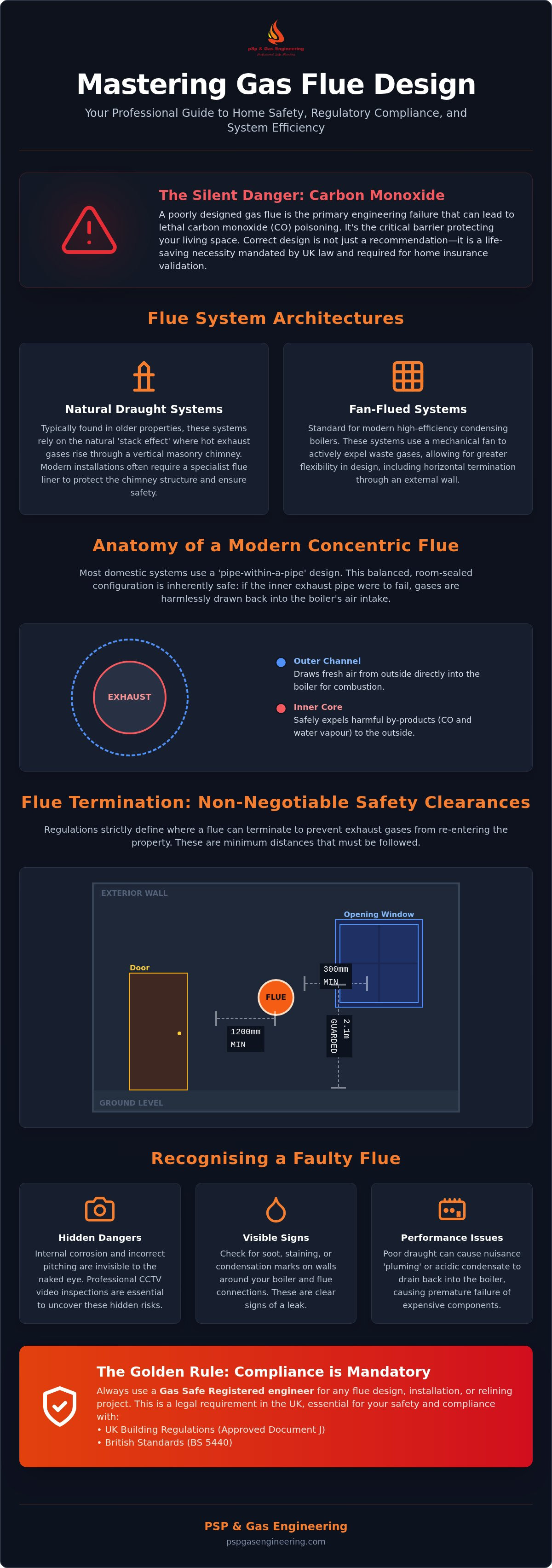
Termination points are another critical element of the design. Regulations dictate exactly where a flue can exit a building to prevent exhaust gases from re-entering the property. For instance, a terminal must be at least 300mm from an opening window and 1,200mm from a door. If the terminal is less than 2.1 metres above ground level in a public area, a protective guard is mandatory. For older properties in Croydon, a flue liner is often required to protect traditional masonry chimneys from the corrosive effects of modern exhaust gases. If you're unsure about your current setup, a professional boiler installation assessment can clarify your technical requirements.
Concentric vs Twin-Pipe Systems
Most domestic installations utilise a concentric flue. This "pipe-within-a-pipe" design pulls fresh air into the boiler through the outer layer whilst expelling exhaust through the inner core. It's a fail-safe configuration; if the inner pipe develops a leak, the gases are simply drawn back into the combustion chamber rather than into your home. Twin-pipe systems are reserved for more complex installations where the flue run exceeds the length limits of a standard concentric setup. Both designs create a "balanced flue" environment, meaning the appliance is room-sealed and doesn't rely on internal room ventilation for oxygen.
Flue Accessories and Support
Stability is essential for long-term safety. Support brackets must be placed at regular centres to prevent sagging, which can lead to joint separation and dangerous leaks. Sagging is often one of the physical signs of a faulty flue that an engineer looks for during a routine inspection. For flues hidden within ceiling voids, the law requires inspection hatches at every joint. These hatches allow Gas Safe registered engineers to visually verify that the entire run is intact. Finally, condensate traps are integrated into high-efficiency systems to safely manage the acidic liquid produced during the heating process, preventing it from damaging the internal components of the boiler.
UK Regulations and British Standards for Flue Design
Compliance with UK Building Regulations is the foundation of any safe gas installation. Approved Document J provides the legal framework for combustion appliances, with the most recent significant amendments having taken effect on 1 October 2022. These rules dictate everything from the materials used to the exact path a flue must take through a property. Alongside these regulations, engineers must adhere to BS 5440-1 for flueing and BS 5440-2 for ventilation requirements. These standards ensure that your heating system has a sufficient air supply and that exhaust gases are discharged safely without risk of re-entry into the building.
Specific measurements are non-negotiable under these British Standards. For example, a flue terminal must be positioned at least 300mm from an opening window or air vent and 1,200mm from a door. In the narrow streets of Croydon and Thornton Heath, achieving these clearances in Victorian terrace houses requires meticulous planning. If a flue passes through a combustible wall or roof space, it must be sleeved or fire-protected to prevent heat transfer. When these distances or protection measures are ignored, the physical warning signs of a faulty flue, such as heat damage to internal finishes or soot staining, often appear quite quickly.
Concealed Flues in Voids: The 2026 Standards
Modern safety standards require that every joint in a flue system is visible for inspection. This is a particular challenge for flues that run through ceiling or wall voids. If your flue is concealed, inspection hatches must be installed at strategic points. If a Gas Safe registered engineer cannot visually verify the integrity of the entire flue length during a service, they are legally required to classify the system as "At Risk." This classification can lead to your gas supply being turned off for safety reasons until the flue is made accessible.
Landlord Responsibilities and Certification
For property managers, flue compliance is directly tied to the annual landlord gas safety certificate London. Landlords have a legal duty to ensure all flues are safe and functioning correctly. In London, where the average cost for this inspection ranges from £85 to £120, the check must include a thorough examination of the flue's termination and support. Failing to maintain a compliant venting system can lead to heavy fines or criminal prosecution. Recognising the early signs of a faulty flue is essential for landlords to avoid these legal repercussions and ensure tenant safety.
Identifying Signs of a Faulty Flue with Video Inspections
Relying on a visual check from the pavement is a common mistake that leaves property owners vulnerable. Whilst you might see that a terminal is in place, you cannot assess the internal condition of the pipe or the masonry from the ground. This limitation is why many homeowners fail to spot the internal signs of a faulty flue, such as hairline cracks in the liner or debris accumulation that restricts airflow. A professional integrity test, which includes pressure monitoring and smoke pellet testing, is the only way to guarantee that the system remains gas-tight.
Common design errors often remain hidden until a specialist diagnostic is performed. Excessive bends in a flue run, for example, create resistance that a boiler's fan may not be able to overcome, leading to frequent lockouts. Similarly, an incorrect pitch can lead to acidic condensate pooling in joints, causing them to corrode and leak over time. High-definition CCTV technology eliminates the guesswork by providing a clear view of these structural flaws before they lead to a dangerous situation or an expensive system failure.
The Role of CCTV Flue Inspections
High-definition cameras allow our engineers to navigate the complex, vertical masonry flues common in Thornton Heath and Croydon properties. These cameras identify spillage points where combustion gases might be seeping into the property through degraded mortar or loose joints. For landlords, this technology provides incontrovertible digital evidence of a system's condition, making it much easier to manage insurance requirements or prove regulatory compliance during a standard safety audit.
When to Consider Flue Relining
When a video inspection reveals that a masonry chimney is no longer structurally sound, relining is the most effective solution. Traditional chimneys are often too large for modern, high-efficiency boilers, which leads to poor draught and excessive condensation. By utilising flue relining services London, you can adapt an existing chimney for a modern appliance. This process involves installing a twin-wall flexible liner that protects the building's fabric and ensures that all exhaust gases are expelled efficiently.
If you are planning a new boiler installation or suspect your existing chimney is compromised, booking a professional CCTV video inspection is the most reliable first step to ensure your home's safety.
Professional Flue Design and Installation in Croydon
South London's architectural diversity presents unique challenges for gas safety. From the high ceilings of Victorian terraces in Thornton Heath to the compact utility cupboards of modern Croydon apartments, a one-size-fits-all approach to venting simply doesn't work. PSP & Gas Engineering treats flue design as the foundational step of any heating project. We assess the specific geometry of your building to ensure optimal draught and total compliance. Our engineers are trained to identify the subtle physical signs of a faulty flue, such as staining on external brickwork or internal dampness, which generic installation manuals often overlook.
We believe that a safe flue is a prerequisite for a successful boiler installation Croydon. By integrating the flue path into the initial design phase, we prevent the need for costly retrofitting later. Every project we undertake is strictly aligned with the Gas Safe Register standards, ensuring that your property remains protected against the risks of poor ventilation. This methodical planning is what differentiates a standard trade service from a specialist engineering solution. It provides the peace of mind that your system is built for long-term durability.
Bespoke Solutions for Complex Properties
Listed buildings and conservation areas in Croydon require a sensitive touch. We work closely with architects to design flue routes that respect the aesthetic integrity of historical properties whilst maintaining total safety. In multi-storey apartment blocks, managing vertical flue runs requires precise calculations to ensure proper pressure and prevent the recycling of exhaust gases. Our team specialises in these bespoke configurations, providing a "safe pair of hands" for even the most technically demanding environments where standard flues are not viable.
Why Credential Checks Matter
Your safety depends on the competence of your engineer. Before any work begins, you should verify that your specialist appears on the Gas Safe Register. This registration is your guarantee that the engineer is qualified to handle the complexities of flue design and installation. Upon completion, we provide a comprehensive gas safe compliance certificate, which is essential for home insurance and future property sales. If you've noticed any signs of a faulty flue or are planning a new installation, booking a professional consultation is the most secure way to protect your home and your investment.
Securing Your Property with Professional Flue Design
Ensuring your gas flue system is designed with precision is the most effective way to protect your home from the silent risks of combustion by-products. By adhering to the strict requirements of Approved Document J and current British Standards, you create a venting solution that's both efficient and legally compliant. It's vital to remember that internal corrosion or blockages are often invisible from the ground. Staying alert to the physical signs of a faulty flue and investing in regular professional assessments will prevent minor issues from becoming dangerous failures.
As specialists in CCTV video flue inspections, PSP & Gas Engineering provides the technical expertise required for complex London properties. Our Gas Safe registered engineers serve Croydon and Greater London, offering bespoke design solutions that prioritise your safety and peace of mind. Whether you're planning a new boiler installation or need to verify the integrity of an existing chimney, our team is ready to assist.
Request a professional flue design consultation from PSP & Gas Engineering today to ensure your heating system remains a safe pair of hands for your household.
Frequently Asked Questions
What is the maximum length a gas boiler flue can be?
The maximum length of a gas boiler flue depends entirely on the specific appliance manufacturer and the boiler's output. Most modern condensing boilers allow for a maximum horizontal run of around 10 to 12 metres, whilst vertical flues can often extend further. Every 90-degree bend added to the run typically reduces the total allowable length by approximately one metre. Our Croydon engineers always calculate these distances precisely during the design phase to ensure safe operation.
Can a gas flue be installed horizontally through a wall?
Horizontal flues are the standard configuration for the majority of modern boiler installations in the UK. These systems, known as fan-flued or balanced flues, use a mechanical fan to expel gases through an external wall. This setup is highly efficient and allows for flexible boiler placement. However, the terminal must be positioned away from opening windows and doors to comply with Approved Document J of the Building Regulations and ensure harmful gases don't re-enter the property.
Do I need a new flue when I replace my boiler?
You should almost always install a new flue when replacing your boiler. Modern condensing boilers operate at different temperatures and pressures than older models, meaning your existing flue may be incompatible or unsafe. Using an old flue can also void your manufacturer's warranty. During a boiler installation in Croydon, we verify that the new venting system is perfectly matched to the appliance for maximum safety and performance, ensuring the entire system meets current standards.
What are the rules for gas flue termination near a window?
Under current UK regulations, a flue terminal must be situated at least 300mm away from an opening window, air vent, or any other opening into the building. This distance ensures that exhaust gases cannot drift back into your living space. If the terminal is located directly below an opening window, the minimum distance increases to 600mm. These measurements are critical for preventing the dangerous accumulation of carbon monoxide within your home and maintaining a safe environment.
How do I know if my flue is blocked or leaking?
Physical indicators are the most reliable way to identify issues. Look for dark stains, soot, or discolouration on the wall around the boiler or the external terminal. If your boiler frequently cuts out or the pilot light has a lazy yellow flame instead of a crisp blue one, these are significant signs of a faulty flue. We recommend using a professional video inspection to identify internal blockages or cracks that aren't visible to the naked eye.
Is it legal to box in a gas flue without inspection hatches?
It is not legal to box in a gas flue that passes through a ceiling or wall void without providing adequate inspection hatches. Since 2012, regulations have mandated that every joint in a flue run must be visible for visual examination by a Gas Safe registered engineer. If your flue is concealed and lacks these hatches, an engineer may be forced to classify the system as "At Risk" and disconnect your gas supply until the issue is resolved.
Can I use an existing chimney for a new gas fire or boiler?
You can often use an existing masonry chimney, but it usually requires a professional relining service first. Traditional chimneys are often too large for modern high-efficiency appliances, which can lead to poor draught and the buildup of acidic condensate. Relining the chimney with a twin-wall flexible liner creates a dedicated, gas-tight path for exhaust gases. Our team in Croydon uses CCTV equipment to assess whether your existing chimney is suitable for relining before any work begins.
How often should a gas flue be professionally inspected?
Your gas flue should be professionally inspected at least once every twelve months as part of your annual boiler service. For landlords in Croydon and Greater London, this annual check is a legal requirement to maintain a valid Gas Safety Certificate. Regular inspections help identify the early signs of a faulty flue, such as joint separation or internal corrosion, ensuring that your heating system remains safe and efficient throughout the winter months and beyond.


