
Would you trust a century-old brick structure to safely channel toxic gases away from your family without a modern safety barrier? For many owners of period properties across the capital, an unlined chimney is a silent risk that often goes unnoticed until a professional survey or a suspected leak occurs. Determining the cost of flue relining London involves more than just a simple material quote. It requires a precise understanding of the intricate logistics and safety standards unique to the city's historic architecture.
It's understandable to feel concerned about the complexity of these projects, especially when specialist scaffolding or strict Gas Safe regulations are involved. This guide provides the professional clarity you need to make a secure investment in your home's infrastructure. We will examine the technical variables that dictate pricing, from material durability to access requirements, whilst ensuring your installation meets the latest 2026 Building Regulations for complete peace of mind.
Key Takeaways
- Understand how property height and access logistics, such as the requirement for scaffolding or cherry pickers, directly influence the total cost of flue relining London.
- Learn why Gas Safe registration is a legal necessity for relining projects to ensure full compliance with 2026 Building Regulations and protect your home from carbon monoxide risks.
- Discover how high-definition CCTV inspections prevent unexpected expenses by identifying internal blockages or structural collapses before the installation work begins.
- Recognise the specific vulnerabilities of London’s Victorian and Edwardian masonry flues and how a modern liner restores the safety and efficiency of your venting system.
- Gain insight into the professional installation process, including how engineers protect your home’s interior and precisely secure the new conduit within the chimney stack.
The Fundamentals of Flue Relining for London Properties
Determining the cost of flue relining London begins with understanding exactly what the process involves. Flue relining is the installation of a specialised, continuous conduit within an existing chimney stack. This procedure creates a sealed channel for combustion gases to exit the property safely. Many homeowners are surprised to learn that their traditional masonry chimney was not originally designed for modern high-efficiency gas appliances. For a foundational overview of the components involved, you can read more about What is a Flue Liner? to understand the different materials and their specific purposes.
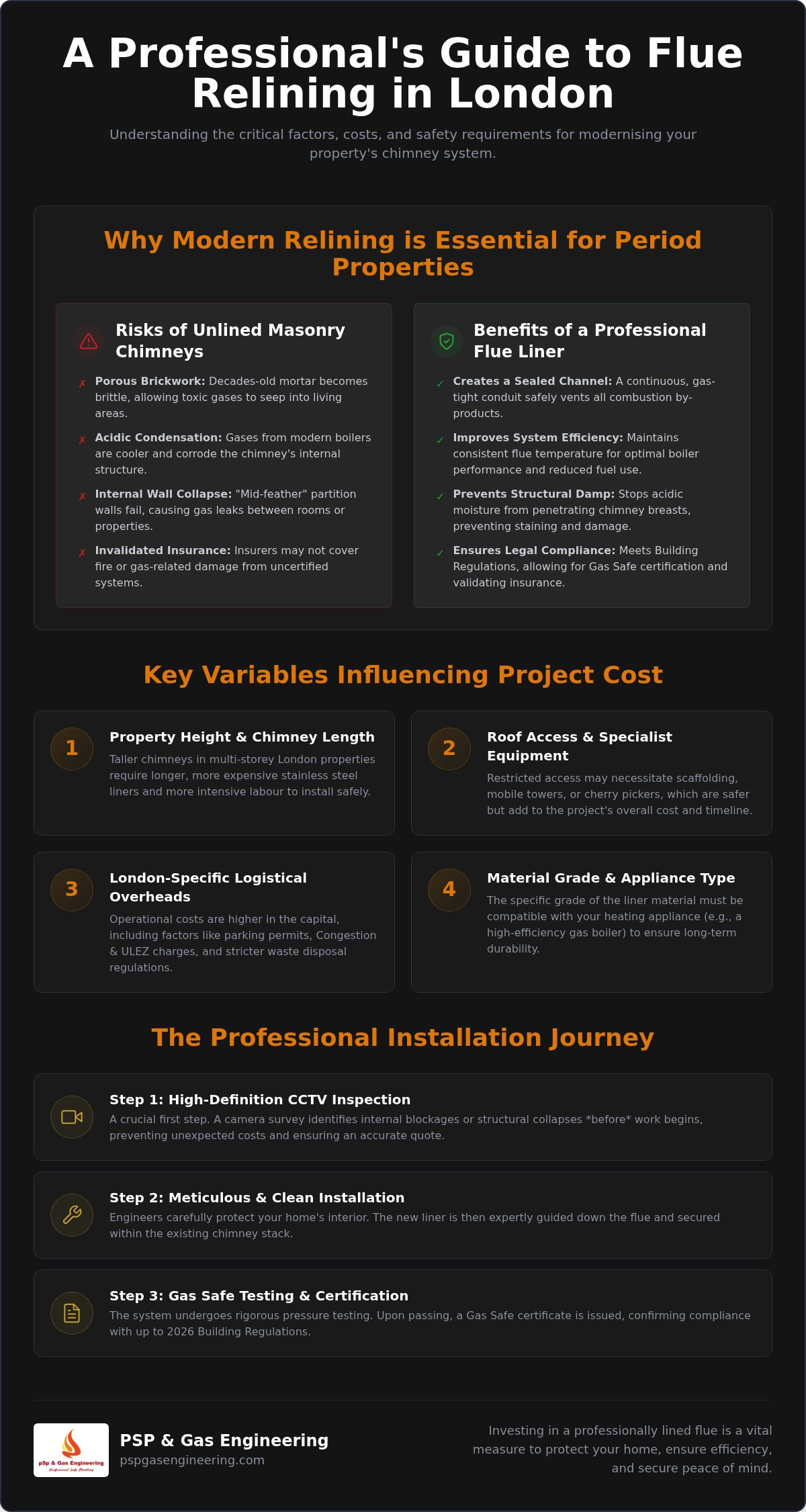
London’s Victorian and Edwardian properties typically feature masonry flues constructed with lime mortar. Over decades, these materials become porous and brittle. When you upgrade to a modern gas boiler, the appliance produces cooler, more acidic flue gases compared to old open fires. These gases don't rise as quickly, which leads to condensation that eats away at the internal brickwork. A liner acts as a protective sleeve, containing carbon monoxide and preventing it from seeping through microscopic cracks into your living spaces.
Beyond the immediate safety benefits, a correctly sized liner improves the efficiency of your heating system. By maintaining a consistent temperature and draught within the flue, the boiler operates under optimal conditions, which can help reduce fuel consumption. It also prevents dampness and salt staining on chimney breasts, which are common structural issues in older London terraces where moisture has penetrated the brickwork.
Why Older Chimneys Fail
Traditional chimneys rely on "mid-feather" walls. These are thin internal brick partitions that separate adjacent flues within a single stack. In many London homes, these walls have partially collapsed or become brittle due to long-term exposure to acidic condensate. When these partitions fail, toxic gases can "cross-talk" between different rooms or even neighbouring flats. Flue integrity is the system’s ability to safely exhaust gases without leakage.
The Legal Requirement for Relining
Relining is often a legal necessity under Building Regulations Approved Document J. This document mandates that any combustion appliance must have a flue that is safe, gas-tight, and appropriately sized for the specific heat output. If a flue fails a professional pressure test, a gas safe compliance certificate cannot be issued. This has serious implications for your property insurance. Most insurers will not cover fire or gas-related damage if the installation has not been certified by a Gas Safe registered engineer. Ensuring your chimney is lined correctly is a critical step in maintaining the safety and regulatory standing of your home.
Variables Influencing the Cost of Flue Relining in London
London’s skyline is defined by its verticality. From four-storey townhouses in Kensington to terraced homes in Croydon, property height is a primary driver of the cost of flue relining London. Taller chimneys require longer continuous lengths of high-grade stainless steel. They also demand more intensive labour as engineers must safely guide the liner through a greater vertical distance without snagging on internal masonry. Every extra metre of material and time spent on the roof contributes to the final investment.
Local logistics also play a significant role. Unlike rural projects, a London installation must account for parking permits, the Congestion Charge, and the Ultra Low Emission Zone (ULEZ). Waste disposal in the capital is also more strictly regulated. These operational overheads are necessary for a fully compliant, professional service. They ensure that all technical and environmental standards are met without compromising the safety of the property or the public.
Access Challenges in High-Density Areas
Many London streets offer restricted roof access. If a chimney stack is positioned away from a flat roof or a safe ladder point, engineers may require scaffolding. Whilst a full scaffold provides the highest safety standard, it adds to the project timeline. In some cases, specialised equipment like mobile towers or cherry pickers can be a more cost-effective alternative. This is particularly true for properties with fragile chimney stacks where traditional ladder work poses a structural risk. If you are unsure about your property's requirements, a site assessment by a specialist engineer can clarify the safest access route.
Material Grades and Appliance Compatibility
The type of heating system you have dictates the material grade required. For most modern gas boilers, 316-grade stainless steel is the professional standard for flexible liners. This material provides the necessary resistance to the acidic condensate mentioned in previous sections. If you are currently researching your boiler installation cost Croydon, remember that the flue system is a separate but vital component of that investment. All materials must align with UK Building Regulations (Approved Document J) to ensure the appliance operates safely. The liner diameter must precisely match the boiler's output to maintain the correct pressure and exhaust flow rate.
The Value of CCTV Inspections in Accurate Cost Estimations
A simple visual inspection from the fireplace or roofline is rarely enough to determine the true state of a chimney. Whilst a stack may look sturdy from the street, the internal masonry often hides decades of degradation that only a high-definition video survey can reveal. Using specialised camera equipment is a critical step in providing an accurate estimate for the cost of flue relining London. Without this technical insight, engineers are essentially working blind, which increases the risk of project delays or unexpected budgetary spikes once the installation begins.
Identifying Obstructions and Voids
During a professional video inspection, engineers look for specific structural hurdles that could impede a new liner. Common issues identified include:
- Historical bird nests or organic debris that could snag and tear the liner.
- Fallen bricks or mortar "snobs" protruding into the flue space.
- Internal "offsets" or sharp bends that require a specific grade of flexible material.
This level of detail is supported by Gas Safe Register guidance on flue inspections, which emphasises the importance of verifying the entire length of the venting system. CCTV diagnostics ensure the liner is perfectly seated from top to bottom, eliminating the risk of gas pockets forming in internal voids.
Transparent Reporting for Landlords
For property owners in the rental sector, video evidence provides a layer of accountability that traditional written reports lack. HD footage serves as definitive proof of compliance when applying for a landlord gas safety certificate London. It creates a clear baseline record of the flue's internal condition, which is invaluable for future maintenance cycles or insurance audits. This transparent approach is equally vital in the business sector. When delivering commercial plumbing services London, technical diagnostics allow for precise project management across larger, more complex chimney systems. By identifying whether a chimney requires a professional sweep or structural repair, we provide a transparent breakdown of the cost of flue relining London before any physical work starts.
The Installation Journey: Professional Standards and Safety Compliance
The physical installation of a chimney liner is a precise engineering task that requires meticulous attention to detail. Whilst homeowners often focus on the material expenses, a significant portion of the cost of flue relining London covers the expert labour required to ensure the system is gas-tight and compliant with safety standards. Professional installers prioritise the protection of your home's interior before any technical work commences. This involves using specialised heavy-duty dust sheets and floor protection to contain any soot or masonry debris that may be dislodged during the process.
Step-by-Step Installation Process
A systematic approach ensures that every component of the venting system performs as intended. Following the initial site preparation, the process typically follows these four critical stages:
- Step 1: Clearing and Preparation: The flue is thoroughly cleared of any historical soot or debris to provide a smooth, unobstructed passage for the new conduit.
- Step 2: The Dropping Process: The flexible liner is carefully lowered from the chimney stack. Engineers maintain structural alignment to prevent the material from kinking or snagging against internal brickwork.
- Step 3: Termination and Sealing: Once in position, the liner is secured at the top with a suitable pot and cowl. At the base, a register plate is installed to seal the chimney opening and prevent heat loss or debris from entering the room.
- Step 4: Appliance Connection and Testing: The liner is connected to the gas appliance using certified adaptors. A critical smoke test or spillage test is then performed to verify that the draught is sufficient and that no gases are leaking into the property.
This final integrity test provides the ultimate peace of mind, confirming that the new system is entirely safe for daily use. If you are planning a renovation or upgrading your heating system, you can request a professional flue relining survey to ensure your installation meets these high standards.
Certification and Handover
Completion of the physical work is not the final step of the journey. To remain compliant with UK Building Regulations, a mandatory notice plate must be affixed to the property, usually near the gas meter or the appliance itself. This plate provides essential technical data for future engineers, including the liner grade and installation date. Your installer will also update the property’s gas safety records and provide a clear maintenance schedule. Regular inspections are necessary to ensure the flue remains clear and the termination points stay secure over the liner's expected lifespan. This transparent handover ensures you understand the long-term value and safety requirements of your investment in the cost of flue relining London.
Selecting a Gas Safe Specialist for Your London Flue Project
Choosing the right professional for your installation is just as significant as the materials selected. In a city where property types range from dense Victorian terraces in Thornton Heath to complex multi-storey developments in Croydon, local expertise is indispensable. We understand the specific architectural nuances of London’s building stock. This knowledge allows us to navigate local access restrictions and heritage considerations that often complicate the cost of flue relining London for less experienced contractors.
It is vital to distinguish between a general chimney sweep and a Gas Safe registered engineer. Whilst a sweep is essential for maintenance and cleaning, only a Gas Safe professional is legally permitted to install or modify a gas flue system. This certification provides the necessary assurance that your installation complies with current safety legislation. We operate as a "safe pair of hands," prioritising technical precision and safety above all else.
The PSP & Gas Engineering Difference
Our approach is defined by methodical diagnostics. We utilise state-of-the-art camera equipment to provide a transparent view of your chimney’s internal condition. This precision extends to our work with business owners, where we manage complex commercial gas safety certificate London requirements with the same level of care as our residential projects. To ensure your home or business remains protected, we offer 24/7 emergency support for peace of mind in gas-related situations.
Get a Professional Estimate
To provide an accurate initial guide for the cost of flue relining London, we typically require details regarding your property’s height, the age of the structure, and your current appliance type. A professional site survey remains the most effective tool for preventing project delays and identifying hidden structural issues. By choosing our flue relining services London, you receive a comprehensive assessment tailored to your specific needs. Contact PSP & Gas Engineering for a professional flue relining quote today to secure your home’s safety and efficiency.
Securing Your Home’s Future with Professional Flue Standards
Investing in a high-quality chimney liner is about more than structural maintenance; it's a commitment to the long-term safety and efficiency of your property. By utilising specialist CCTV diagnostic equipment, we remove the guesswork from the installation process. This ensures that the cost of flue relining London is transparent and based on technical reality rather than assumptions. This methodical approach identifies internal faults before work begins, protecting your household from the risks of carbon monoxide leaks and structural decay.
Our Gas Safe registered engineers provide the technical precision required to meet strict 2026 Building Regulations, offering a "safe pair of hands" for these high-stakes tasks. Whether you require a routine upgrade or 24/7 emergency assistance across London and Croydon, we are here to provide professional solutions that stand the test of time. Take the first step toward a safer, more compliant heating system today by engaging with local specialists who prioritise your peace of mind.
Request a Professional Flue Relining Quote
Frequently Asked Questions
How long does a typical flue relining project take in a London property?
A standard installation typically takes one full working day to complete. For a mid-terrace property in Croydon, our engineers can usually finish the dropping and sealing process within six to eight hours. More complex projects involving taller stacks or restricted access might extend into a second day. We always provide a clear timeline during the initial site survey to ensure you can plan your schedule around the work.
Will relining my chimney cause a significant amount of mess in my home?
No, professional installers take extensive precautions to protect your interior. We use heavy-duty dust sheets and specialised seals at the chimney base to contain soot and masonry debris. Whilst the process involves physical work within the stack, the mess is kept to an absolute minimum. Our team ensures the work area is left clean and tidy, mirroring the precision we apply to the technical aspects of the installation.
Is it a legal requirement to use a Gas Safe engineer for flue relining?
Yes, it's a legal requirement to use a Gas Safe registered engineer for any work involving a gas flue. Relining is classified as building work under UK regulations and must be reported to local authority Building Control. Using a registered professional ensures your installation is safe and compliant. This is a critical factor when considering the cost of flue relining London, as uncertified work can invalidate your home insurance.
How often should a relined gas flue be inspected for safety?
A relined gas flue should be inspected at least once every twelve months. This usually takes place during your annual boiler service or gas safety inspection. Regular checks ensure the termination points remain secure and the liner is free from obstructions like bird nests. For landlords in London, these annual checks are a mandatory part of maintaining a valid Gas Safe certificate for the property.
Can you reline a flue if the chimney has several bends?
Yes, flexible stainless steel liners are specifically designed to navigate bends within a chimney stack. UK building regulations allow for a maximum of four bends in a flue system, with each bend not exceeding a 45-degree angle. We use high-definition video inspections to map these bends before installation. This ensures the liner can be seated correctly without kinking, which is vital for maintaining a safe and efficient draught.
What are the most common signs that a flue liner has failed?
Common indicators of failure include damp patches on the chimney breast or white salt deposits on the brickwork. You might also notice small pieces of mortar or brick debris falling into the fireplace. The most serious sign is the activation of a carbon monoxide alarm, which suggests gases are leaking into the room. If you suspect a failure, we recommend an immediate CCTV inspection to verify the internal condition.
Does flue relining improve the performance of my gas boiler?
Yes, a correctly sized liner significantly improves the performance and longevity of your gas boiler. By creating a consistent draught, it allows the appliance to exhaust gases more efficiently. It also prevents the formation of acidic condensate that can damage both the boiler and the chimney structure. This improved efficiency is a key component of the overall cost of flue relining London, as it helps prevent expensive future repairs.
Is scaffolding always necessary for chimney relining in London?
No, scaffolding isn't always a requirement, but it's often the safest option for London’s taller properties. Our engineers assess each site individually to determine if ladders or cherry pickers are sufficient. If a chimney stack is particularly fragile or difficult to reach safely, we will recommend scaffolding to comply with Health and Safety legislation. This assessment is a standard part of our methodical diagnostic process during the initial survey.


