
What if the lowest quote you receive for your annual gas safety inspection is actually the most expensive mistake you'll make as a landlord this year? It's natural to feel frustrated by the varying prices quoted across London and Croydon, especially when you're trying to manage a property budget whilst ensuring your tenants remain protected. You're likely wondering exactly how much is a gas safety certificate in the current market and why some engineers charge significantly more than others for what seems like the same piece of paper.
We understand that navigating gas regulations can feel overwhelming, particularly when you're balancing the fear of failing an inspection against the need for fair pricing. This guide clarifies the specific factors that influence the cost of a CP12 and explains how to ensure your property meets all legal safety standards without falling victim to hidden charges or cut-price inspections that overlook critical faults. You'll gain the clarity needed to secure a valid certificate and the peace of mind that comes from professional precision.
We'll provide a detailed breakdown of the 2026 pricing landscape, explain the legal requirements for various appliance types, and highlight why a thorough flue inspection is vital for tenant safety. By the end of this guide, you'll know exactly what to expect from a professional Gas Safe registered expert who treats your property's safety as their priority.
Key Takeaways
- Understand your legal obligations under the Gas Safety (Installation and Use) Regulations to ensure full compliance for 2026.
- Learn exactly how much is a gas safety certificate by identifying the key factors that influence pricing, including the total number of appliances requiring testing.
- Discover why technical diagnostics and flue integrity assessments are essential for preventing carbon monoxide risks and ensuring a successful inspection.
- Master a practical roadmap for organising your annual CP12, including how to verify an engineer's credentials before they arrive at your property.
- Recognise the long-term value of a safety-first approach and how choosing a local specialist provides greater security for your tenants and your investment.
Understanding the Gas Safety Certificate (CP12) in 2026
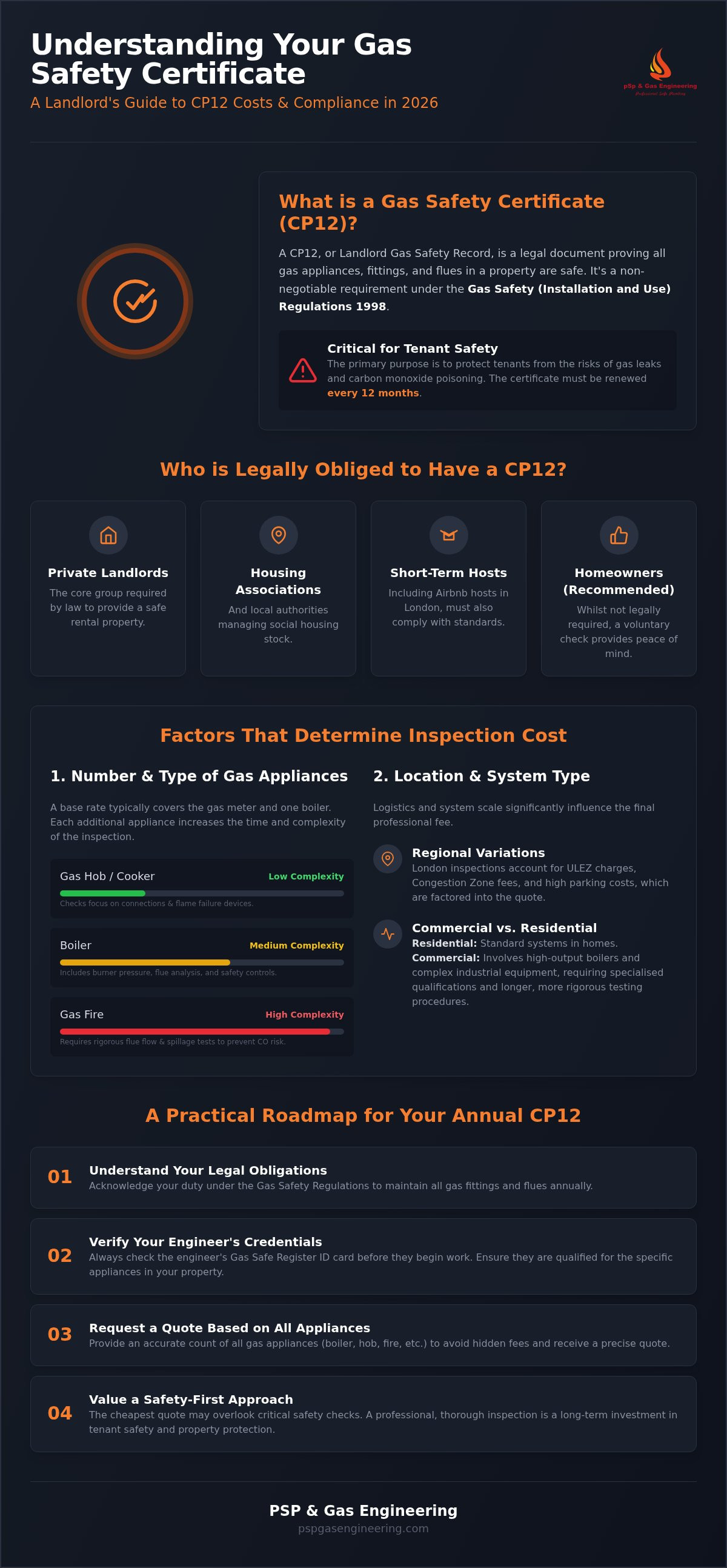
The Landlord Gas Safety Record, universally known as the CP12, is the definitive document proving that gas appliances in a property have been inspected by a Gas Safe registered engineer. Under the Gas Safety (Installation and Use) Regulations 1998, landlords carry a non-negotiable legal duty to ensure all gas fittings and flues are maintained in a safe condition. This isn't just a recommendation; it's a statutory requirement that must be renewed every 12 months. When landlords ask how much is a gas safety certificate, they're often looking for a simple number, but the real value lies in the rigorous safety check that protects tenants from the silent threat of carbon monoxide. The landlord gas safety certificate London landlords rely on serves as the primary evidence of compliance during property audits or in the event of an incident.
Who Needs a Gas Safety Certificate?
Legal obligations extend to any individual or organisation providing residential accommodation. This includes private landlords, housing associations, and local authorities. In 2026, the rise of short-term rental platforms means Airbnb hosts in London must also adhere to these strict standards. Whilst homeowners aren't legally forced to obtain a CP12, many choose to do so. A voluntary annual check provides peace of mind that their heating system is operating efficiently and safely. It's a proactive step that identifies minor issues before they escalate into expensive repairs or hazardous situations. Understanding exactly how much is a gas safety certificate requires looking at the scope of work involved, from testing gas tightness to checking safety devices on each appliance.
Commercial vs Residential Certificates
Business premises operate under a different set of technical requirements. The commercial gas safety certificate London businesses require involves inspecting high-output boilers, industrial catering equipment, and complex pipework systems. These inspections are more rigorous because the potential risks in a commercial environment are often scaled up. Testing procedures take longer and require specialised qualifications beyond standard domestic registration. This complexity is why commercial certificates carry a higher professional fee. The technical expertise required to sign off a commercial system ensures that large-scale operations remain compliant with the more stringent health and safety executive (HSE) guidelines. We focus on providing a methodical, step-by-step assessment that mirrors the careful nature of professional engineering work, ensuring every technical requirement is met with precision.
Factors That Determine the Cost of Your Gas Inspection
Determining the exact cost of compliance requires a clear understanding of what happens during the technical assessment. When landlords ask how much is a gas safety certificate, they're often surprised that the quote isn't a flat rate across all property types. The complexity of the work dictates the professional fee, as an inspection for a studio flat with a single boiler is vastly different from a four-bedroom house with multiple gas points. The goal is a precise, safety-first evaluation rather than a rushed visual check.
The Number and Type of Gas Appliances
Most providers offer a base rate that typically covers the gas meter and the primary heating boiler. Every additional appliance requires its own specific set of safety checks, which naturally extends the duration of the visit. A standard gas hob or oven is relatively straightforward to verify, focusing on flame failure devices and secure connections. However, gas fires are significantly more labour-intensive. They require rigorous flue flow and spillage tests to ensure combustion products are venting safely away from the living space. If your property contains multiple appliances, the engineer must perform individual pressure tests and safety verifications on each, ensuring the integrity of the entire gas installation.
Regional Variations and London Logistics
Location plays a critical role in the final invoice. Operating as a Gas Safe engineer in Thornton Heath or Croydon involves navigating specific logistical hurdles that aren't present in other regions. Ultra Low Emission Zone (ULEZ) charges, the Congestion Zone, and the high cost of parking in London boroughs are overheads that local businesses must manage. National firms often struggle with these variables, which can lead to inflated quotes or unreliable arrival times. Choosing a local specialist who understands these regional nuances often results in a more efficient service and a more accurate reflection of the work required. If you're managing multiple properties, it's often beneficial to consult with a local expert to streamline your annual compliance schedule.
Opting for a "budget" certificate can be a false economy. If an inspection is rushed to meet an unnaturally low price point, critical faults like failing flue seals or minor gas leaks might be overlooked. These missed issues don't just compromise tenant safety; they often result in more expensive emergency repairs or legal complications later. Investing in a thorough, methodical inspection ensures that your property remains fully compliant and your tenants stay protected, providing the professional calm that comes from knowing the job was done with precision.
Beyond the Basic Check: Professionalised Safety Standards
Whilst the initial question many landlords ask is how much is a gas safety certificate, the focus should ideally shift toward the technical rigour of the inspection itself. Professionalised safety standards move beyond a simple visual assessment to include technical diagnostics that identify hidden risks. By using advanced tools like flue gas analysers and electronic leak detectors, we provide a level of precision that a basic check cannot match. This methodical approach is designed to identify the early signs of component wear, helping you avoid the stress and high costs associated with an emergency boiler repair Croydon. It is about providing a comprehensive guarantee of competence rather than just a signature on a form.
Specialised Flue and Video Inspections
Flue integrity is statistically the most common reason for a property to fail its gas safety inspection. In many older London buildings, chimneys and internal flues may have degraded over decades, leading to potential carbon monoxide leakage. We utilise specialised video cameras to inspect the internal condition of these systems, providing a clear view of any cracks, soot build-up, or structural blockages. For properties where the flue is no longer gas-tight, our flue relining services London offer a durable solution to restore safety and efficiency. This technical diagnostic is particularly critical for 'flue in void' scenarios, where pipework passes through ceiling spaces in modern apartments and cannot be inspected by traditional means. Ensuring these hidden systems are intact is vital for preventing CO poisoning and protecting your tenants.
Comprehensive Boiler Commissioning
It's helpful to distinguish between a basic CP12 safety check and a comprehensive boiler service. A safety check ensures the appliance is safe to operate at that moment, verifying that safety devices work and gas pressures are correct. In contrast, a full performance service involves a deep clean of the heat exchanger and burner, alongside optimising the combustion process. When landlords consider how much is a gas safety certificate, they should account for the long-term savings generated by this level of care. Maintaining high efficiency levels reduces monthly fuel bills for tenants and significantly extends the operational lifespan of the boiler. This proactive maintenance schedule ensures that your heating system remains a reliable asset, reflecting a safety-first mentality that prioritises the welfare of the community.
How to Organise Your Inspection and Avoid Hidden Fees
Managing your annual compliance requires more than just booking a date. It involves a structured roadmap to ensure the visit is efficient and final. While the primary concern for many property owners is how much is a gas safety certificate, the hidden costs usually stem from aborted visits or return call-outs due to poor preparation. By following a clear checklist, you maintain control over the process and ensure your property remains a safe environment for your tenants. A methodical approach doesn't just save time; it provides the professional calm that comes from knowing every technical requirement is addressed during the first visit.
Verifying Gas Safe Registered Credentials
Verification is the first step in protecting your investment and your tenants. Every legitimate engineer carries a Gas Safe ID card featuring a unique licence number and a clear photograph. It's vital to check the back of this card to confirm they're qualified for the specific appliances in your property. Some engineers might be licensed for domestic boilers but not for gas fires or unvented cylinders. Using uncertified labour doesn't just invalidate your insurance; it's a serious breach of safety regulations. Confirming credentials via the official Gas Safe Register provides the professional security you need, ensuring your documentation is legally binding and accurate.
Preparing the Property for the Engineer
Preparation is the most effective way to keep your compliance costs predictable. Engineers require a live gas supply to perform essential safety tests, such as checking the burner pressure and gas rate. If the property uses a pre-payment meter, you must ensure there's sufficient credit before the appointment begins. Clear access is equally critical. If an appliance is located in a loft or a cluttered cupboard, the area must be accessible to allow for a thorough inspection. Reviewing the gas safe compliance certificate checklist can help you identify potential access issues before they lead to a wasted call-out fee.
Locating previous safety records and installation manuals can significantly speed up the process. These documents provide the engineer with essential data regarding the specific requirements of your heating system, ensuring that performance tests are tailored to the manufacturer's specifications. This level of detail ensures that the final Landlord Gas Safety Record is accurate and legally robust. A well-prepared property allows our engineers to work with the precision and care your home deserves. To ensure your documentation is handled by a seasoned professional, you can book your gas safety inspection with our local team today.
Securing Professional Gas Safety in Croydon and London
Selecting a qualified provider is the final, most critical step in your annual compliance journey. While property owners naturally need to know how much is a gas safety certificate, the true value of the document lies in the professional rigour behind the signature. A safety-first mentality ensures that high-stakes technical tasks are handled with absolute precision, shifting the focus from the stress of maintenance toward a feeling of total protection. By choosing an expert who prioritises durability and regulatory compliance, you ensure that your property meets every legal standard for 2026 without compromise.
Why Choose a Local Specialist Over a National Firm?
Partnering with a dedicated local business in South London provides a level of service that large national firms often struggle to match. Our engineers possess an intimate knowledge of Croydon's varied architecture, from traditional Victorian terraces with aging chimney systems to contemporary developments requiring specialised video flue diagnostics. This regional expertise means we're already familiar with the common technical hurdles found in local properties, allowing for a more efficient and thorough inspection. We offer faster response times for urgent requirements, ensuring your documentation is ready exactly when you need it. The personal accountability of an independent specialist provides a comprehensive guarantee of care that builds cumulative trust over time.
Next Steps for Landlords and Homeowners
To ensure a seamless compliance process, we recommend scheduling your inspection at least two weeks before your current certificate expires. This window allows for any necessary remedial work to be completed without the pressure of a looming deadline. Landlords often find the greatest value in requesting a combined boiler service alongside their CP12 inspection. This proactive strategy ensures your heating system is safe and operating at maximum efficiency, which significantly reduces the risk of expensive emergency call-outs during the colder months. When evaluating how much is a gas safety certificate, it's worth considering the peace of mind provided by 24/7 emergency support, a service we provide to ensure our local clients are never left without assistance.
We encourage you to reach out for a transparent, no-obligation quote that reflects the specific needs of your property. Our approach is grounded in clarity and honesty; we provide a matter-of-fact presentation of the work required with no hidden charges. Securing your professional gas safety record is a vital investment in the welfare of your tenants and the longevity of your property assets. Contact our team today to experience the unwavering reliability of a local expert who treats your safety as a non-negotiable priority.
Securing Your Property's Compliance for 2026
Maintaining a safe and compliant rental property requires looking beyond the initial invoice. While understanding how much is a gas safety certificate is essential for budgeting, the true priority is the technical accuracy of the inspection. We've explored how appliance numbers and London-specific logistics influence costs, alongside the vital role of video flue diagnostics in preventing carbon monoxide risks. Professional compliance isn't just about a piece of paper; it's about the security that comes from a "safe pair of hands" handling your technical requirements.
By preparing your property and verifying your engineer's credentials, you avoid hidden fees and ensure a first-time pass. Our team of Gas Safe registered engineers provides a methodical, safety-first service across South London and Croydon, specialising in complex diagnostics that national firms often overlook. We invite you to request a professional Gas Safety Inspection quote from PSP & Gas Engineering to secure your 2026 certification with confidence. Protecting your tenants and your investment starts with a commitment to high-quality standards and professional care.
Frequently Asked Questions
Is a gas safety certificate a legal requirement for homeowners?
Homeowners aren't legally mandated to hold a gas safety certificate, but an annual check is strongly advised for personal safety. Whilst landlords must comply with the Gas Safety (Installation and Use) Regulations 1998, homeowners should view an inspection as a proactive maintenance step. It ensures your system operates efficiently and identifies potential carbon monoxide leaks early. Investing in a professional assessment provides the same peace of mind that regulated rental properties receive.
How often do I need to renew my landlord gas safety certificate?
You must renew your landlord gas safety certificate every 12 months. Regulations allow you to arrange the inspection up to two months before the current expiry date whilst still maintaining the original renewal date. This "stay-set" period provides flexibility to organise access with tenants without losing time on your annual coverage. Keeping a consistent schedule ensures you remain fully compliant with UK law and provides a continuous record of safety for your property portfolio.
Does the cost of the certificate include any necessary repairs?
The fee you pay for an inspection covers the professional assessment and documentation, not the cost of remedial repairs. When asking how much is a gas safety certificate, it's important to understand that if an engineer identifies a fault, they will provide a separate quote for the necessary work. We maintain a transparent approach, clearly distinguishing between the inspection fee and any subsequent repairs required to bring an appliance back to a safe, compliant standard.
Can I get a gas safety certificate if I don’t have a boiler?
You can certainly obtain a gas safety certificate even if your property doesn't have a boiler. The inspection covers any gas-burning appliance, such as a gas hob, oven, or a standalone gas fire. The engineer will also perform a gas tightness test on the entire pipework system from the meter onwards. Regardless of the heating source, every gas installation in a rental property requires a valid CP12 to satisfy legal safety requirements for tenants.
How long does a standard gas safety inspection typically take?
A standard gas safety inspection typically takes between 30 and 60 minutes for a residential property. The exact duration depends on the number of appliances requiring a check and the complexity of the flue system. If the engineer needs to perform specialised video diagnostics or if access to the meter is restricted, the process may take longer. We prioritise a methodical, thorough approach over speed to ensure every safety device and connection is verified with precision.
What happens if my property fails the gas safety inspection?
If your property fails the inspection, the engineer will issue a Warning Notice and may need to disconnect or cap the unsafe appliance. The engineer will categorise the fault as Immediately Dangerous or At Risk based on the severity of the hazard. You must arrange for repairs to be carried out by a Gas Safe registered professional before the appliance can be used again. Once resolved, a new certificate is issued to confirm the property is compliant.
Do I need a separate certificate for each rental property I own?
You require a separate gas safety certificate for every individual rental property you own. Each CP12 is specific to a single address and the unique set of gas appliances installed at that location. If you own a block of flats, every unit with its own gas supply and meter needs an individual record. This ensures that every tenant has a documented guarantee that their specific living environment meets the required national safety standards.
What information is included on a valid CP12 record?
A valid CP12 record must include the property address, the landlord's details, and the name and signature of the Gas Safe registered engineer. It lists every appliance inspected, its location, and the results of the specific safety tests performed. Crucially, it must feature the engineer's unique licence number and the date of the inspection. This document serves as your primary evidence of compliance and must be provided to your tenants within 28 days of the check.


