
A hot water cylinder is far more than just a storage tank; it's a safety-critical pressure vessel that serves as the heart of your home's plumbing system. If you've been struggling with disappointing shower pressure or the frustration of the water running cold halfway through a bath, you're likely considering a professional hot water cylinder installation to restore comfort. It's a significant investment that requires technical precision and a deep understanding of current safety standards to get right.
We understand that the technical jargon surrounding G3 building regulations and unvented systems can feel overwhelming. This guide simplifies the process, showing you how to select a system that delivers high-pressure water to every tap whilst significantly reducing your energy bills through modern insulation. You'll learn exactly what's required for full legal compliance in 2026, ensuring your home remains a safe and efficient environment. We'll walk you through the essential steps to move from plumbing uncertainty to the peace of mind that comes with a perfectly calibrated, professionally commissioned system.
Key Takeaways
- Identify the primary indicators of system failure, such as scale build-up and reduced recovery times, to prevent unexpected breakdowns and water damage.
- Compare the functional differences between traditional vented tanks and modern unvented systems to achieve high-pressure water performance across all floors.
- Master the requirements of G3 Building Regulations to ensure your hot water cylinder installation is legally compliant and safely commissioned by a qualified specialist.
- Calculate the ideal capacity for your home, ranging from 120L to over 300L, to guarantee your system meets the specific demands of your household size.
- Discover how 2026 insulation standards and smart system integration can significantly reduce your energy bills whilst maintaining a consistent hot water supply.
Professional Hot Water Cylinder Installation: Why Upgrade Your System?
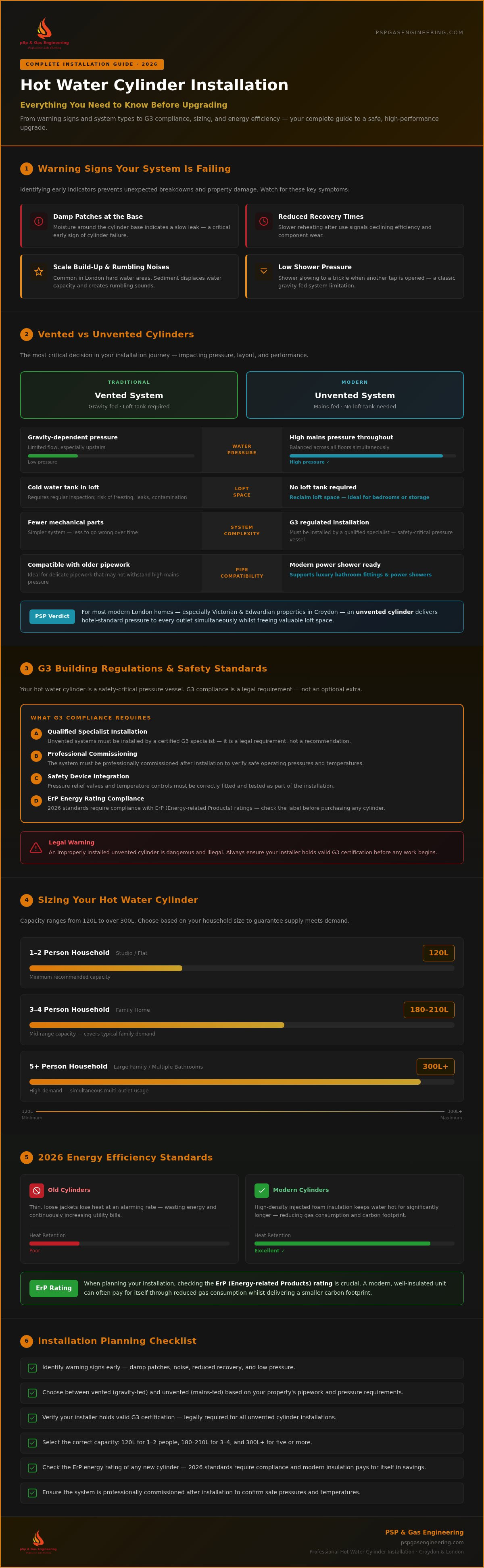
Your home relies on a steady supply of heated water, yet the system responsible for it often goes ignored until a fault occurs. Identifying the early warning signs of a failing hot water storage cylinder is vital for avoiding property damage and unnecessary stress. You might notice damp patches around the base indicating a slow leak, or a significant decrease in recovery time, which is how long the system takes to reheat after use. Scale build-up, particularly in hard water areas like London, often manifests as strange rumbling noises or a gradual loss of capacity as sediment displaces the water.
A professional hot water cylinder installation represents more than just a repair; it's a fundamental upgrade to your home's infrastructure. Most traditional systems in older properties rely on gravity, using a cold water tank in the loft to create pressure. Modern solutions move away from this outdated method, integrating seamlessly with your gas boiler to provide a more responsive and powerful experience. This transition ensures your plumbing meets the demands of a modern household without the constant worry of a system failure.
Addressing Poor Water Pressure in London Homes
Many Victorian and Edwardian properties in Croydon were never designed for the demands of 21st-century plumbing. If your shower slows to a trickle when someone turns on a kitchen tap, your gravity-fed system is likely the culprit. Unvented cylinders solve this by taking water directly from the mains. This setup ensures high-pressure hot water reaches every outlet simultaneously, which is essential for the performance of modern power showers and luxury bathroom fittings. It's a transformative change that brings hotel-standard pressure to residential settings.
Energy Efficiency and Insulation Standards in 2026
Efficiency standards have evolved rapidly, and 2026 regulations place a heavy emphasis on heat retention. Older copper cylinders with thin, loose jackets lose heat at an alarming rate, wasting energy and increasing your utility bills. In contrast, new models feature high-density injected foam insulation that keeps water hot for significantly longer periods. When planning your hot water cylinder installation, checking the ErP (Energy-related Products) rating is crucial. Upgrading to a modern, well-insulated unit can often pay for itself through reduced gas consumption and a smaller carbon footprint, providing long-term financial and environmental benefits.
Vented vs Unvented Cylinders: Choosing the Right Setup
Choosing between a vented and unvented setup is the most critical decision in your hot water cylinder installation journey. The choice dictates not only how your water is heated but also the physical layout of your plumbing and the pressure you'll experience at the tap. Whilst both systems store water for later use, their methods of delivery and installation requirements differ significantly.
The Traditional Vented System
Vented cylinders are the traditional choice for many older UK properties. They rely on a large cold water storage tank, usually situated in the loft, which uses gravity to feed the cylinder below. This system is open to the atmosphere via a vent pipe, hence the name. Many homeowners appreciate this setup for several reasons:
- Simplicity: Fewer mechanical parts mean there's less to go wrong over time.
- Low Pressure Compatibility: Ideal for properties with older, delicate pipework that might not withstand high mains pressure.
- Loft Maintenance: The cold water tank requires regular inspection to prevent freezing, leaks, or contamination from dust and debris.
The main drawback is the limited pressure. Because it depends on gravity, the "head" of water often isn't enough to power multiple showers simultaneously or provide a satisfying flow in upstairs bathrooms. This can lead to frustration in larger households where hot water demand is high.
The Modern Unvented Solution
Unvented cylinders are direct mains-fed systems. They eliminate the need for a loft tank entirely, as they take water directly from the cold water main. This makes them the preferred choice for boiler installation Croydon projects where homeowners want to reclaim loft space for bedrooms or storage.
These systems provide balanced pressure throughout the property. This means your kitchen tap and your ensuite shower will perform with equal vigour, even if used at the same time. However, unvented systems are more complex. Because they operate under high pressure, they require specialist safety components like expansion vessels and pressure relief valves to manage water expansion as it heats. This is why a hot water cylinder installation of this type must only be performed by a G3-qualified engineer.
Before proceeding, it's essential to verify that your existing pipework can handle the increased pressure. Older lead or poorly joined copper pipes, common in Victorian properties, may require upgrading to ensure a secure and leak-free environment. Our engineers meticulously check your home's infrastructure to prevent any risk of burst pipes following a high-pressure upgrade. If you're unsure which system suits your home’s architecture, you can speak with a local plumbing specialist for a technical assessment.
Navigating Building Regulations and G3 Safety Standards
Unvented hot water systems are classified as high-pressure vessels. Without proper regulation, these units could pose a significant risk to the structural integrity of your home. Building Regulation G3 exists to mitigate these risks by mandating specific safety features and professional standards. During a professional hot water cylinder installation, several fail-safe components are integrated into the system. These include expansion vessels to handle water volume changes, temperature and pressure relief valves, and a tundish. The tundish is a visible break in the pipework that allows you to see if water is being discharged due to a fault, acting as an early warning system for the homeowner.
Compliance is a legal requirement. When a new unvented system is installed, the local building control department must be notified. This isn't a mere formality; it's a safety record that ensures the work meets the rigorous standards set out in the 2026 building codes. Failing to adhere to these rules can invalidate your home insurance and create significant hurdles if you ever decide to sell your property. It's about ensuring your home remains a secure environment for your family.
The Role of the Gas Safe Engineer
Integrating a cylinder with your heating system requires a dual skill set. While Gas Safe registration is mandatory for any work involving your boiler, unvented systems require an additional G3 qualification. This specific certification proves the engineer understands the physics of pressure and the correct installation of safety-critical relief valves. PSP & Gas Engineering ensures all technicians are fully qualified to handle these complexities, providing a safe pair of hands for your home’s most critical infrastructure. We prioritise precision in every connection to ensure long-term system durability.
Certification and Documentation
Once the hot water cylinder installation is complete, you'll receive a commissioning certificate. This document is a vital record of the system's initial performance and safety checks. For homeowners, it serves as proof of compliance during property surveys. For landlords, maintaining this documentation is a statutory duty alongside their annual safety checks. You can read more about these regulatory requirements in our landlord gas safety certificate London guide. Proper record-keeping ensures your system remains legal and your tenants remain protected from avoidable technical failures.
Sizing and Positioning Your New Hot Water Cylinder
Determining the correct dimensions for your hot water cylinder installation is a technical exercise that balances household demand with energy conservation. A tank that's too small will leave you with a cold shower during peak morning hours. Conversely, an oversized unit leads to unnecessary heat loss and higher utility bills. We typically calculate requirements based on the number of residents and the frequency of bathroom use. A 120-litre unit often suffices for a one-bedroom flat. However, a four-bedroom family home with multiple ensuites will likely require a 210-litre or 250-litre capacity to maintain consistent pressure and temperature across all floors.
The physical placement of the unit requires a careful structural assessment. Water is heavy. A 300-litre cylinder weighs approximately 300kg plus the weight of the vessel itself. Our engineers evaluate the floor joists to ensure they can safely support this concentrated load over the long term. We also aim to position the unit as centrally as possible. This strategy reduces the length of "dead leg" pipework, which is the section of pipe where water sits and cools between uses. Shorter pipe runs mean hot water reaches your taps faster, which significantly reduces water wastage and improves the daily user experience.
Choosing the Correct Capacity
When choosing capacity, you must also decide between direct and indirect heating. Indirect cylinders, which use a heat exchanger coil connected to your gas boiler, are generally the most efficient choice for London homes. Direct cylinders rely solely on internal immersion heaters, which can be more expensive to run as a primary heat source. It's also wise to factor in future renovations. If you plan to add a high-flow rain shower or an extra bathroom next year, sizing up now is a sensible precaution to ensure your system remains fit for purpose.
Installation Logistics and Pipework
Preparing the installation site involves more than just clearing the airing cupboard. We ensure the area is accessible and meets all ventilation requirements for safety. A critical phase of our professional process is pipework pressure testing, which verifies the integrity of your existing plumbing before the new system is fully commissioned. For unvented installations, we must also manage the D1 and D2 discharge pipework. These pipes safely direct high-temperature water away from the property if the safety valves are ever triggered. If you're ready to upgrade your home’s efficiency, you can book a technical survey with our Croydon team to determine the perfect fit for your property.
Professional Installation in Croydon: The PSP & Gas Engineering Approach
At PSP & Gas Engineering, we view every hot water cylinder installation as a precision engineering project rather than a simple swap. Our methodical approach begins with a comprehensive site assessment. We evaluate your property's existing infrastructure to identify any potential complications before work begins. South London homes, particularly those in Croydon with Victorian and Edwardian origins, often present unique plumbing quirks. These range from idiosyncratic pipe layouts to varying incoming mains pressure. Our local expertise allows us to anticipate these challenges. We ensure your new system is integrated securely without compromising the integrity of your home’s older pipework.
The hot water cylinder installation follows a logical, step-by-step sequence. It's designed to minimise disruption to your daily routine. We handle the decommissioning of your old tank, the structural reinforcement of the installation site, and the meticulous connection of all safety-critical components. By prioritising a safety-first mentality, we provide homeowners with the peace of mind that their high-pressure system is commissioned correctly. Our work doesn't end when the water is hot. We conduct rigorous testing to ensure every valve and joint operates perfectly under load.
Integration with Boiler and Heating Systems
A modern cylinder must work in perfect harmony with your boiler and radiators. We ensure your existing gas boiler is fully compatible with the requirements of a high-pressure unvented system. This often involves upgrading controls to allow for independent management of your heating and hot water schedules. Such precision is enhanced by integrating smart thermostats, which let you monitor energy usage from your smartphone. For businesses or larger residential blocks requiring complex setups, our commercial plumbing services London team manages high-capacity system design with the same technical rigour.
The Importance of Annual Servicing
To maintain the durability of your system, annual servicing is a mandatory requirement. During these visits, our engineers check the charge levels of the expansion vessel. We also test the temperature and pressure relief valves to ensure they haven't become seized by limescale. These checks are essential for protecting your manufacturer warranty. Many of our clients choose to book their annual gas safety check alongside their cylinder service. This consolidated approach ensures your entire system remains compliant with 2026 safety standards. Your household remains protected by local experts who take pride in their craftsmanship.
Securing Your Home’s Future with Modern Hot Water Solutions
Upgrading your system is a technical investment that rewards you with consistent water pressure and significantly lower energy bills. Whether you've opted for a space-saving unvented model or a traditional vented setup, the success of your hot water cylinder installation depends on technical precision and strict adherence to 2026 building standards. Ensuring your system is correctly sized and professionally commissioned protects your home from the risks associated with high-pressure vessels whilst guaranteeing long-term durability.
At PSP & Gas Engineering, our Gas Safe Registered Engineers are specialists in G3 regulatory compliance, providing the expertise needed for a seamless transition. We remain available 24/7 for emergency support, ensuring you're never left without the professional guidance you require. Get a free quote for your hot water cylinder installation in Croydon today and enjoy the peace of mind that comes with a system built to last. We're ready to help you create a more efficient, comfortable home environment for years to come.
Frequently Asked Questions
Do I need a G3 certificate for a hot water cylinder installation?
Yes, a G3 qualification is a legal requirement for anyone carrying out an unvented hot water cylinder installation. This certification ensures the engineer understands the complex safety requirements for high-pressure systems. Upon completion, your installer must provide a commissioning certificate and notify local building control. This documentation is essential for your home insurance and is often requested by solicitors during the property sale process in Croydon.
Can I install an unvented hot water cylinder myself?
You shouldn't attempt to install an unvented cylinder yourself. These units are high-pressure vessels that can become dangerous if the safety-critical valves are incorrectly fitted. UK law mandates that only G3-qualified professionals perform this work. Attempting a DIY installation not only risks your safety but also invalidates your manufacturer's warranty and home insurance. It's always best to rely on a Gas Safe registered specialist to ensure a secure setup.
How long does it take to install a new hot water cylinder?
A standard hot water cylinder installation typically takes between one and two days to complete. A straightforward replacement of an existing unit is often finished within a single day. However, if you're converting from a vented system to an unvented one, the process takes longer. This is because our engineers must remove the old loft tanks and modify the pipework to handle the increased mains water pressure safely.
Is an unvented cylinder better than a combi boiler?
The choice depends entirely on your household’s hot water demand. A combi boiler is excellent for smaller flats with limited space, as it heats water on demand. However, for larger family homes in South London with multiple bathrooms, an unvented cylinder is superior. It stores a large volume of water at mains pressure, allowing you to run several showers and taps simultaneously without a significant drop in flow or temperature.
What is a tundish and why is it leaking?
A tundish is a safety component that provides a visible break in the discharge pipework. If you see water dripping or flowing through it, the system is telling you there's a fault. This usually indicates that a pressure relief valve has opened or the expansion vessel has lost its internal air charge. If you notice a leak, you should contact a professional engineer immediately to diagnose the issue and restore the system's safety balance.
Will an unvented cylinder work with my old gas boiler?
In most cases, yes. Indirect unvented cylinders are designed to work alongside your existing gas boiler by using a heat exchanger coil. However, our engineers will need to assess your boiler’s compatibility with modern heating controls and the new system's pressure requirements. If your boiler is particularly old, we might suggest a technical review to ensure the entire heating circuit operates efficiently and meets current 2026 energy standards.
How often should a hot water cylinder be serviced?
You must have your hot water cylinder serviced every twelve months by a qualified professional. This annual check is vital for verifying that the safety-critical valves are functioning and the expansion vessel is correctly pressurised. Regular maintenance is often a condition of the manufacturer's warranty. Many Croydon homeowners choose to schedule this service at the same time as their annual gas safety inspection to ensure their entire system remains compliant and safe.
What is the average lifespan of a modern hot water cylinder?
A modern stainless steel hot water cylinder typically lasts between 20 and 30 years if it's maintained correctly. These units are highly durable and resistant to corrosion, making them a long-term investment for your property. Older copper cylinders generally have a shorter lifespan, often requiring replacement after 10 to 15 years. Regular annual servicing and the use of scale inhibitors in hard water areas like London will help you achieve the maximum possible lifespan.


