

Did you know that over 80% of central heating system failures, such as seized pumps and clogged heat exchangers, are caused by contaminated water and sludge build-up? For many Croydon homeowners, the first sign of trouble isn't a total breakdown but a steady rise in monthly energy bills and radiators that struggle to get warm. Understanding the central heating powerflush cost is the first step toward restoring your home's efficiency and avoiding a much more expensive boiler replacement.
It's frustrating to receive varying quotes from engineers when you simply want a quiet, reliable system for the winter ahead. You're right to look for clarity on what constitutes a fair local rate for professional maintenance. This guide promises to break down exactly what influences the price of this essential service, from the number of radiators to the specific challenges of South London's hard water. We will preview the technical requirements of the process and show how a thorough flush provides the peace of mind that your heating system is in a safe pair of hands.
Key Takeaways
- Understand how property size and system age directly impact your central heating powerflush cost to ensure you receive a fair and transparent quote.
- Learn how removing magnetite sludge can improve heating efficiency by up to 25%, significantly reducing your monthly energy expenditure.
- Identify the warning signs of system contamination, such as radiators that remain cold at the bottom or unusual "kettling" noises from your boiler.
- Discover why professional engineering standards and Gas Safe registration are essential for performing a safe and compliant system deep-clean.
- Recognise why Croydon’s specific water hardness levels make regular maintenance a technical necessity for protecting your boiler's internal components.
Understanding Central Heating Powerflush Costs in 2026
A powerflush is a specialised engineering procedure designed to restore the efficiency of a household's heating circuit. It involves a high-velocity, low-pressure circulation of water and chemical agents through the pipework and radiators. Unlike a simple system drain, this process uses a dedicated pumping station to dislodge stubborn deposits. It's a critical task for maintaining wet central heating systems, ensuring that water flows freely without obstruction. Because the process requires direct intervention with the boiler's internal circulation, it must be performed by a Gas Safe registered engineer to maintain safety and warranty standards.
The evolution of the central heating powerflush cost in 2026 reflects the adoption of more sophisticated biodegradable chemicals and high-torque magnetic filtration units during the cleaning cycle. These advancements allow for a deeper clean in a shorter timeframe, though they require a higher investment in specialised equipment and consumables. The primary objective remains the total removal of magnetite and limescale, which otherwise act as thermal insulators that force your boiler to work harder than necessary.
The Science of Sludge: Why Professional Cleaning Costs More
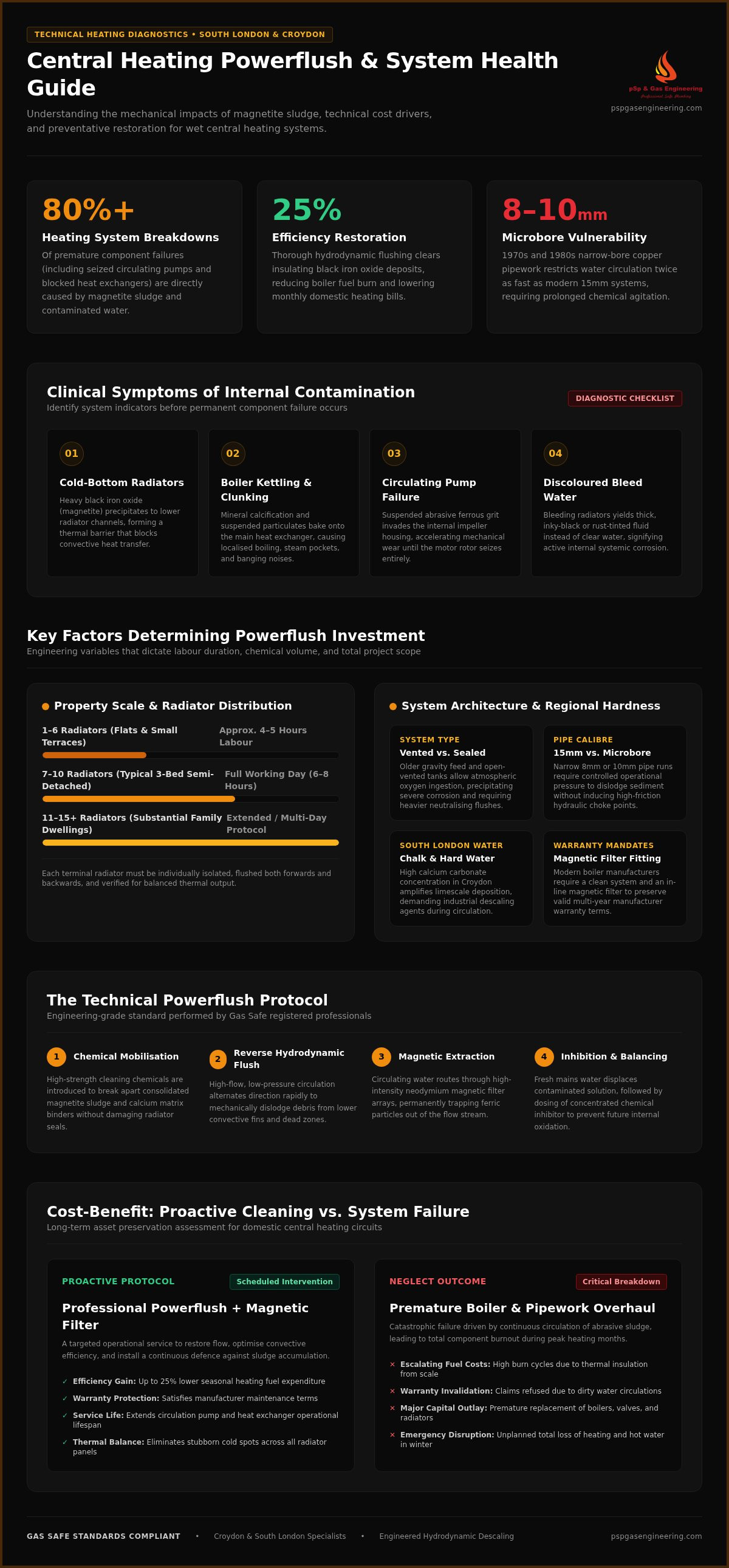
Magnetite is a black iron oxide sludge that forms when oxygen reacts with the internal metal surfaces of your radiators. This heavy debris settles at the bottom of the system, creating a thick barrier that prevents hot water from circulating effectively. Magnetite is the primary cause of radiator cold spots. To remove it, engineers use high-velocity pumps that create a turbulent flow without exceeding the safe pressure limits of older pipework. This balance of power and precision is why professional cleaning carries a premium over basic maintenance; it requires both technical expertise and industrial-grade machinery to be effective.
The Role of Magnetic Filters in System Protection
Installing a high-quality magnetic filter during a powerflush is a standard recommendation for 2026. While adding a filter increases the upfront central heating powerflush cost, it serves as a permanent line of defence for your home. These units capture metallic debris before it can reach the boiler's sensitive heat exchanger or pump. This protection is especially vital if you've recently investigated a Boiler Installation Cost Croydon, as most modern manufacturers now mandate magnetic filtration to validate their multi-year warranties. By preventing the recurrence of sludge, a filter ensures the system remains clean and efficient long after the engineer has completed the work.
Key Factors That Influence the Price of a Powerflush
Calculating the central heating powerflush cost requires a detailed assessment of your home's specific infrastructure. While national averages provide a baseline, London and Croydon labour rates typically carry a regional premium. This adjustment reflects the higher operational costs for qualified engineers in the South East. Beyond geographic location, the physical scale of your property and the current state of the pipework are the most significant variables in any professional quote.
System type also dictates the intensity of the cleaning required. Older open-vented systems are frequently more contaminated than modern sealed systems because they allow oxygen to enter the water loop, which accelerates internal corrosion. According to the Which? guide to central heating powerflushing, identifying these symptoms early can prevent the need for multiple chemical cycles, helping to keep your total central heating powerflush cost manageable. Heavily restricted systems may require double doses of cleaning agents or extended agitation time to break down stubborn blockages, which naturally increases the total labour investment.
Number of Radiators and System Complexity
A standard three-bedroom semi-detached house in Croydon typically features between seven and ten radiators. This setup requires more time to isolate and clean than a small flat. Complexity increases further if your property uses microbore pipework, which was common in many 1970s and 1980s developments. These narrow 8mm or 10mm pipes clog more easily than standard 15mm copper. They require a methodical approach to ensure that dislodged sludge doesn't create a secondary blockage in narrow bends. You should expect a professional engineer to be on-site for a full working day to complete this work properly.
Additional Plumbing Requirements
A powerflush is the ideal time to upgrade system controls because the circuit is already drained. Many homeowners opt to replace old manual valves with modern thermostatic radiator valves (TRVs) during the process. This upgrade improves energy efficiency by allowing for precise room-by-room temperature management. The high-velocity pumping phase can also occasionally reveal minor underlying leaks in thin-walled pipework that were previously held together by sludge. Addressing these vulnerabilities immediately provides long-term security for your home. If you are concerned about your system's performance, consulting a local Croydon heating specialist will help you understand the full scope of your requirements.
Comparing Powerflush Costs vs. System Replacement
Deciding between a maintenance flush and a full system upgrade often comes down to a clear cost-benefit analysis. Whilst the central heating powerflush cost represents an upfront investment, it remains a fraction of the multi-thousand pound expense required for a full boiler replacement. By removing abrasive debris before it impacts the circulator pump, you effectively bypass the high emergency call-out fees associated with sudden winter breakdowns. This preventative approach is the most logical financial choice for any property where the boiler unit remains structurally sound.
Compliance with statutory requirements also reinforces the value of this service. Under the Building Regulations Approved Document L, heating systems must be properly cleaned and commissioned to ensure maximum energy performance. Most leading manufacturers now explicitly state that a professional system flush is a prerequisite for validating a multi-year warranty. Without evidence of this deep clean, a manufacturer may refuse to cover repairs if magnetite damage is discovered within the heat exchanger.
Extending Boiler Lifespan in South London Homes
Modern condensing boilers are engineered for high efficiency, but their narrow internal waterways are particularly vulnerable to magnetite. In South London, where very hard water frequently combines with iron oxide sludge, this dual-threat contamination can lead to premature component failure. A thorough engineering flush protects these sensitive parts, ensuring your installation continues to meet the safety and efficiency standards required for a Gas Safe Compliance Certificate. Maintaining a clean circuit is the most reliable way to ensure your boiler reaches its full expected lifespan without requiring expensive premature interventions.
Energy Bill Reduction: The Long-term Savings
A clean system isn't just about mechanical reliability; it's about your monthly gas expenditure. Industry data indicates that clearing sludge and limescale can improve heat transfer efficiency by up to 25%. This improvement leads to lower gas consumption and quicker radiator warm-up times, allowing the central heating powerflush cost to pay for itself through reduced energy bills over several winters. In the context of 2026 environmental standards, reducing your home's carbon footprint through improved system efficiency is a responsible and economically sound decision.
How to Tell if Your Heating System Needs a Powerflush
Radiators that are cold at the bottom but hot at the top are the most common indicator of a system in distress. This occurs because heavy magnetite sludge settles at the base of the radiator, creating a physical barrier that prevents hot water from reaching the lower sections. Whilst bleeding a radiator can release trapped air from the top, it won't address the dense sediment at the bottom. If you notice that your home takes significantly longer to reach a comfortable temperature, or if some radiators fail to heat up at all, the circulation is likely being choked by debris.
Noise is another critical warning sign that should not be overlooked. If your boiler makes banging, whistling, or "kettling" sounds, it's often due to limescale and sludge insulating the heat exchanger. This creates localised boiling hotspots, which is both inefficient and damaging to the unit's internal components. Ignoring these sounds can lead to a more complex repair, eventually increasing the overall central heating powerflush cost by requiring component replacements alongside the clean.
Diagnostic Signs You Should Not Ignore
Homeowners can perform a simple "magnet test" by placing a strong magnet against the exterior of a copper pipe or the radiator itself. If the magnet sticks firmly to a copper pipe, it indicates a high concentration of magnetite sludge within the water flow. Similarly, pay close attention to the water colour when bleeding your radiators. Clear water is a sign of a healthy system, but water with a black or dark brown tint indicates active internal corrosion. Frequent pump failures or sticking zone valves are also symptoms of debris interfering with the mechanical parts of your heating system.
When Maintenance Becomes Urgent
Waiting until the peak of winter to address these issues significantly increases the risk of a total system failure when you need warmth the most. Permanent blockages in the heat exchanger can occur if sludge is allowed to bake onto the surfaces, potentially leading to a terminal fault for the boiler. We recommend that homeowners check their radiator temperatures across the entire surface area before the heating season begins to identify any cold spots early. If you suspect your system is losing efficiency, it's best to book a professional system health check with a Gas Safe registered Croydon heating engineer today.
Professional Powerflushing Services in Croydon and South London
Choosing a local specialist for your heating maintenance ensures a level of accountability and rapid response that national providers often struggle to match. Based in the Thornton Heath and Croydon area, PSP & Gas Engineering understands the specific technical requirements of South London’s varied housing stock. Whether you own a Victorian terrace in Addiscombe with original pipework or a modern development in the town centre, our team provides a "safe pair of hands" for complex engineering tasks. Every technician we deploy is Gas Safe registered, ensuring that all work complies with current safety standards and manufacturer warranty requirements.
Our assessment process is thorough and transparent. We don't provide generic estimates; instead, we offer customised quotes based on the exact number of radiators and the specific complexity of your installation. This precision helps homeowners manage their central heating powerflush cost effectively, avoiding the hidden fees often found in standardised national packages. From the initial system survey to the final issue of a completion certificate, our focus remains on restoring your home’s comfort with professional calm and technical precision.
The PSP & Gas Engineering Approach
We utilise industry-leading chemicals and high-velocity magnetic flushing technology to achieve a deeper clean than standard gravity flushes. Our engineers don't simply circulate water; they monitor the progress of the flush using thermal imaging and water quality tests to ensure every radiator is performing at its peak. Once the system is clear of magnetite, we perform post-flush water testing to verify that the correct concentration of protective inhibitor is present. This final step is vital for preventing future corrosion and ensuring the longevity of your boiler's internal components.
Booking Your System Health Check
Securing your home’s heating efficiency for the coming winter is a straightforward process. You can request a free, no-obligation quote through our online portal or contact our 24/7 emergency line for urgent assistance regarding your central heating powerflush cost and requirements. Before our engineer arrives, we recommend clearing access to your radiators and the boiler area to ensure the work can proceed efficiently. To protect your investment and lower your monthly energy expenditure, contact PSP & Gas Engineering for a professional powerflush quote today. We are committed to providing Croydon residents with a quiet, efficient, and reliable heating system that stands the test of time.
Protecting Your Heating Investment for the Future
Maintaining a high-performance heating system requires more than just an annual service; it demands a proactive approach to water quality and system health. A professional powerflush removes the restrictive magnetite sludge that forces your boiler to overwork, ensuring your radiators provide consistent warmth throughout the winter months. Whilst the initial central heating powerflush cost is an important consideration, the long-term savings on energy bills and the prevention of emergency repairs make it a sound financial decision for any Croydon homeowner.
As specialists in London property heating systems, PSP & Gas Engineering provides the technical precision needed to handle everything from modern flats to complex Victorian installations. Our Gas Safe registered engineers are based in the heart of the community, offering 24/7 emergency availability and a deep understanding of local water conditions. We prioritise safety and durability in every task, giving you the security of a "safe pair of hands" for your home maintenance. Take the first step toward a more reliable, efficient system and Get a Professional Powerflush Quote from PSP & Gas Engineering. Your home deserves the protection of a quiet, optimised heating circuit.
Frequently Asked Questions
How much does a powerflush cost for a 3-bedroom house in 2026?
The final central heating powerflush cost for a three-bedroom property depends on the number of radiators and the complexity of the pipework. Every system is unique, so quotes are customised based on the labour time required and the volume of specialised chemicals needed to achieve a clear circuit. A professional survey ensures you receive a fair local rate that reflects the specific technical requirements of your Croydon home.
Is a powerflush better than a chemical flush?
A powerflush is significantly more effective for systems with established sludge issues because it uses a high-velocity pump to dislodge stubborn debris. Whilst a chemical flush relies on the system's own circulator pump and gravity, a professional powerflush provides the turbulent flow necessary to clear heavy magnetite. This method is the industry standard for restoring efficiency in South London properties where circulation has become restricted over time.
How long does a professional powerflush take to complete?
You should expect a professional powerflush to take between six and ten hours to complete. Most standard domestic systems are finished within a single working day. Larger Croydon properties with more than 15 radiators or complex microbore pipework may occasionally require a second day to ensure every circuit is thoroughly cleaned. Engineers remain on-site until water samples confirm the system is entirely free of contaminants.
Will a powerflush fix my cold radiators?
A powerflush will effectively fix radiators that are cold at the bottom or in the middle. These cold spots are definitive signs of magnetite sludge settling at the base of the unit, preventing hot water from circulating. If your radiator is cold at the top, it usually contains trapped air that can be resolved by bleeding. However, if the entire system is slow to warm up, a deep clean is the most reliable solution.
Can I perform a central heating powerflush myself?
It is not recommended to perform a powerflush yourself as it requires industrial-grade equipment and specialised technical expertise. Attempting this without professional training can lead to system damage or invalidated boiler warranties. A Gas Safe registered engineer provides a "safe pair of hands," ensuring the chemicals are handled correctly and the system is properly inhibited afterward. Professional certification is also required to prove maintenance meets British Standards.
How often should a central heating system be powerflushed?
The trade recommendation is to have your system powerflushed every five to six years. This interval helps prevent the accumulation of magnetite and limescale that naturally occurs in Croydon’s hard water area. In addition to this deep clean, you should have an annual inhibitor check during your routine boiler service. Regular maintenance ensures your central heating powerflush cost remains a preventative investment rather than an emergency reactive expense.
Does a powerflush cause leaks in old pipework?
A powerflush is a low-pressure procedure, but it can occasionally reveal existing leaks in very old or corroded pipework. If a radiator wall has already thinned due to internal corrosion, removing the sludge may expose a "pinhole" leak that was previously blocked by debris. Professional engineers carry out a thorough visual inspection before starting to identify any high-risk areas, ensuring that any vulnerabilities are addressed safely during the process.
Is a powerflush required for a new boiler warranty?
Yes, a professional system flush is a mandatory requirement for validating most new boiler warranties. Under Building Regulations Part L and BS 7593:2019, any new installation must be cleaned and treated to prevent debris from damaging the new heat exchanger. Manufacturers often require proof of a flush and the installation of a magnetic filter to honour their multi-year guarantees. Failing to perform this task could leave your investment unprotected.


