
A flame’s colour can reveal more than whether a cooker is clean. Signs of a dangerous gas appliance include yellow or orange flames, soot marks, a pilot light that keeps going out and unusual condensation. These clues may point to faulty combustion, but carbon monoxide has no smell, colour or taste, so you can’t rely on your senses to detect it.
It’s understandable to want a clear way to judge whether a gas appliance is safe to use. This guide explains the visual clues to look for, possible symptoms of carbon monoxide poisoning and what to do if you suspect an appliance is unsafe or notice a gas leak outdoors.
You’ll also learn when to leave the property, how to reduce immediate risk and why gas work must be handled by a registered professional. The aim is to help you recognise danger early and respond calmly, without attempting repairs yourself.
Key Takeaways
- Spot visual warning signs such as yellow or orange flames, soot, heat damage or a pilot light that repeatedly goes out.
- Recognise possible carbon monoxide poisoning, including headaches, dizziness, nausea, confusion and unusual tiredness, and act promptly.
- If you suspect a gas leak outdoors, move away from the area and avoid anything that could create a spark.
- Understand when a gas appliance needs a professional safety inspection and why repairs should not be attempted as DIY work.
What are the symptoms of carbon monoxide poisoning?
Carbon monoxide poisoning can cause headaches, dizziness, nausea, breathlessness, confusion and unusual tiredness. The gas has no smell, colour or taste, so you cannot detect it with your senses. Symptoms that ease outside, or several people becoming unwell in the same property, can indicate exposure.
If you suspect carbon monoxide, stop using appliances that may be producing it, open doors and windows, and go outside immediately. Seek medical advice as soon as possible. If someone has collapsed or lost consciousness, call 999, as advised by the NHS. Do not return indoors until you have received professional advice. In the UK, call the Gas Emergency Service on 0800 111 999 if you suspect an appliance or gas supply emergency.
Treat a sounding carbon monoxide alarm as a warning: leave the building and get outside rather than staying to investigate. Don’t assume the alarm is faulty because nobody feels ill. Carbon monoxide alarms detect that gas, not natural gas leaks, so a silent alarm cannot rule out a gas leak.
Choose an alarm that meets the relevant standard. The British Standards Institution says carbon monoxide alarms installed in rooms with fuel-burning appliances should comply with BS EN 50291-1. Position an alarm 1-3 metres horizontally from the appliance, following its manufacturer’s instructions. A sealed battery model may have a stated life of 7-10 years; mains-powered alarms should have battery backup.
Test the alarm monthly using its test button, and follow the expiry date when replacing it, usually after 7-10 years. Keep the alarm maintained and don’t ignore a fault warning or expired unit. A faulty gas appliance can produce carbon monoxide through incomplete combustion; unsafe use can also expose occupants to natural gas, which carries fire and poisoning risks. A Gas Safe registered engineer should assess a suspect appliance.
Gas safety legislation and unsafe-situation procedures
The Health and Safety Executive requires gas work to be carried out by a Gas Safe registered engineer. Arrange routine servicing every year with a registered engineer. A gas safety check covers the supply pipework, appliance operation, flue safety and suitability, and adequate ventilation. These checks can identify a fault affecting safe operation, including problems with a gas fire or its flue.
Landlords must arrange annual gas safety checks for relevant appliances and flues in rented homes. A gas safety certificate is valid for 12 months, but it records the condition found during that inspection. It cannot show whether an appliance has developed a fault since. Tenants should report concerns to their landlord, particularly if an appliance changes behaviour or appears damaged.
Gas engineers use the Gas Industry Unsafe Situations Procedure to assess hazards and decide what action their severity requires. If an engineer identifies an unsafe appliance, follow their advice and don’t use it until the risk has been addressed. A yellow or orange flame may indicate a combustion issue; poor ventilation can also affect safe operation. Never attempt gas repairs yourself.
One in five gas appliances in the UK is described as dangerous and not fit for purpose. This makes prompt attention to warning signs important, but an appliance’s safety depends on its condition and installation. If you smell gas, leave the property immediately. Don’t operate electrical switches or use electronics, matches or lighters, as these could create a spark. Contact the Gas Emergency Service from outside, and don’t re-enter until you have professional advice, even if the gas supply has been turned off.
For a suspected appliance fault without an immediate gas smell, arrange a professional gas safety inspection. A registered engineer can assess the appliance and flue, then determine whether it can be used safely or needs further attention.
Is a gas leak outside dangerous?
Yes. A suspected natural gas leak outdoors should be treated as a safety risk. Natural gas is colourless and odourless; suppliers add an odourant to make leaks easier to notice. A gas smell near an outside meter, pipe or boiler supply should be treated as a warning, not investigated at close range.
If you suspect an outdoor leak, move away from the area and avoid flames, switches and electronics that could create a spark. Don’t try to locate the exact point of escape or operate the supply equipment. Once at a safe distance, contact the Gas Emergency Service. Keep other people away until the situation has been assessed professionally.
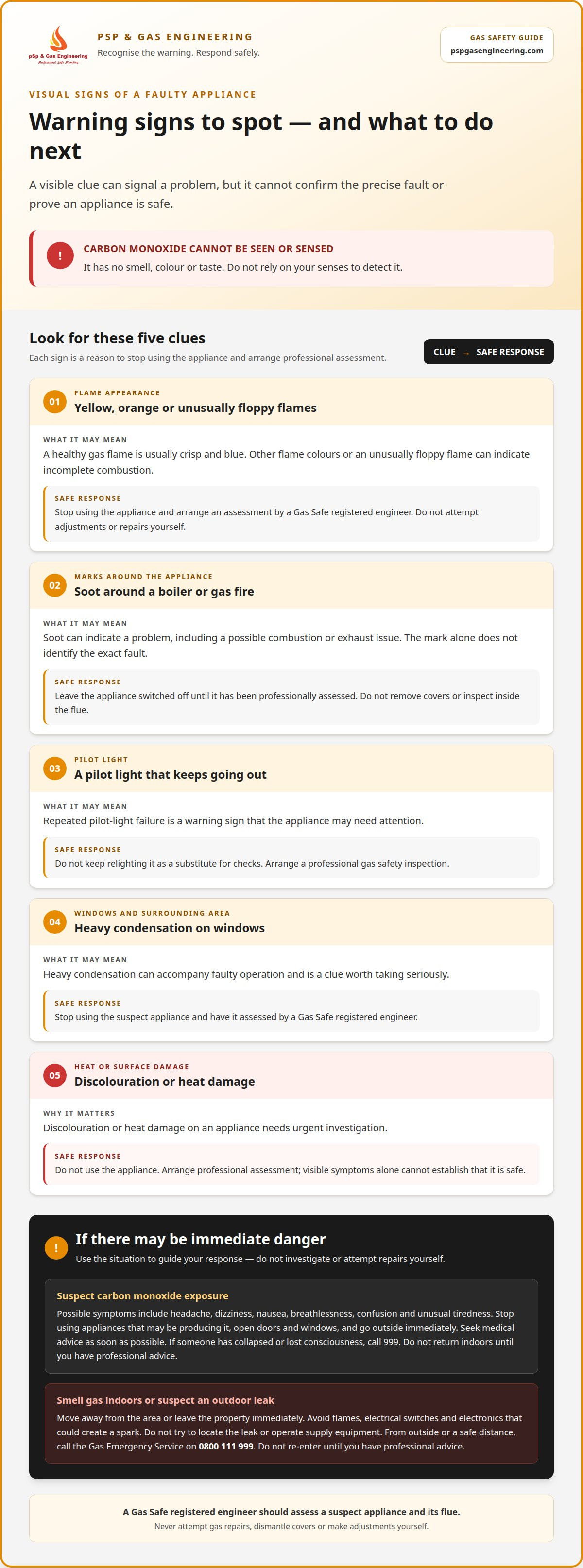
Faulty appliances can also show visible warning signs indoors. Soot marks around a boiler or gas fire, frequent pilot-light failure and heavy condensation on windows can indicate a problem. Discolouration or heat damage on an appliance needs urgent investigation. These clues don’t identify the precise fault, but they are reasons to stop using the appliance and arrange a professional assessment.
Pay particular attention to changes around the boiler and flue. Soot or heat marks near the appliance may signal a combustion or exhaust problem, while condensation can accompany faulty operation. A flue carries combustion products away; damage, obstruction or unsuitable installation can affect safe operation. Don’t dismantle covers, inspect inside the flue or attempt adjustments yourself.
A Gas Safe Registered engineer can assess the appliance, flue and relevant supply components to determine the cause of the warning. This matters whether the appliance is a boiler, gas fire or cooker, because visible symptoms alone can’t establish that it is safe. If a fault affects heating or cooking, leave the appliance switched off until it has been professionally assessed. Whether to repair or replace it depends on the equipment’s condition and safety.
Visual signs of faulty gas appliances
A flame can provide a useful visual warning, but it cannot certify that an appliance is safe. A healthy gas flame is usually crisp and blue. Yellow, orange or unusually floppy flames can indicate incomplete combustion. Check the flame only during normal use; don’t remove a cover or adjust the appliance to inspect it. Decorative fuel-effect gas fires are an exception, as their flames are designed to look coal-like.
Look at the appliance and nearby surfaces for changes. Soot marks, visible discolouration or heat damage can signal a problem that needs professional investigation. A pilot light that repeatedly goes out is another warning sign. Excessive condensation on windows may also accompany faulty appliance operation. These clues don’t identify the precise fault, but they should prompt you to stop using a suspect appliance and arrange an assessment.
- Flame: note whether it is blue, stable and crisp, rather than yellow, orange or floppy.
- Surroundings: look for fresh soot, heat marks or discolouration near the appliance.
- Operation: note a pilot light that repeatedly extinguishes or windows that become unusually wet.
Carbon monoxide itself cannot be seen, so a clear-looking flame does not rule out a poisoning risk. Visual checks are only an early warning, not a substitute for an inspection. A Gas Safe Registered engineer can assess combustion and safe appliance operation. Note when the change occurs, such as whether a boiler flame looks different during heating, and share that detail with the engineer.
Arrange regular servicing, including an annual boiler service by a Gas Safe registered engineer. If you see heat damage or suspect unsafe operation, stop using the appliance and seek professional advice rather than attempting a repair. A professional gas safety inspection can establish whether the appliance needs attention. Act on warning signs promptly, even if the appliance still appears to work.
PSP & Gas Engineering
PSP & Gas Engineering can help when warning signs leave you unsure whether a gas appliance is safe. Its Gas Safe registered engineers carry out Gas Safety Inspections to assess appliance condition and operation. Where a boiler is faulty or unsuitable, the company also provides Boiler Installations. Flue Relining and Video Inspections support work involving flues and their condition.
Arrange a professional assessment if you notice unusual flames, soot, recurring pilot-light problems or signs of damage. An inspection can establish what needs attention and help determine the next step. If you suspect an immediate gas leak or carbon monoxide exposure, leave the property and follow emergency advice before arranging non-emergency work.
For help assessing a suspected appliance fault, contact PSP & Gas Engineering.
Take the next step towards safer gas use
Noticing signs of a dangerous gas appliance gives you a reason to act, not a diagnosis of the fault. A professional assessment can establish what needs attention and help you decide how to proceed. PSP & Gas Engineering provides Gas Safety Inspections for concerns about appliance safety, alongside Boiler Installations and Flue Relining when the equipment or flue needs further work.
Note what has changed, such as when the appliance behaves differently or which visible signs you’ve noticed. Share these observations when arranging an assessment. This gives the engineer useful context without requiring you to investigate or interfere with the appliance yourself.
For professional help with a suspected gas appliance fault, contact PSP & Gas Engineering. Taking a clear next step can help you manage the concern with care and confidence.
Frequently Asked Questions
Is natural gas safe in the home?
Natural gas can be used safely at home when appliances are correctly installed, maintained and used with suitable ventilation. A fault can change that, creating risks such as fire or exposure to escaping gas. Keep air vents clear and arrange professional attention if an appliance behaves unusually. Remember, a carbon monoxide alarm detects carbon monoxide, not a natural gas leak.
What does a natural gas leak smell like?
A natural gas leak may smell like rotten eggs or sulphur because an odourant is added to make the otherwise odourless gas easier to notice. Treat an unexpected smell near a meter, pipe or appliance as a possible leak. Leave the area without using switches or flames, then contact the Gas Emergency Service from a safe location. Don’t re-enter until advised.
What should I do if I suspect carbon monoxide poisoning?
Leave the building and get outside immediately if you suspect carbon monoxide exposure. If safe to do so on your way out, open doors and windows, but don’t delay leaving. Seek medical advice promptly and don’t return until you’ve received professional advice. Call 999 if someone has collapsed or lost consciousness, as advised by the NHS. Tell responders where exposure may have occurred.
Why is gas safety important?
Gas safety matters because an appliance fault can cause a fire, release natural gas or produce carbon monoxide through incomplete combustion. Carbon monoxide cannot be detected by smell, so symptoms or an alarm may be the first indication of exposure. Safe operation also depends on the appliance, flue and ventilation working together. If something changes, stop using the affected appliance and seek a professional assessment.
What are the warning signs of a faulty or dangerous gas appliance?
Common signs of a dangerous gas appliance include soot, heat discolouration, a pilot light that repeatedly goes out, or a flame that changes from blue to yellow or orange. Unusual condensation can also be a warning. These clues don’t reveal the fault or prove the appliance is safe. Stop using a suspect appliance and arrange an assessment by a Gas Safe Registered engineer.
What does a rotten-egg smell near a gas appliance indicate?
A rotten-egg smell near a gas appliance can indicate a natural gas leak, because an odourant is added to the otherwise odourless gas. It does not indicate carbon monoxide, which has no smell, colour or taste. Don’t try to locate the leak or operate electrical switches. Leave the property, move away from the suspected source and contact the Gas Emergency Service from outside.


