
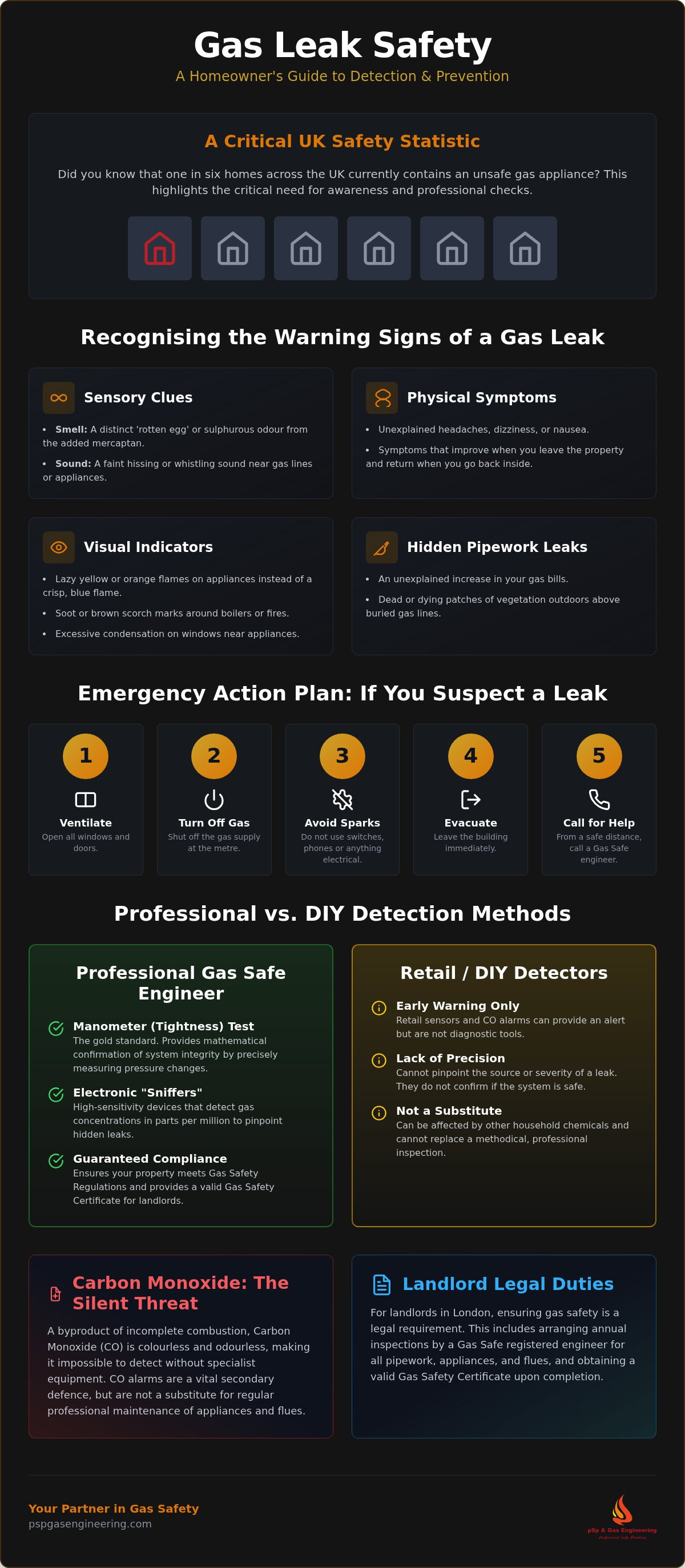
Did you know that one in six homes across the UK currently contains an unsafe gas appliance? For homeowners and landlords in Croydon, the silent nature of a potential leak often creates a persistent sense of anxiety regarding fire risks or carbon monoxide poisoning. Professional gas leak detections are not merely a routine check; they are a rigorous engineering requirement designed to provide absolute certainty where your safety is concerned. Whether you're worried about the integrity of older pipework or navigating the complexities of new 2026 safety regulations, understanding the technical reality of your gas system is the first step towards a secure home.
It's natural to feel concerned about the potential disruption or costs associated with gas repairs, especially with the mandatory shift to IGEM/UP/1B Edition 4 standards in October 2026. This article will help you recognise the subtle signs of a leak and explain why professional intervention is the only way to ensure your London property stays safe and legally compliant. We'll explore the shift towards Installation Volume testing, the process of obtaining a valid Gas Safety Certificate, and how a methodical, safety-first approach by a local specialist provides the peace of mind you deserve.
Key Takeaways
- Learn to recognise the critical warning signs of a leak, from the distinctive scent of mercaptan to physical symptoms like unexplained headaches or nausea amongst residents.
- Understand why professional gas leak detections using calibrated pressure testing are the only definitive method to ensure your system is safe and leak-free.
- Discover the limitations of retail-grade sensors and why they cannot replace the methodical diagnostic approach required for regulatory compliance.
- Clarify the legal requirements for London landlords, including the essential role of annual inspections and obtaining a valid Gas Safety Certificate.
- See how combining traditional engineering expertise with modern video diagnostics ensures a comprehensive "safe pair of hands" for your Croydon property.
Recognising the Signs: When to Suspect a Gas Leak
Natural gas is naturally odourless, so suppliers add a chemical called mercaptan to create a distinctive "rotten egg" or sulphurous scent. This addition is a critical safety measure, ensuring that even a minor escape of gas is detectable by the human nose. If you notice this smell in your Croydon home, it's the most immediate indicator that you require professional gas leak detections to identify the source. While a basic gas detector can provide an early warning, the scent remains your primary organic alert system.
Beyond the smell, your body might react to a leak before you even realise there's a problem. Physical symptoms amongst residents, such as persistent headaches, dizziness, and sudden nausea, are significant red flags. These feelings often improve when you leave the property and return when you go back inside. These symptoms shouldn't be ignored. They suggest the air quality is being compromised, necessitating an urgent inspection by a Gas Safe registered engineer to confirm the property is safe.
You should also inspect your appliances for visual cues of a fault. A healthy gas flame is crisp and blue; a lazy yellow or orange flame indicates poor combustion. Look for soot or brown scorching marks around the casing of boilers and fires, or excessive condensation on windows in the room where the appliance is situated. If you suspect a leak, act with precision. Open all windows to ventilate the space and turn off the gas supply at the meter immediately. Don't flip any electrical switches or use a telephone inside the property, as a small spark can trigger an ignition. Evacuate the building and call for professional assistance from a safe distance.
The Silent Threat of Carbon Monoxide
Carbon Monoxide is a byproduct of incomplete combustion. This gas is particularly dangerous because it's both colourless and odourless, making it impossible to detect without specialist equipment. Because it bypasses our natural senses, professional detection and the installation of audible CO alarms are vital layers of protection for your family. These alarms serve as a secondary line of defence, but they aren't a substitute for regular maintenance and technical inspections of your flue and appliances.
Signs of Leaks in Hidden Pipework
Not all leaks occur at the appliance; some happen within the building's infrastructure. An unexplained increase in your gas bills, despite no change in your heating habits, often points to a slow leak in hidden pipework. Listen for faint hissing sounds behind walls or near your gas meter. Outdoors, look for dead patches of grass or vegetation directly above the path of external gas lines, as escaping gas replaces the oxygen in the soil and kills the roots.
How Professional Gas Safe Engineers Locate Hidden Leaks
Professional gas leak detections involve a disciplined engineering protocol rather than a simple visual inspection. When an engineer arrives at your Croydon property, their priority is to establish the technical state of the entire system. This follows the Gas Safety (Installation and Use) Regulations 1998, which mandate specific standards for installation, maintenance, and safety. Every joint, valve, and appliance connection represents a potential point of failure. By following a step-by-step diagnostic process, engineers ensure that hidden faults are identified whilst minimising disruption to your home's daily routine.
Electronic Sniffers and Combustible Gas Indicators
High-sensitivity combustible gas indicators, often referred to as "sniffers," are a crucial part of modern gas leak detections. These devices can identify gas concentrations in parts per million, allowing engineers to trace leaks in enclosed spaces or behind floorboards where pipework isn't visible. While these tools are excellent for pinpointing a specific source, they're only one part of the survey. Electronic sensors can sometimes be affected by other household chemicals, so a professional always backs up these readings with physical pressure analysis.
The Manometer Test: Precision Pressure Analysis
The gold standard for confirming system safety is the manometer test, often called a tightness test. This procedure provides mathematical confirmation of whether a leak exists within the pipework. The process is intentional and methodical:
- Step 1: The engineer isolates the gas supply at the primary meter to create a closed environment.
- Step 2: A calibrated digital or fluid manometer is connected to a specific test point on the system.
- Step 3: After a period of temperature stabilisation, the engineer monitors for pressure drops over a precisely timed interval.
- Step 4: If a drop is recorded, the engineer calculates whether it falls within the "permissible" safety limits defined by the Gas Safe Register.
Video Inspections for Flues and Chimneys
Sometimes, the hazard isn't in the supply pipes but in the exhaust system. We use high-definition CCTV cameras to perform video inspections of internal flue systems and chimneys. This technology allows us to identify structural faults, cracks, or blockages that could allow combustion gases to escape into your living areas. By seeing inside the flue, we eliminate the need for invasive wall removals, preserving your property's interior whilst providing a comprehensive guarantee of safety. This technical precision ensures your home remains a "safe pair of hands" for your family or tenants.
Comparing Detection Methods: Handheld Devices vs Pressure Testing
It's common to see handheld gas sensors available at retail shops for under £60. While these devices might seem like a cost-effective way to monitor your home, they are merely tools rather than comprehensive safety solutions. A retail-grade sensor is designed to detect high concentrations of gas in the air, but it lacks the sensitivity required for precise gas leak detections in a domestic setting. Relying on such a device creates a false sense of security. It might alert you to a significant leak at a cooker joint, but it will likely miss the slow, dangerous seepage occurring behind a wall or under floorboards.
There is a fundamental difference between "finding a smell" and "certifying a system." A professional Gas Safe engineer doesn't just follow their nose or a beep; they use a multi-layered diagnostic approach to ensure every component of the gas infrastructure is sound. DIY sensors are prone to false negatives because they aren't calibrated to account for the specific environmental conditions of a London home, such as humidity or the presence of other household aerosols. Without professional equipment, you're guessing at your safety rather than guaranteeing it.
Calibration and Accuracy Standards
Professional engineering tools require annual calibration by certified laboratories to maintain their accuracy. This ensures that the readings used during gas leak detections meet the stringent UK safety standards required for legal certification. Environmental factors can easily skew the results of uncalibrated sensors. Professional engineers rely on multiple detection methods, including digital manometers and video diagnostics, to cross-reference data. This redundancy is what makes a professional inspection a "safe pair of hands" for your property.
The Legal Weight of Professional Detection
Choosing a qualified specialist isn't just about technical accuracy; it's about legal protection. Insurance companies often require a formal professional report following a suspected leak or an incident. Without this, you may find your policy is voided. For those managing rental properties, understanding the Landlords' responsibility for gas safety is essential for staying on the right side of the law. Professional detection is a core requirement for issuing a landlord gas safety certificate London, particularly with the stricter 2026 compliance rules. Having a documented, professional safety record protects you from liability and ensures your property remains a secure environment for its occupants.
Maintaining Compliance: Gas Safety Certificates and Landlord Duties
In the UK, landlords carry a statutory duty to ensure all gas appliances and pipework are maintained in a safe condition. This requirement isn't optional. An annual inspection by a Gas Safe registered engineer is the only way to obtain a valid Landlord Gas Safety Record, commonly known as a CP12. During these visits, gas leak detections are a core component of the assessment. If an engineer identifies a leak, they're legally obliged to isolate the affected appliance or the entire supply to prevent an immediate hazard. This prioritises the safety of the occupants whilst ensuring the landlord remains compliant with current legislation.
A vital part of this annual check is the "Tightness Test". As of October 2026, new regulations under IGEM/UP/1B Edition 4 have become mandatory, shifting the focus from meter size to Installation Volume (IV) testing. This change ensures a zero-tolerance approach to pipework leaks, making professional gas leak detections more rigorous than ever. For property owners in Croydon, where many residences feature older Victorian pipework alongside modern extensions, this precision is essential for identifying micro-leaks that might otherwise go unnoticed during a surface-level inspection.
The CP12 Certificate: What Landlords Need to Know
The CP12 involves a comprehensive check of all gas-burning equipment, including boilers, gas fires, and hobs. The engineer must verify that the gas is burning correctly and that flues are safely removing combustion products. For property managers in Greater London, maintaining accurate records is vital, as digital copies of these certificates have been legally acceptable since 2018. If your portfolio includes larger premises, you should also review the requirements for a commercial gas safety certificate London to ensure full regulatory adherence.
Commercial vs Residential Standards
Croydon's architectural diversity requires different engineering approaches. Residential standards focus on domestic flow rates, whereas commercial properties involve significantly higher pipework volumes and higher pressures. High-occupancy residential blocks also face stricter scrutiny regarding shared flues and communal heating systems. Whether you manage a single Victorian terrace or a modern apartment complex, ensure you have a "safe pair of hands" managing your compliance. To book your annual inspection and ensure your property meets all safety standards, schedule a Gas Safety Inspection with our expert team today.
Professional Solutions in Croydon: The PSP & Gas Engineering Approach
Every property in South London presents a unique set of engineering challenges, from the intricate flue systems of Victorian terraces to the high-pressure requirements of modern apartment blocks. Our approach to gas leak detections is rooted in technical precision and a safety-first mentality. We recognise that home maintenance can be a source of significant stress, so we position ourselves as a "safe pair of hands" for our clients. By choosing a Gas Safe registered specialist for your gas leak detections, you are investing in the long-term safety of your household whilst ensuring your system meets the most recent 2026 regulatory standards.
We believe that effective resolution requires more than just identifying a fault; it requires a deep understanding of the local building stock. Our engineers combine traditional, time-tested pressure analysis with modern video diagnostics to provide a comprehensive view of your gas infrastructure. This methodical process allows us to pinpoint issues with surgical accuracy, reducing the need for invasive searches and ensuring that your heating system is restored to peak efficiency without unnecessary disruption to your home life.
24/7 Emergency Support for Gas Concerns
Safety concerns don't always happen during standard business hours. We maintain a rapid response protocol for suspected gas leaks across Thornton Heath and the wider Croydon area. When you contact us with a potential emergency, our priority is to secure the site immediately and provide a calm, clear roadmap for the necessary repairs. This unwavering professional reliability ensures that you are never left guessing about the safety of your property. We handle the technical intricacies so you can regain your peace of mind, knowing that experts are managing the risk.
Beyond Detection: Flue Relining and System Restoration
Identifying a leak is only the first step in our comprehensive service. If our video inspections reveal a fault within your internal flue or chimney, we offer specialised flue relining services to rectify the issue. This process restores the structural integrity of your exhaust system, preventing the escape of dangerous combustion gases and improving the overall performance of your boiler. We don't just find the problem; we provide the engineering solution required to keep your London home compliant and safe. Book your professional gas safety inspection today to ensure your property remains a secure environment for your family or tenants.
Securing Your Property with Expert Oversight
Maintaining a safe environment for your family or tenants requires more than just a functional boiler; it demands a proactive approach to system integrity. Recognising physical warning signs and understanding the rigorous nature of professional engineering surveys are essential steps in property management. With the implementation of stricter 2026 safety standards, the value of calibrated pressure testing and specialist diagnostics has never been higher. Relying on expert engineers protects your property from silent risks whilst ensuring your home remains fully compliant with current regulations.
Our Gas Safe Registered Engineers are specialists in CCTV flue inspections and dedicated to providing a "safe pair of hands" for every client. We are committed to serving Croydon and Greater London 24/7, ensuring that technical precision is always available when you need it most. Don't leave your safety to chance or uncalibrated retail sensors. Contact PSP & Gas Engineering for 24/7 professional gas leak detections in Croydon to secure your peace of mind. We look forward to helping you maintain a safe and efficient home.
Frequently Asked Questions
What is the first thing I should do if I smell gas in my home?
You must immediately extinguish all naked flames and open every window to ventilate the property. Turn off the gas supply at the primary meter control valve and evacuate the building without using any electrical switches or telephones. Once you're safely outside, contact the National Gas Emergency Service and a Gas Safe registered engineer. Our team provides 24/7 emergency assistance for suspected leaks in Croydon and Thornton Heath, securing the site before providing repairs.
How much does a professional gas leak detection survey cost?
Professional gas leak detections are typically charged as a fixed-fee service for standard safety inspections or a project-based fee for more complex diagnostic work. The total cost depends on the size of the property, the number of appliances, and whether specialised equipment like video flue cameras is required. We provide transparent, free quotes online to help Croydon homeowners and landlords understand the technical requirements and costs before any engineering work begins.
Can I use a DIY gas leak detector instead of calling an engineer?
DIY detectors should only be used as a secondary alarm and never as a substitute for a professional survey. Retail-grade sensors are often uncalibrated and prone to false negatives, meaning they might miss micro-leaks in hidden pipework. A Gas Safe registered engineer uses precision manometers and electronic sniffers calibrated to UK standards. Only professional gas leak detections can mathematically confirm system integrity and provide the legal certification required for insurance and rental compliance.
How long does a professional gas tightness test take?
A standard gas tightness test usually takes between 30 and 60 minutes to complete. This duration allows for the necessary temperature stabilisation period and the timed pressure monitoring required by current regulations. If the initial test indicates a pressure drop, the engineer will need additional time to trace the specific source of the leak across your pipework and appliances. Complex properties with extensive pipework in Croydon may require a longer diagnostic period.
What happens if a gas leak is found during an inspection?
If an engineer identifies a leak, they are legally required to isolate the gas supply or the specific faulty appliance to ensure immediate safety. They will then explain the nature of the fault and provide a detailed plan for the restoration of your system. This might involve tightening joints, replacing sections of pipework, or performing specialised flue relining. Our priority is to secure your property whilst minimising the disruption to your daily routine.
Is a gas leak detection included in a standard boiler service?
A basic gas tightness test is a core component of a professional safety inspection, but it differs from a routine maintenance service. A boiler service focuses on the efficiency and cleaning of the unit, whilst gas leak detections verify the integrity of the entire supply system. We recommend combining these services to ensure your boiler is both performing optimally and operating safely within a fully sealed and compliant gas network.
How often should I have my gas pipework checked for leaks?
Landlords are legally mandated to have a gas safety check performed every 12 months. For homeowners in Croydon, whilst there is no statutory requirement, an annual inspection is strongly advised to maintain the safety of your property. Regular checks are particularly important for older Victorian homes where pipework may be prone to corrosion. Annual testing ensures that micro-leaks are identified before they develop into significant safety hazards or lead to increased gas bills.
Do landlords need a specific certificate for gas leak detection?
Landlords do not require a standalone leak certificate, but they must possess a valid Landlord Gas Safety Record, also known as a CP12. This document confirms that a tightness test was performed and that no leaks were detected in the pipework or appliances. Since 2018, digital copies of these certificates have been legally acceptable in the UK. This record is essential for proving regulatory compliance and protecting you from liability in the event of an accident.


