
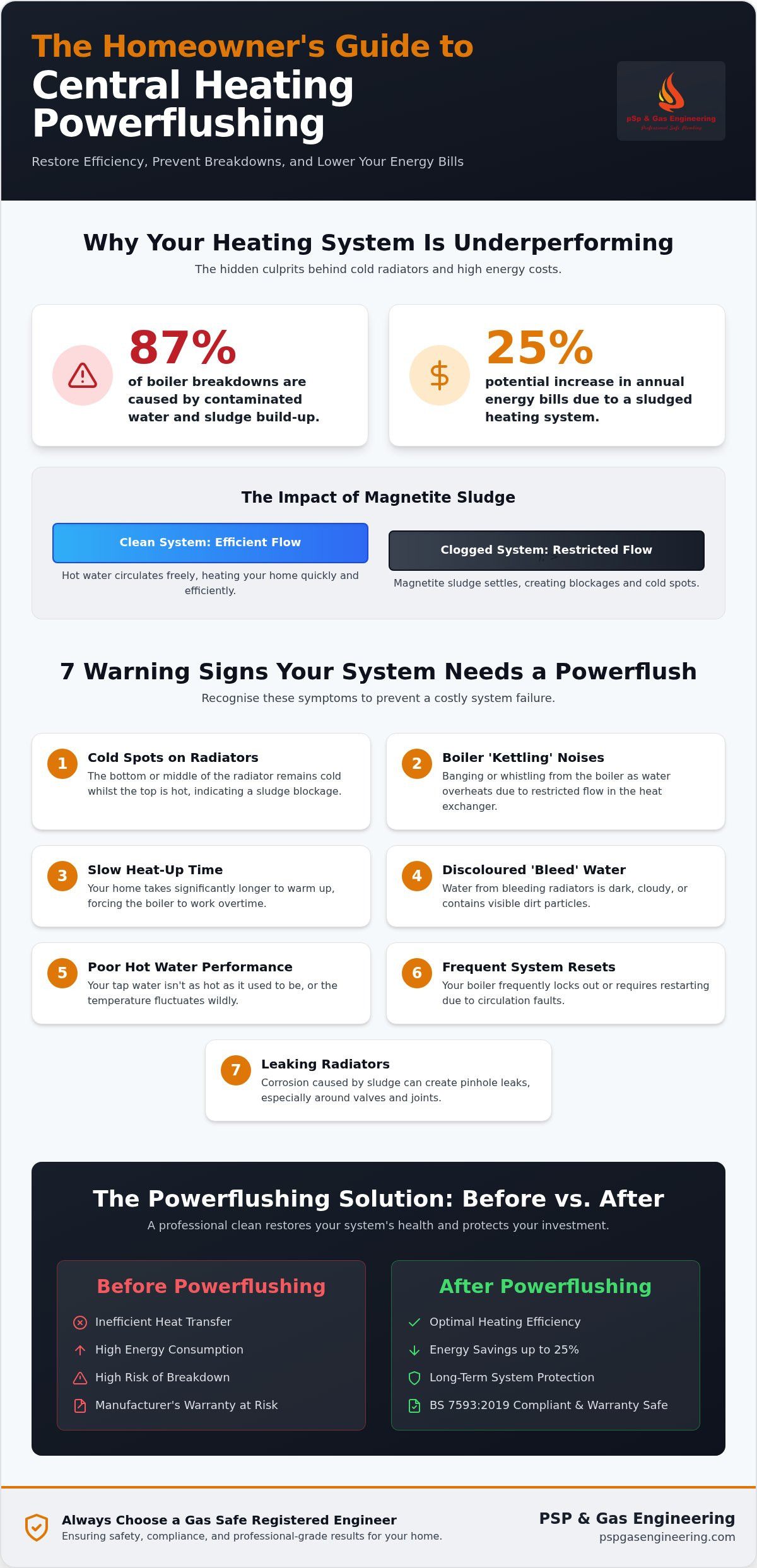
Did you know that 87% of boiler breakdowns are caused by dirty water circulating through the pipes? It's a sobering statistic for any homeowner in Croydon, especially when a sludged heating system can increase your annual energy bills by as much as 25%. You've likely felt the frustration of radiators that stay cold at the bottom or heard the unsettling kettling noises of a struggling boiler. It's natural to worry about a total system failure just as the winter temperatures begin to drop.
Investing in a professional powerflushing heating system service is the most effective way to restore your home's comfort and efficiency. We understand that you want a warm home without the stress of mounting repair costs or voided warranties. This article explains how a precision powerflush removes corrosive debris, lowers your monthly gas bills, and ensures your system remains compliant with BS 7593:2019 standards. We'll look at the technical process behind this essential maintenance and why local, Gas Safe registered expertise is vital for protecting your boiler's long-term health and ensuring your manufacturer's guarantee remains valid.
Key Takeaways
- Understand how removing magnetite sludge can reduce your annual energy consumption by up to 25% and prevent the primary cause of boiler failure.
- Learn to identify the seven critical warning signs of system neglect, including radiators with cold bases and persistent boiler kettling noises.
- Discover the methodical steps involved in a professional powerflushing heating system procedure to ensure even heat distribution across your entire home.
- Gain clarity on why a professional clean is essential for compliance with BS 7593:2019 and for protecting your manufacturer's boiler warranty.
- Recognise the importance of hiring a Gas Safe registered Croydon specialist to provide a thorough, engineering-led solution for long-term system health.
What is Powerflushing and Why is it Essential for London Homes?
A powerflush is a specialised maintenance procedure designed to restore the internal health of your heating circuit. It involves a high-velocity, low-pressure deep clean that uses advanced chemicals and specialised pumping equipment to purge contaminants from the entire system. Understanding What is a central heating system? helps clarify why this process is necessary. Because the water in your radiators remains in a closed loop for years, it eventually becomes a breeding ground for corrosion and chemical degradation.
The primary objective of a professional powerflushing heating system service is to remove a substance known as magnetite. This black iron oxide forms when the water in your system reacts with the steel inside your radiators. Over time, these metallic particles detach and circulate through your pipework, eventually settling into a thick, heavy sludge. Whilst a standard chemical flush relies on gravity to drain the system, a professional powerflush uses mechanical force and magnetic filtration to physically extract debris that would otherwise remain trapped.
The Role of Magnetite in System Failure
Magnetite is the primary cause of radiator cold spots. Because these iron oxide particles are heavier than water, they naturally settle at the lowest points of your radiators, preventing hot water from circulating through the bottom sections. This forces your boiler to run for longer periods to reach the desired room temperature, which places immense strain on the internal components. When this sludge reaches the boiler, it often coats the heat exchanger. This creates an insulating layer that prevents efficient heat transfer and can eventually lead to the heat exchanger overheating and failing entirely.
Hard Water and Scale Build-up in Croydon
Properties in Croydon and Greater London face a specific environmental challenge: hard water. The high mineral content in South London's water supply accelerates the formation of limescale within the heating circuit. Limescale often acts as a binding agent, trapping magnetite particles and creating stubborn blockages that are difficult to shift with basic cleaning methods.
This synergy between scale and sludge is particularly damaging to modern, high-efficiency boilers which have narrow waterways. Local water minerals can also reduce the effectiveness of standard corrosion inhibitors if the system hasn't been properly cleansed first. For Croydon homeowners, a professional powerflushing heating system treatment ensures that these mineral deposits are thoroughly stripped away, allowing protective chemicals to bond correctly with the metal surfaces of your installation.
Seven Warning Signs Your Heating System Needs a Powerflush
Recognising the early indicators of system degradation is vital for avoiding a mid-winter breakdown. Whilst some issues appear minor, they often signal a significant accumulation of magnetite sludge that requires a professional powerflushing heating system treatment. Identifying these symptoms early allows for a planned maintenance intervention rather than an expensive emergency repair. Consulting a professional guide on how to tell if your system needs a powerflush can help you distinguish between a simple air lock and deep-seated internal corrosion.
The "Cold Bottom" Radiator Symptom
Heat naturally rises, but magnetite sludge is heavy and dense. In a neglected system, these metallic particles settle at the base of your radiators, creating a physical barrier that prevents hot water from circulating. This results in "dead zones" where the bottom or middle of the radiator remains cold whilst the top is hot. This imbalance forces your boiler to run for significantly longer periods to achieve the temperature set on your thermostat. If you notice several rooms in your home are struggling to reach a comfortable temperature despite the heating being on for hours, it's a clear sign of sludge-induced inefficiency.
Boiler Kettling and Pump Stress
Boiler "kettling" is a distinct banging or whistling noise that sounds remarkably like a kitchen kettle reaching boiling point. This occurs when sludge or limescale deposits restrict the water flow through the heat exchanger, causing the water to overheat and turn into steam bubbles. Beyond the unsettling noise, this restriction places immense mechanical strain on your central heating pump. A struggling pump will often feel excessively hot to the touch or vibrate more than usual as it fights to circulate thickened, debris-laden water through narrowed pipework. Ignoring these sounds can lead to a total pump failure or a cracked heat exchanger.
Beyond these primary symptoms, there are several other red flags that Croydon homeowners should monitor:
- Slow warm-up times: If your home takes noticeably longer to heat up than it did in previous winters.
- Frequent radiator bleeding: If you find yourself constantly releasing air from radiators, it may actually be hydrogen gas produced by internal corrosion.
- Discoloured water: If the water appearing when you bleed a radiator is dark, cloudy, or black, the internal metal surfaces are actively corroding.
- Leaking radiator valves: Sludge can damage the internal seals of valves, leading to persistent, small leaks.
If your system is displaying any of these warning signs, a technical assessment from our local gas engineering specialists can determine the exact level of contamination and the required solution.
The Professional Powerflushing Process: A Step-by-Step Guide
A professional powerflush is a methodical engineering project, not a simple plumbing task. At PSP & Gas Engineering, we approach each system with a structured plan to ensure total restoration of your home's comfort. The process begins with an initial system inspection and baseline temperature recording. By using thermal imaging or digital thermometers, we document the "dead zones" in your radiators, providing a clear reference point for the improvements achieved after the flush.
Connecting the Pumping Station
We typically connect our specialised pumping station at the central heating pump or a convenient radiator point. This setup allows us to circulate water through the entire circuit without the need to remove any radiators from the walls. Our equipment operates at high velocity but low pressure. This distinction is vital for Croydon's older properties, as it ensures debris is dislodged without risking damage to aged pipework or joints. During this stage, we carefully isolate the boiler's delicate internal components to protect the heat exchanger from the dislodged magnetite.
Once the circuit is established, we focus on one radiator at a time. By closing the valves on all other units, we direct the full force of the pump through a single radiator. This concentrated flow, often combined with the use of a pneumatic vibrator on the radiator surface, ensures that even the most stubborn, compacted sludge is mobilised and extracted. This level of precision is why a professional powerflushing heating system service is far more effective than a basic DIY chemical pour.
Chemical Cleaning and Neutralisation
The process relies on professional-grade mobilising agents that chemically break down the bond between the sludge and the metal pipework. After the primary flush is complete, neutralising the system is an essential step. If left un-neutralised, the cleaning chemicals can continue to react with the system's metal surfaces, potentially causing long-term damage. We perform a "clear water" test to verify that all debris and chemical traces have been removed, ensuring the water is perfectly pH-balanced and clear.
Finally, we add a high-quality inhibitor to provide a protective layer against future corrosion, in accordance with BS 7593:2019 standards. The system is then balanced to ensure heat is distributed evenly across all rooms. We record the final temperatures, providing you with a clear comparison against the initial baseline and confirming that your powerflushing heating system service has successfully restored your heating efficiency.
Costs, Energy Savings, and Boiler Warranty Compliance
Investing in a professional powerflushing heating system is a strategic decision that offers immediate financial returns and long-term regulatory security. Whilst the upfront cost is a consideration, it's often outweighed by the significant reduction in monthly gas consumption. A system heavily contaminated with magnetite sludge can increase your annual heating bills by as much as 25% because the boiler must work harder and run for longer to overcome internal blockages. Restoring the system to its original efficiency ensures that every pound spent on gas is converted into usable heat for your home.
Maintaining Your Boiler Warranty
For Croydon homeowners planning a new combi boiler installation, a professional powerflush is usually a non-negotiable requirement. Most major manufacturers stipulate in their terms that the existing heating circuit must be thoroughly cleansed in accordance with BS 7593:2019 before the new unit is commissioned. This is because dirty water is the primary cause of system failure, accounting for 87% of boiler breakdowns according to British Gas. If an engineer discovers that a component failed due to sludge or debris, the manufacturer may refuse to honour the warranty, leaving you with a significant repair bill.
Following a flush, our Gas Safe registered engineers complete the Benchmark commissioning checklist. This document serves as a formal record that the system has been cleaned and treated with the correct inhibitors. It provides you with the peace of mind that your investment is fully protected and that you remain compliant with Part L of the Building Regulations, which governs the conservation of fuel and power in domestic properties.
Energy Efficiency and ROI
The return on investment for a powerflush is realised through both lower bills and the avoidance of catastrophic part failures. A clean system reduces the mechanical strain on the pump and the thermal stress on the heat exchanger. Comparing the one-off cost of a powerflush to the price of replacing a cracked heat exchanger or a seized pump reveals the clear financial logic of preventative maintenance. Beyond the direct savings, a more efficient system also reduces the carbon footprint of your property, aligning with the UK's broader shift toward more sustainable home heating solutions.
By removing the insulating layer of sludge from your radiators and pipework, your home will reach its target temperature faster and maintain it more effectively. If you want to secure your boiler's lifespan and start reducing your monthly energy expenditure, you can book a technical assessment with our Croydon team to evaluate your system's current efficiency levels.
Why Choose PSP & Gas Engineering for Your Croydon Powerflush?
Choosing a local specialist in Croydon ensures you receive a service tailored to the specific challenges of South London's hard water and diverse housing stock. Unlike national providers that often prioritise volume, PSP & Gas Engineering treats every powerflushing heating system project as a precision engineering task. We don't believe in a "quick rinse" approach. Instead, we perform a comprehensive health check of your entire circuit before and after the procedure to ensure every component is functioning at its peak. This methodical mindset allows us to identify underlying issues, such as faulty valves or pump wear, before they escalate into costly repairs.
The "Safe Pair of Hands" Approach
Our reputation as a "safe pair of hands" is built on a foundation of rigorous gas safe compliance. This commitment to safety is evident in everything we do, from basic maintenance to complex flue relining and video inspections. Because we are accustomed to handling high-stakes technical tasks like internal flue assessments, we bring a level of meticulous detail to a powerflushing heating system that general plumbers might overlook. Croydon residents value this professional plumbing expertise because it provides tangible security for their homes. We maintain a clean and respectful work environment, ensuring that the process is as non-disruptive as possible whilst prioritising the long-term durability of your installation.
Post-Flush Protection: Magnetic Filters
A successful powerflush is only the beginning of your system's renewed lifespan. To maintain these results, we strongly recommend the installation of a high-quality magnetic sludge filter. This device acts as a permanent safeguard, capturing any new magnetite particles before they can settle in your radiators or reach your boiler's heat exchanger. Maintaining your system health between professional visits is straightforward once this protection is in place. It involves annual water quality testing and ensuring your chemical inhibitors are topped up every five years, in accordance with BS 7593:2019 standards.
By choosing an engineering-led firm, you aren't just buying a cleaning service; you're investing in a comprehensive guarantee of competence and care. Our local specialists are deeply committed to the welfare of the Croydon community, providing the technical intricacies required to keep your home warm and your bills low. If you're ready to restore your system's efficiency and protect your boiler for the years ahead, Contact PSP & Gas Engineering for a free powerflushing quote today.
Protect Your Home and Optimise Your Heating Efficiency
Maintaining a healthy heating circuit is essential for both your financial security and your home's winter comfort. By removing years of accumulated magnetite sludge and limescale, you aren't just fixing cold radiators; you're actively extending the lifespan of your boiler and ensuring your energy bills remain manageable. A professional powerflushing heating system service provides the precision required to meet modern regulatory standards whilst protecting your manufacturer's warranty.
Our team of Gas Safe registered professionals specialises in Croydon and South London, bringing a meticulous, engineering-led approach to every project. We understand the specific challenges of local hard water and the technical intricacies of complex heating systems. Whether you're preparing for a new installation or addressing long-standing efficiency issues, we provide the security of a "safe pair of hands" and the reassurance of 24/7 emergency assistance available for your peace of mind. Taking proactive steps now prevents the stress of a mid-winter breakdown.
Request a Free Powerflushing Quote from Our Gas Safe Engineers to restore your system to its peak performance today.
Frequently Asked Questions
How long does a powerflush take for a standard 3-bedroom house?
A professional powerflush for a standard 3-bedroom property in Croydon typically takes between six and ten hours to complete. The exact duration depends on the total number of radiators and the severity of the magnetite accumulation. Because our engineers focus on a meticulous, radiator-by-radiator deep clean rather than a rushed process, we often dedicate a full working day to ensure the system is thoroughly purged and chemically balanced for long-term reliability.
Can a powerflush cause leaks in my old central heating pipes?
A powerflush does not create leaks, but it can occasionally reveal them. If internal corrosion has already eaten through a pipe or radiator, the sludge itself might be acting as a temporary plug. Our high-velocity, low-pressure equipment is specifically designed to be safe for older Croydon homes. We perform a pre-flush inspection to assess your system's integrity, ensuring we handle your installation with the precision and care of a seasoned specialist.
Is a powerflush better than a standard chemical flush?
Yes, a powerflush is significantly more effective than a standard chemical flush. Whilst a standard flush relies on gravity and the system's own pump to circulate cleaning agents, a professional powerflushing heating system service uses a high-powered external pump and magnetic filtration. This mechanical force physically extracts heavy magnetite deposits that a basic chemical drain would simply leave behind, providing a far deeper clean and restoring much higher levels of efficiency.
How often should I have my heating system powerflushed?
Most domestic systems require a professional powerflush every five to ten years. This interval varies based on the age of your boiler and the presence of a magnetic filter. We recommend a technical assessment if you notice cold spots or noisy operation. Regular maintenance, including annual water quality testing and refreshing your corrosion inhibitors every five years as per BS 7593:2019, helps maintain system health and prevents premature component failure.
Will a powerflush make my radiators hotter?
A powerflush will restore your radiators to their maximum heat output by removing the insulating layer of sludge at the base. You'll notice that radiators heat up faster and distribute warmth evenly across their entire surface, eliminating the "cold bottom" symptom. This improved thermal transfer means your rooms reach the desired temperature more efficiently, allowing your boiler to cycle less frequently and reducing the strain on your primary heating components.
Do I need to be home whilst the engineer performs the powerflush?
We generally recommend that a homeowner is present at the start and end of the procedure. Our engineers require access to every radiator in your Croydon property to perform individual flushing and final balancing. Whilst you don't need to supervise the entire six-to-ten-hour process, being available allows us to demonstrate the "clear water" test results and explain the final system temperature readings, ensuring you have total peace of mind regarding the work.
Can I powerflush my heating system myself as a DIY project?
Attempting a DIY powerflush is not recommended due to the technical intricacies and the specialised equipment required. Using the wrong chemicals or incorrect pressure can cause permanent damage to your boiler's heat exchanger or lead to significant leaks. A professional powerflushing heating system service performed by a Gas Safe registered engineer is often a mandatory requirement for validating your boiler's warranty and ensuring compliance with current UK Building Regulations and safety standards.
What is the difference between powerflushing and jet flushing?
Powerflushing and jet flushing are different terms for the same high-velocity cleaning process. Both methods involve connecting a specialised pumping station to the heating circuit to purge magnetite and debris. At PSP & Gas Engineering, we focus on the engineering-led methodology of the process rather than the terminology. Our goal is to ensure a methodical deep clean that adheres to the highest safety standards, regardless of the colloquial name used for the service.


