
A general homebuyer survey can leave important plumbing defects undiscovered. In England and Wales, buyers aren’t legally required to commission a property survey before purchase, but a plumbing survey before buying a house in Croydon can provide a closer assessment of the plumbing and drainage before you commit.
It’s easy to assume a standard survey will uncover every issue that could affect a home. However, a focused plumbing inspection can identify faults that may not be examined in detail during a general survey, giving you clearer information to consider during the purchase.
This article explains what a pre-purchase plumbing survey can check, how its findings may support price negotiations and when a general homebuyer survey may not be enough. You’ll also learn how to assess the findings and decide on your next step.
Key Takeaways
- Consider a specialist plumbing inspection alongside a general homebuyer survey to uncover faults that may receive less attention.
- Use clear survey findings to support discussions with the seller about repairs or the purchase price.
- Review boiler, radiator and heating-system observations carefully before deciding what needs attention.
- Learn which plumbing and drainage issues can be easy to overlook, and what a focused inspection can help bring to light.
Why Do You Need a Pre-Purchase Plumbing Survey?
A general homebuyer report and a specialist inspection have different scopes. A purchase plumbing survey can assess visible and hidden problems, giving you evidence to consider before you negotiate.
Specialist plumbing survey scope
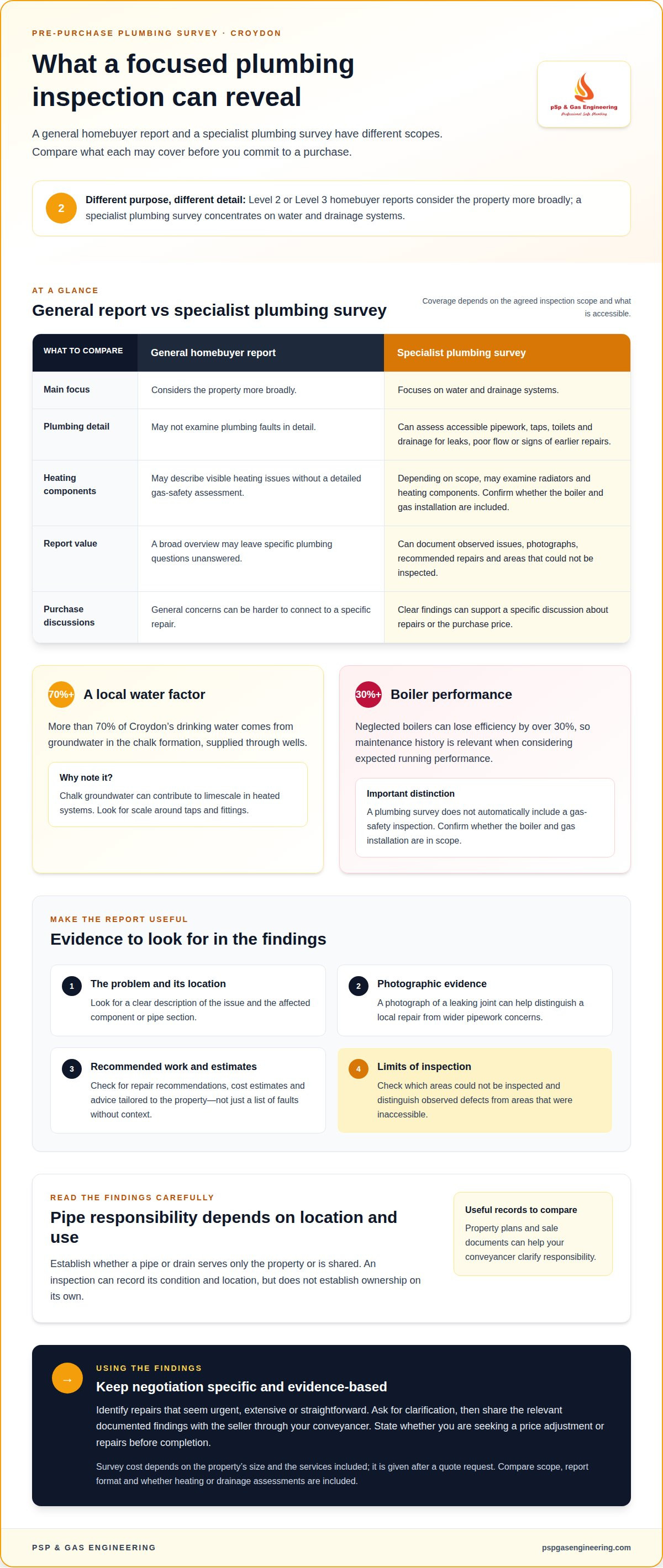
A Level 2 or Level 3 homebuyer report considers the property more broadly, while a specialist plumbing survey focuses on water and drainage systems. It can assess accessible pipework, taps, toilets and drainage for leaks, poor flow or signs of earlier repairs. Croydon’s water supply also matters: over 70% of drinking water comes from groundwater in the chalk formation, supplied through wells. Chalk groundwater can contribute to limescale in heated systems, so note scale around taps and fittings.
Report evidence and recommended works
The Ministry of Housing, Communities and Local Government approved Updated Approved Document G incorporating 2024 amendments. A survey report should make its findings useful for a purchase decision by describing the problem, showing photographic evidence and setting out recommended repairs. For example, a photograph of a leaking joint can help distinguish a local repair from wider pipework concerns. Look for repair cost estimates and advice tailored to the property, rather than a list of faults without context. This gives you a clearer basis for prioritising work and discussing the findings with the seller.
Water pipe and drain responsibilities
In Croydon, responsibility depends on the location and use of the affected pipe or drain. Establish whether it serves only the property or is shared, then compare the findings with property plans and sale documents. An inspection can record a problem’s condition and location, but that alone doesn’t establish ownership. Ask your conveyancer to use the property records to clarify responsibility before agreeing who will arrange repairs. This distinction matters if a leak or blockage is outside the home’s internal plumbing. A written report with photographs can help pinpoint the affected section and support that discussion.
Can I use survey findings to negotiate the price?
Yes. A clear plumbing inspection report can provide evidence for discussing repairs or negotiating the purchase price. If it identifies a leaking pipe, unreliable hot water or drainage defects, ask for the finding, its likely effect and recommended action in writing. Use those details to make a specific proposal rather than relying on a general concern about the property.
A specialist pre-purchase plumbing and heating survey focuses on systems that a broader home report may not assess in detail. Depending on the agreed scope and access, it can examine accessible pipework, taps, toilets, drainage, radiators and heating components. Check that the written findings distinguish observed defects from areas that could not be inspected.
If defects appear, read the report first and identify which repairs seem urgent, extensive or straightforward. Ask for clarification about the affected components and recommended work. Share the relevant findings with the seller through your conveyancer, and state whether you’re seeking a price adjustment or repairs before completion. Keep the discussion tied to documented evidence, such as a photograph of a leak or a recorded drainage concern.
The cost of a pre-purchase plumbing survey depends on the property’s size and the services included, and is given after a quote request. Compare quotes by checking the inspection scope, report format and whether heating or drainage assessments are included. A lower fee may not represent the same work if it excludes systems you want assessed.
For example, a report identifying a faulty valve and a separate concern about poor drainage gives you two distinct points to discuss. Ask which repair recommendations are supported by inspection evidence, then consider their likely impact on your plans and budget. A thorough report helps you negotiate using specific findings, while leaving the final agreement to you and the seller.
Will the survey include a gas safety check for the boiler?
Not automatically. A plumbing survey and a gas safety inspection are distinct checks, so establish whether the booked inspection includes the boiler and gas installation. A general property survey may describe visible heating issues without providing a detailed assessment of gas safety.
A specialist boiler assessment can examine efficiency, flue integrity and thermostat functionality. It can also record the boiler’s condition and how it operates during the inspection. Neglected boilers can lose efficiency by over 30%, making the system’s maintenance history relevant when assessing expected running performance.
Consider radiators as part of the wider heating system. Look for visible corrosion, leaks, uneven warmth or signs of repeated repairs, and note whether the controls respond as expected. These observations can help distinguish a boiler fault from a wider circulation or control issue. The report should identify what was examined and any limitations.
Ask for boilers, hot-water cylinders or storage tanks, and accessible gas pipework to be listed in the inspection scope. The presence and visible condition of a gas meter can be recorded, but that alone doesn’t assess the full installation. Flue condition matters because the flue carries combustion products away from the appliance.
For a detailed gas safety assessment, arrange a dedicated inspection rather than assuming a plumbing survey includes one. The findings can clarify whether the appliance and accessible flue components need attention before purchase. They can also help you plan maintenance, repairs or a future boiler installation.
Keep the report with the property documents and note the inspection date, boiler details and recommendations. If the seller provides service records, compare them with the survey observations and ask about any gaps. This review can support peace of mind, but it shouldn’t be mistaken for evidence that every heating component has been tested.
Issues general surveyors may miss
A general survey gives buyers a broad view, but plumbing details can escape a visual inspection. In Croydon, a focused check can help identify less obvious defects before they become an unexpected cost.
Overlooked plumbing issues
Pipe insulation, drainage falls and concealed joints may receive limited attention in a general report. Poor drainage falls can affect homes less than ten years old, as can incorrect pipe insulation. Look for slow drainage, damp patches, water marks and exposed pipework that appears poorly supported. These signs don’t establish the cause, but they give a qualified engineer specific areas to assess. A detailed inspection can help distinguish a local repair from a wider plumbing concern.
Common plumbing problems to look for in Croydon include leaks, drainage faults and signs of inadequate insulation. Check under sinks, around toilets and near visible pipe joints, and note persistent damp or unusual staining. A boiler problem may also be less obvious if the heating hasn’t been tested during the visit. Record each observation and its location so it can be assessed alongside the survey findings.
Lead pipes and outdated plumbing
To identify possible lead water pipes, inspect exposed sections near the internal stop tap and where the supply enters the home. Lead pipe can appear dull grey, but an engineer can assess the material without relying on appearance alone. Don’t cut or disturb pipework to identify it. Older fittings, corrosion and a mixture of pipe materials can also indicate plumbing that needs closer assessment.
For a London property, ask the surveyor to record accessible pipe materials and signs of previous alterations. Croydon has older homes where plumbing may have changed over time, so check visible sections in cupboards and service areas. Base your investment decision on the condition and extent of the system, not just the age of the boiler.
If a boiler or gas installation raises concerns, arrange an assessment by a Gas Safe registered engineer. Discuss plumbing concerns when you need a closer look at specific defects.
PSP & Gas Engineering: Boiler Installations
PSP & Gas Engineering can help homeowners address plumbing and heating issues identified during a property purchase. If the survey flags an ageing or faulty boiler, its Boiler Installations service may be relevant when replacement is the appropriate next step. A Gas Safety Inspection assesses concerns about a gas appliance or installation, while Video Inspections can help examine areas that are difficult to assess visually.
Use the survey findings to identify the issue, then choose the relevant service. A boiler concern, for example, needs a different response from a suspected problem inside pipework or drainage. This measured approach keeps follow-up work focused on the property’s actual needs.
To discuss plumbing, boiler or gas safety requirements, contact PSP & Gas Engineering.
Make your next move with clear priorities
A plumbing survey before buying a house in Croydon is most useful when its findings shape a practical plan, not just a decision about whether to proceed. Before your next conversation about the property, note which issues need attention first, which require further investigation and which can be planned for later. Keep these priorities with your purchase documents so they remain clear as the transaction moves forward.
Where a report points to work on a boiler, gas system or flue, match the next step to the specific finding. PSP & Gas Engineering provides relevant services, including Boiler Installations, Gas Safety Inspections and Flue Relining. Share the issue you need addressed and the information available from the inspection.
For a considered next step, contact PSP & Gas Engineering to discuss the relevant work. With a clear priority and the right technical support, you can move towards your purchase with greater confidence.
Frequently Asked Questions
Is a survey a legal requirement?
No. In England and Wales, buyers aren’t legally required to commission a property survey before purchase. A plumbing inspection is voluntary, but it can provide useful detail for your decision before contracts are exchanged. For example, if a viewing reveals damp beneath a sink, arrange an assessment early enough to understand the finding and discuss its implications with your conveyancer.
When should you organise a plumbing inspection?
Arrange the survey after your offer is accepted and early enough to consider the findings before exchanging contracts. This gives you time to review concerns, discuss them with your conveyancer and decide whether further investigation is needed. Ask the seller or agent to provide access to relevant rooms and service areas, such as the boiler cupboard, under-sink units and accessible pipework.
What does a plumbing survey before buying a house include?
A plumbing survey before buying a house in Croydon can examine accessible pipework, taps, toilets, drainage and heating components. Check the written scope: does it cover only visible inspection, or include specialist investigation of concealed or difficult-to-reach areas? A camera inspection, for instance, may help assess a section of pipe that cannot be judged from its exterior alone.
How much does a plumbing survey cost in Croydon?
The price depends on the property, access and the inspection scope, and is given after a quote request. A survey covering accessible plumbing differs from one that also examines heating components or requires specialist drainage investigation. Before booking, compare what each proposed inspection includes, how findings will be reported and whether photographic evidence or repair recommendations are part of the report.
Is a plumbing survey included in a standard RICS home survey?
Not by default as a separate, detailed plumbing inspection. A standard RICS home survey considers the property’s general condition, but its scope differs from a specialist assessment of plumbing systems. Read the survey scope and note any access limitations. If you need specific findings about pipework, drainage or a suspected leak, arrange a focused inspection alongside the broader property report.
What plumbing checks should buyers request before exchanging contracts?
Ask for accessible pipes, taps, toilets, drainage and signs of leakage to be assessed, with any limitations recorded. If the home has a boiler, clarify whether the inspection covers its condition or whether a separate gas safety assessment is needed. Request clear notes on defects, photographs where useful and recommended next steps. Share relevant findings with your conveyancer before exchange.


