
A standard home survey can flag visible gas concerns, but it isn’t a detailed gas safety assessment. What’s involved in a home buyer gas survey is a check of gas appliances, their installation, accessible pipework and flues; a home-buyer gas safety check may be an 18-point inspection. The findings help identify visible issues and whether further testing is needed.
It’s understandable to want reassurance before committing to a property, especially when parts of the gas system may be hidden from view. A general surveyor can inspect visible services, but this visual check has limits and does not replace specialist testing when a concern needs closer investigation.
This article explains which parts of the gas system may be examined, what a visual inspection can and cannot establish, and when more detailed checks may be appropriate. You’ll have a clearer picture of what the survey can tell you when assessing a home in Croydon.
Key Takeaways
- Learn which gas appliances, visible connections, pipework and flues may be included in a buyer’s safety inspection.
- Understand why a visual survey can identify concerns but may not establish the full condition of concealed services.
- See how suspected leaks and flue or combustion concerns can point to the need for more specialist testing.
- Find out when gas safety inspections, video inspections or flue relining may help address findings at a property.
Gas appliance and installation safety checks
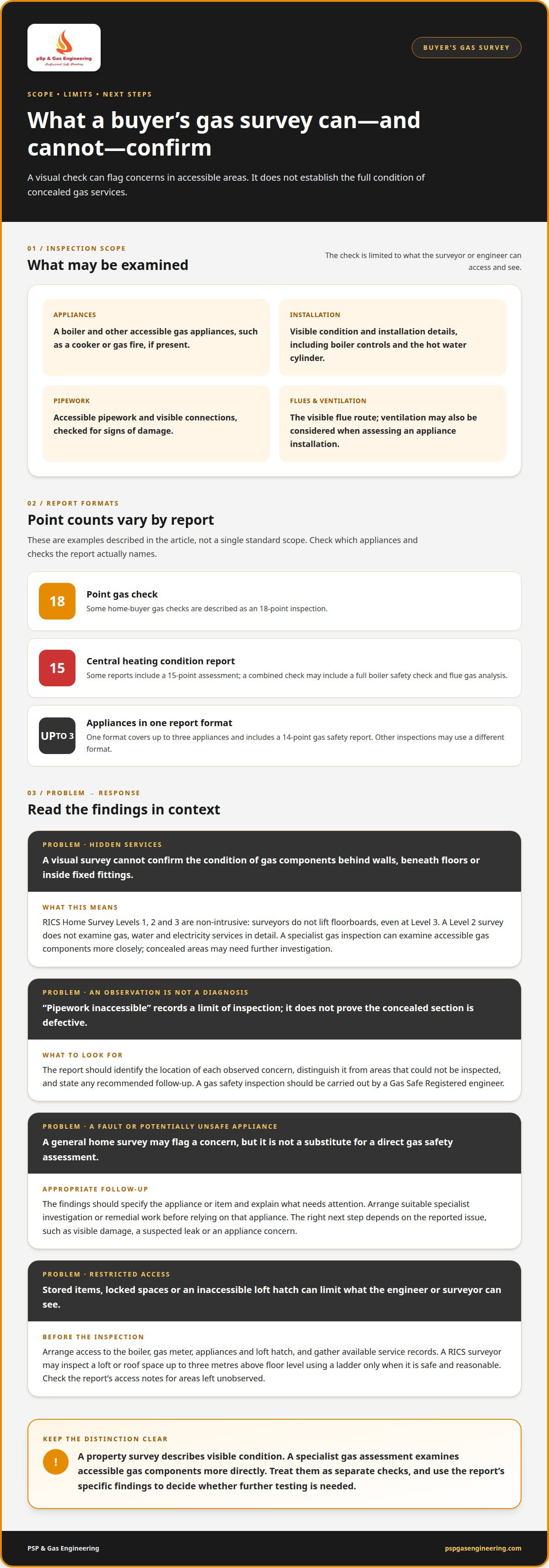
Understanding what's involved in a home buyer gas survey starts with its scope: visible appliances, installations, accessible pipework and flues. Basic checks of gas and other main services are limited to parts the surveyor can see. Some home-buyer gas checks are described as an 18-point inspection, while report formats can differ.
Boiler and central heating checks
A boiler assessment considers its visible condition and installation, heating controls, hot water cylinder and flue. Some reports include a 15-point central heating condition report, and a combined check may include a full boiler safety check and flue gas analysis. Look for findings that identify specific concerns. A visual assessment cannot test every concealed component or establish the complete condition of the heating system.
Gas appliance checks
The appliances checked may include a boiler and other accessible gas appliances, such as a cooker or gas fire, if present. One home-buyer report format covers up to three appliances and includes a 14-point gas safety report. Other inspections describe an 18-point check. Knowing what's involved in a home buyer gas survey also means checking which appliances the report actually names and whether it records condition or installation concerns.
Pipework and ventilation checks
An engineer examines accessible pipework and visible connections for signs of damage, along with the appliance installation and visible flue route. Ventilation may also be considered when assessing an appliance installation. Concealed pipes and fittings behind fixed units cannot be assessed visually. Basic checks of other main services, including electrics, are similarly limited to visible parts.
Faults and unsafe appliances
If a fault or potentially unsafe appliance is identified, the findings should specify the item and explain what needs attention. Arrange appropriate specialist investigation or remedial work before relying on that appliance. A gas safety inspection assesses gas-related concerns more directly than a general home survey. Electrical installation condition checks are separate and cover relevant parts such as sockets, wiring and the fuse board.
Limits of visual inspection and specialist testing
A home survey can identify visible concerns, but it cannot establish the condition of concealed services. When buying, treat the property inspection and a specialist gas assessment as separate checks.
Visual inspection of the property
RICS Home Survey Levels 1, 2 and 3 are non-intrusive. A surveyor can inspect visible walls, floors and built-in fittings, but won’t lift floorboards, even during a Level 3 survey. A RICS Level 2 survey does not examine services such as gas, water and electricity in detail. Its findings therefore cannot replace a dedicated assessment of central heating or gas appliances.
Roof-space access also has limits. A RICS surveyor may inspect a loft or roof space up to three metres above floor level, using a ladder when it is safe and reasonable. Check the report’s access notes, as restricted access can leave parts of the property unobserved.
Gas check and survey distinctions
A gas safety check focuses on the safety of gas appliances and their installation. A pre-purchase survey gives broader information about a home’s visible condition, while a specialist gas inspection examines accessible gas components more closely. A pre-purchase gas inspection can cover appliances, visible connections, accessible pipework, flues and ventilation. Concealed areas may need further investigation.
A gas safety inspection should be carried out by a Gas Safe Registered engineer. In England, sellers are not legally required to obtain gas or electrical checks when selling a home, although gas checks are required when a property is let. Buyers can ask the seller for gas safety records, appliance guarantees and service history. If the findings identify work, buyers can request repairs or negotiate the price, but the seller does not have to agree.
Access and inspection timing
The time required depends on the number of appliances, the inspection’s scope and how easily the engineer can reach them. There is no single duration for every property. Clear access to the boiler, gas meter, appliances and loft hatch helps the inspection proceed; stored items or locked spaces can limit what can be seen.
RICS surveyors may use a ladder to access a roof space only when it is safe and reasonable, up to three metres above floor level. Before the visit, arrange access to relevant rooms and gather available service records. This helps the engineer compare the visible installation with the property’s documented gas history.
Gas leaks and pipework
Pipework matters because a leak can affect a home’s safety and use after purchase. During a gas survey, the engineer considers accessible pipework and visible installation concerns. A visual inspection cannot establish the condition of sections concealed behind walls, beneath floors or inside fixed fittings. The report should distinguish observed defects from areas that could not be inspected, helping buyers decide whether further investigation is needed.
When a concern arises, a specialist assessment can investigate the gas installation more directly than a general property survey. The right next step depends on the reported issue: visible damage, a suspected leak and an appliance concern may each require different checks. Findings should identify the affected area and explain whether further work is needed to assess safety or compliance. Buyers can then discuss the report with the seller before completing the purchase.
Distinguish a recorded observation from a confirmed fault. For example, a survey may note that pipework is inaccessible rather than conclude that the concealed section is defective. This prevents an assumption from being mistaken for a diagnosis. Ask for the report to identify each concern’s location and any recommended follow-up, so decisions are based on specific evidence rather than a general impression of the property.
Gas issues can affect a buyer’s move-in plans as well as safety. One buyer reported being without heating for 8 days after gas problems were found in a purchased UK home. That individual account illustrates why unresolved findings matter, but it does not predict what will happen in another property. Before committing, review any reported leak or pipework defect, establish which areas were inspected, and factor necessary specialist investigation into the purchase decision.
Flue gas analysis and combustion
Flue gas analysis adds measured information to a visual boiler inspection. A combined home-buyer check may include a full boiler safety check and flue gas analysis. The engineer assesses gases produced during combustion, helping evaluate the boiler’s operation. This provides information that a visual inspection alone cannot establish. Consider the results alongside the boiler’s condition, installation and flue, rather than treating them as a complete assessment of the entire heating system.
Combustion involves the appliance burning gas and directing its products through the flue. A qualified engineer carries out the analysis as part of a methodical safety assessment, following the boiler’s operating process and interpreting the test results. Buyers should look for findings that identify the appliance tested and explain any concern. A clear report states whether the inspection recorded an issue or recommended further investigation.
Flue condition matters because the flue carries combustion products away from the appliance. A visual check can identify accessible concerns, while flue gas analysis adds evidence about boiler operation. Neither should be confused with a general property survey, which is limited to visible services. If the inspection notes restricted access or a flue concern, the findings should make that limitation clear so the buyer understands what was and was not assessed.
Use the report to connect the result to a practical next step. For example, a finding about boiler operation may call for closer assessment of the appliance, while a flue concern may need attention to the route or its condition. The engineer’s written findings help distinguish these issues and guide decisions before purchase. If you need a closer assessment of a flue concern, arrange a specialist flue inspection based on the report’s findings.
A combined home-buyer gas and electrical check was described as including a full boiler safety check, flue gas analysis, heating controls and hot water cylinder checks, an electrical installation condition report, and checks of sockets, wiring and the fuse board. This wider scope considers combustion results alongside other home services. The report should still clarify what was assessed and which findings need follow-up.
PSP & Gas Engineering: Boiler Installations
PSP & Gas Engineering can help you act on gas survey findings through Gas Safety Inspections, Boiler Installations, Flue Relining and Video Inspections. If a report raises a boiler concern, a gas safety inspection can assess the installation; where replacement is needed, a boiler installation is the next step. A flue concern may call for relining, while a video inspection can help investigate areas that are difficult to assess visually.
When discussing the findings, explain the concern and share relevant details about access and service history. This helps focus attention on the work required instead of treating every observation as the same problem. For gas-related findings at a Croydon property, contact PSP & Gas Engineering to discuss the next step.
Make your next property decision with clarity
Use the survey findings to decide what needs attention before proceeding with the purchase. Understanding what’s involved in a home buyer gas survey helps distinguish observations from issues needing a more focused assessment. Keep the report with the property documents and use its specific findings to plan your next step.
If further work is identified, match the response to the issue rather than assuming every concern needs the same solution. PSP & Gas Engineering provides Gas Safety Inspections for gas-related findings, Boiler Installations when replacement is needed, and Flue Relining for flue concerns. Use the report to guide a clear discussion about the work required.
For support with a property’s gas findings, contact PSP & Gas Engineering to discuss the appropriate next step. A measured decision based on the survey can help you move forward with greater confidence.
Frequently Asked Questions
What is a gas survey for a home buyer in the UK?
A home buyer gas survey is a focused assessment of a property’s gas installation to help a buyer understand its condition before purchase. Unlike a general home survey, it is carried out by a Gas Safe Registered engineer and focuses on gas-related components. For example, if a survey report notes an older appliance or limited access to pipework, this assessment can provide relevant findings to inform your next steps.


