

The cost of moving a radiator to another wall in the UK depends on the work needed at the new position, not just the distance across the room. The job may involve extending or rerouting pipework, lifting flooring and repairing the wall at the old position. Pipe access, floor type and finishing work all affect the cost, so a quote is based on the specific property and scope.
It’s understandable to want a clear figure before changing your room layout, especially when you’re weighing up disruption as well as expense. This guide explains what influences the cost, what a move involves and whether the work can affect boiler pressure. It also covers the difference between a straightforward move and a more involved relocation, so you can see which parts of the job matter most.
Key Takeaways
- Understand why moving a radiator to a new wall can involve more work than shifting it along the same wall, particularly when the pipe route changes.
- See how labour rates and regional differences, including London and the South East, can influence the overall estimate.
- Identify how floor access, pipework and repairs to the old radiator position can add to the work involved.
- Learn what happens to the heating system during a relocation and why boiler pressure is worth considering afterwards.
Will relocating a radiator affect my boiler pressure?
Moving a radiator can temporarily affect boiler pressure if the heating system is drained.
A like-for-like move on an existing wet central heating system is not normally notifiable under UK building regulations. Adding radiators or changing the heat source can alter the requirements. If you rent or own a leasehold property, your tenancy agreement or lease may also require consent.
Distance and floor type
The distance between the old and new positions affects how much pipework is needed, while the floor type determines how easily it can be routed. A stud wall may allow concealed pipes, but access and making good still add to the work.
Pipework, valves and system draining
Longer or harder-to-reach pipe runs require more labour and materials. After the system is refilled, its pressure needs restoring and air removing, so pressure may change temporarily during the work.
Other cost factors include pipe access, wall repairs and radiator condition. If a radiator is over 15 years old, undersized or unsuitable for the new position, replacement may make more sense. Electric radiators involve different work from wet-system models, particularly if electrical wiring needs changing.
What's Involved in Moving a Radiator?
Moving a radiator involves more than lifting it from one set of brackets to another. The heating engineer needs to assess the new position, pipe route, floor access and effect on the system. These factors determine the labour involved and help define the scope for a quote.
First, the plumber identifies how the radiator connects to the heating circuit and where its new valves will sit. The radiator is removed, then the pipework is routed to the new position and connected. On a straightforward move, the work usually takes 2 to 3 hours. Concealed pipe runs or restricted access can extend the job.
A plumber’s charge reflects the time needed to remove the radiator, alter pipework and refit it. A fixed quote can set out the full scope, including work beyond labour time.
Location also affects the estimate. London and the South East typically cost 15 to 25 per cent more than the UK national average for radiator moves. A bathroom relocation with pipework routed around a window may take longer than an accessible position on a clear wall. The same applies when flooring or boxing-in restricts access.
Potential issues include leaks at disturbed joints, trapped air after refilling, and damage to floors or walls during access. Air can make a radiator heat unevenly or cause noise, while a leaking connection can damage nearby flooring. Careful reconnection and checks after refilling help identify problems before you rely on the heating.
For a wider heating project that includes a boiler change, explore boiler installation work alongside the radiator plans.
How Much Does It Cost to Move a Radiator?
Relocation estimates vary with the pipe route, access and finishing work. A market price sample puts typical offers between £168 and £275, with a median of about £275.
Average relocation cost
An average is a guide to likely market spend, not a fixed price for every property. A benchmark for a straightforward move may not include extensive pipe chasing, repairs or a replacement radiator. To assess the cost of moving a radiator to another wall in the UK, compare estimates by the work included, not just the headline figure.
Cost of moving to another wall
Moving a radiator to another wall costs more when the heating system needs a new pipe route. Pipes beneath timber flooring may be easier to access than those requiring concrete-floor access or wall chasing. For a UK estimate, include the route and any making-good work as well as the relocation itself.
DIY relocation
DIY relocation involves removing and reconnecting the radiator without a professional carrying out the plumbing work. The tasks can include isolating valves, draining water, extending pipework, fixing brackets and refilling the system. Cast iron radiators are particularly heavy, and leaks from disturbed joints can damage floors. Pipe connections must also remain secure under heating-system pressure.
Relocation time
A typical central-heating radiator move takes 2 to 3 hours. That estimate can increase if the new route requires chasing, difficult floor access or additional pipework. The radiator must be removed, repositioned, connected, filled and checked as part of the job. A simple move with accessible connections differs from relocating a unit across a room or altering concealed pipe runs.
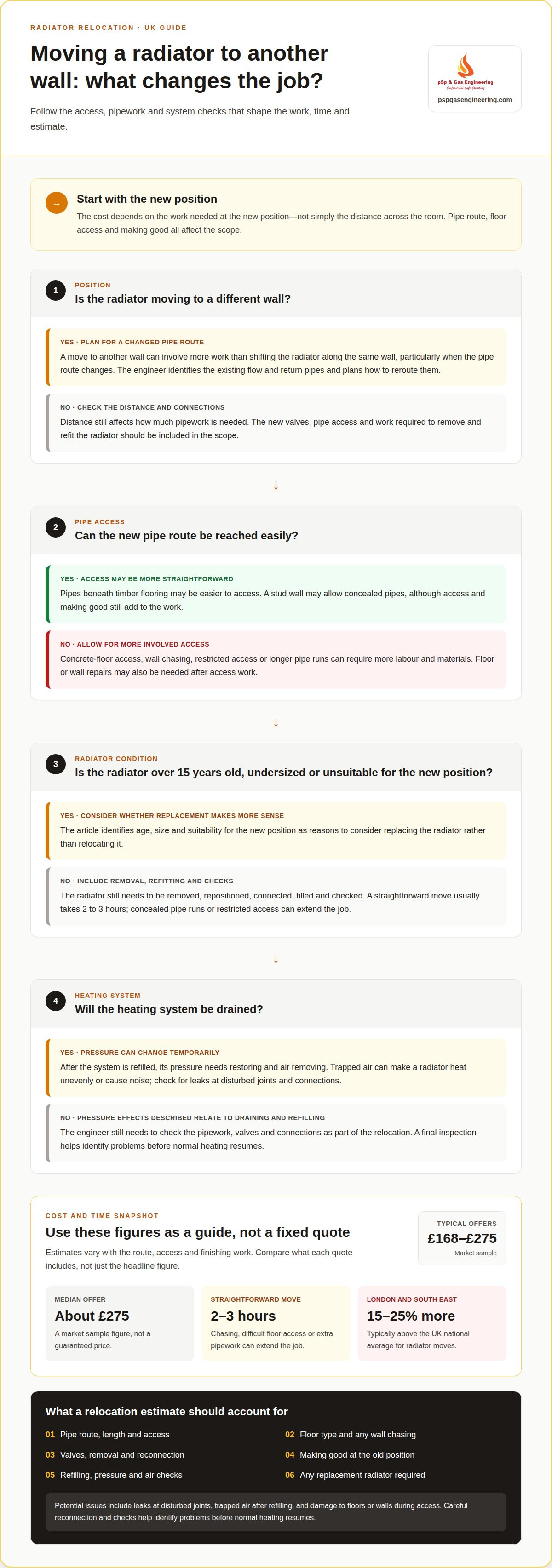
Moving a radiator to a different wall
Relocating a radiator across a room means connecting it to the heating circuit from a new position. The new pipe route, floor access and wall repairs shape the work more than moving the radiator itself.
The engineer identifies the existing flow and return pipes, then plans how to reroute them. Radiators in a central heating system are usually plumbed in parallel, so the altered connections need to maintain that arrangement. Pipes may run beneath timber floors, through a stud wall or along the surface in covers. Each route affects access and the finish.
Before removing the radiator, the system is isolated and drained as required. The radiator is detached from its brackets, and new brackets are fixed securely at the chosen position. Pipework is extended or rerouted to meet the valves without forcing the connections into alignment. On concrete floors, reaching a concealed route can require more disruptive access than lifting timber floorboards.
After reconnection, the system is filled and checked for leaks. Refilling can introduce air, so the radiator may need bleeding to heat evenly. Check system pressure after refilling, as draining and restoring water can affect the reading. A final inspection of joints and valves helps identify problems before normal heating resumes.
Finishing work also affects the project. Removing old brackets can leave holes, and pipe routes through walls or floors may need repairs. The old radiator position might require filling, plastering or repainting. Extensive wall chasing, pipe rerouting, a system power flush and rebalancing can turn a simple relocation into a much larger project.
For a radiator move across another wall, arrange professional plumbing support to assess the pipe route and finishing work.
PSP & Gas Engineering
PSP & Gas Engineering can help with wider heating work alongside a radiator relocation. If the move is part of replacing an older boiler, a boiler installation may also be relevant. Considering the pipe route and condition of the existing system helps clarify whether the work should be planned together.
If you’re concerned about boiler pressure after heating work, explain what changed and when the issue began. PSP & Gas Engineering also carries out gas safety inspections, flue relining and video inspections when these services suit the property’s needs. The next step depends on the problem, not just the radiator’s new position.
Contact PSP & Gas Engineering to discuss your heating project.
Plan the next step with confidence
Before settling on a new position, consider how the radiator will work with the room’s layout and your wider heating plans. A clear brief covering the intended wall, access and any boiler concerns helps focus the discussion on your home’s practical requirements. For the cost of moving a radiator to another wall in the UK, the pipe route and property conditions are key.
PSP & Gas Engineering provides boiler installations, gas safety inspections and flue relining. These services may be relevant if your radiator project is part of broader heating or gas work. Discussing the project helps identify which aspects need attention, without assuming every service applies to every home.
Contact PSP & Gas Engineering to discuss your heating plans and the next practical step. A considered plan can make it easier to move forward with confidence.
Frequently Asked Questions
Can a radiator be moved a few inches without new pipework?
Yes, a small adjustment may use the existing pipe connections if they align with the radiator’s new position. The valves, brackets and pipe tails must also suit the revised position. If the connections do not reach or line up, extending the pipework becomes part of the job.
What happens to the old pipes after the radiator is moved?
Redundant pipe ends need sealing to prevent water escaping from the heating circuit. Accessible old pipework may be removed; concealed sections can remain if removing them would cause unnecessary disruption. The route and condition of the pipes determine the practical option. After reconnecting the radiator, the system can be refilled and the altered joints checked.
How much does it cost to move a radiator to another wall in the UK?
The quote may also account for access beneath floors, removal and refitting, and repairs where the radiator previously stood. UK market estimates are guides, not fixed prices for every property.
What is the average UK plumber's hourly or day rate for relocating a radiator?
The charging method affects how labour costs are presented, so compare the work included as well as the rate.
What factors affect the cost of moving a radiator, such as pipework length and wall type?
The main cost drivers are the length and accessibility of the pipe route, floor construction, and how much wall or flooring needs repair. Concrete can make pipe access harder than a timber floor. Microbore systems using 8mm or 10mm pipework can also be more difficult to extend than standard 15mm systems. A new wall position that needs extensive chasing adds work beyond the plumbing connections.
How much does it cost to extend or reroute radiator pipes in the UK?
These figures describe different parts of the work: materials alone are not the same as extending or rerouting pipes, which also involves labour and access.


