

If you’re searching for “how to prepare your heating for winter Croydon”, start with a few straightforward checks. Arrange an annual boiler service before the coldest weather, test that the thermostat starts the heating, and bleed radiators only if they have cold patches or uneven warmth. Set the thermostat to a comfortable temperature and insulate exposed pipes before freezing weather sets in.
It’s easier to deal with uneven heating or a boiler concern before colder weather puts your system to greater use. A steady thermostat setting, clear space around radiators and simple steps to keep warmth in can also make rooms more comfortable.
This guide explains how to check your central heating, bleed a radiator safely, choose a comfortable thermostat temperature and reduce draughts. It also covers practical ways to keep yourself warm, so you can prepare methodically and recognise when a heating issue needs professional attention.
Key Takeaways
- Use radiator cold spots and uneven warmth to decide whether bleeding is needed, rather than doing it routinely.
- Keep your thermostat at a comfortable, steady setting and check its battery backup before winter.
- Watch for unusual boiler noises, repeated pressure loss or slower heating, as these can indicate a problem that needs attention.
- Reduce heat loss with curtains and draught-proofing, and take extra care to keep vulnerable household members warm.
1. Bleeding radiators
A radiator that is cold at the top but warm near the bottom may have trapped air inside. This can prevent hot water circulating evenly, leaving the radiator unable to warm the room consistently. Cold patches elsewhere on the surface can also mean bleeding may help. Check the radiator while the heating is on and compare how warm the top and bottom feel. A draught near a window can make a room feel cold too, even if the radiator is heating evenly.
Before bleeding a radiator, switch the heating off and let it cool. Croydon Council advises turning the heating off first. Get a radiator key, cloth and small container to catch drips. Place the key on the bleed valve, usually near the radiator’s upper edge, and turn it slowly anti-clockwise. A hiss means air is escaping. Keep the cloth and container beneath the valve, then close it gently once water flows steadily. Do not unscrew the valve completely.
Bleed only radiators that show cold spots, rather than doing every radiator automatically. Bleeding can lower system pressure, which may affect how well the heating works. If several radiators remain cool after releasing air, or the same radiator repeatedly develops cold patches, the cause may need further investigation. Switch the heating back on and check whether the radiator warms evenly. Persistent uneven warmth is different from a one-off air pocket.
Keep furniture, long curtains and decorations clear of radiator panels. A sofa pushed against a radiator, for example, restricts airflow and makes it harder for warmth to spread around the room. Leave space above and in front of each radiator, and keep the area unobstructed during winter. If dark or dirty water comes out while bleeding, sludge may be present in the system. Sludge can indicate that the system needs further attention, rather than repeated radiator bleeding. These checks help your radiators circulate warmth effectively when colder weather arrives.
2. Recommended thermostat temperature
For Croydon homes, Croydon Council recommends setting the thermostat between 18 and 21°C. Start within that range, then adjust to a comfortable temperature for the people and rooms in your home. A thermostat measures the air temperature and signals the central heating when a room needs more warmth. Turning the setting down by one degree can help reduce heating costs, while a steady setting avoids frequent adjustments.
Use a programmer or thermostat schedule to match heating periods to your routine. For example, set the heating to come on before you get up and switch off when the house is usually empty. A smart thermostat can also be programmed around when people will be home. If temperatures drop sharply, adjust the schedule and settings to suit conditions rather than letting rooms become uncomfortably cold.
Check that the heating responds when you raise the thermostat. If the display is blank or the controls behave inconsistently, inspect the battery backup and replace its batteries if needed. Follow the thermostat manufacturer’s instructions, then set the temperature again and confirm that the heating starts. Learn where the controls are before an emergency and make sure household members can operate them.
When choosing a Gas Safe Registered heating engineer in Croydon, check that the engineer is registered for the gas work required. PSP & Gas Engineering’s engineers are Gas Safe Registered and Level 2 and Level 3 qualified in gas engineering.
Support for heating improvements differs from help with energy bills. The Department for Energy Security and Net Zero says people on means-tested benefits in Great Britain can receive a £150 Warm Home Discount deduction from their bills. This is a bill discount, not a grant for installing heating equipment.
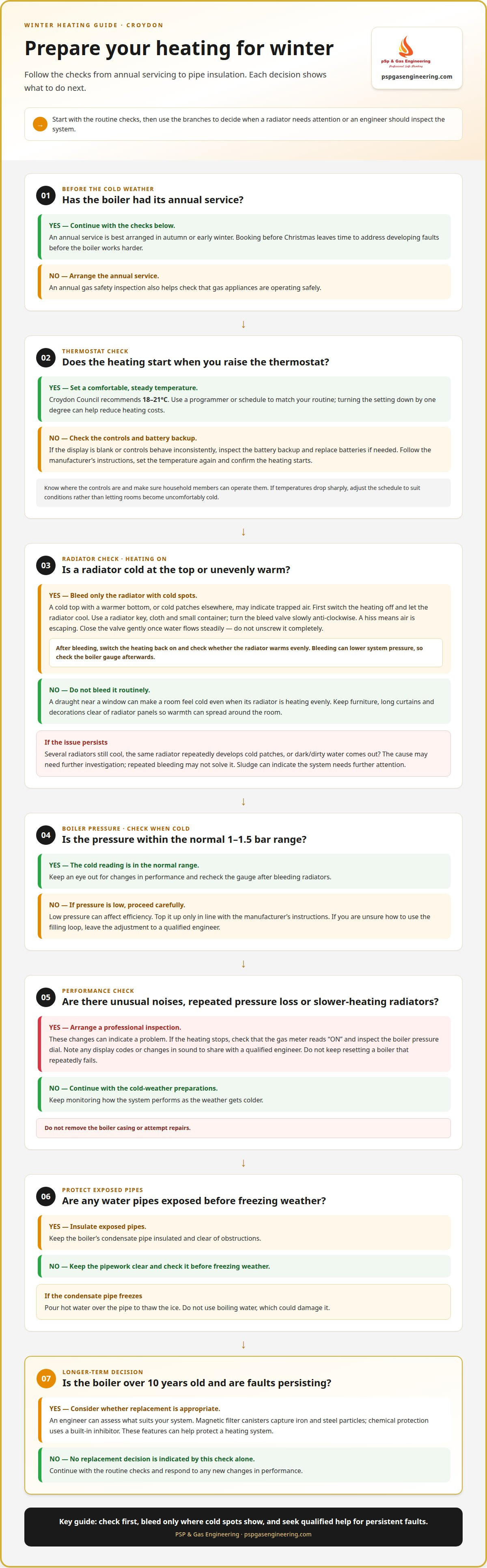
3. How to prepare your central heating system for the winter?
For Croydon homeowners planning how to prepare their heating for winter, arrange a boiler service annually, ideally in autumn or early winter. Booking before Christmas gives you time to address developing faults before the boiler works harder for heating and hot water. A service assesses the appliance’s operation and can identify issues affecting reliability or efficiency. An annual gas safety inspection also helps check that gas appliances are operating safely.
Check the pressure gauge when the boiler is cold. It should normally read between 1 and 1.5 bar. Low pressure can affect efficiency, so top it up only in line with the manufacturer’s instructions. If you’re unsure how to use the filling loop, leave the adjustment to a qualified engineer. After bleeding radiators, check the gauge again, as releasing air can lower system pressure.
Notice changes in performance. Unusual noises, frequent pressure loss or radiators taking longer to heat can indicate a problem that needs professional inspection. If the heating stops, check that the gas meter reads ‘ON’ and inspect the boiler pressure dial. Note any boiler display codes or changes in sound before arranging help. Don’t keep resetting a boiler that repeatedly fails.
Before cold weather sets in, insulate exposed water pipes to help prevent freezing. Keep the boiler’s condensate pipe insulated and clear of obstructions. If it freezes, pour hot water over the pipe to thaw the ice, not boiling water, which could damage it.
For a breakdown, share any display codes, pressure readings or changes in sound with a qualified engineer. Don’t remove the boiler casing or attempt repairs. If the boiler is over 10 years old and faults persist, consider whether replacement is appropriate. Magnetic filter canisters capture iron and steel particles, while chemical protection uses a built-in inhibitor. These features can help protect a heating system, and an engineer can assess what suits your system.
4. Keeping rooms warm and maintaining body temperature
Keeping warm in winter can support health. The NHS says warmth during winter can help prevent health problems, including heart attacks, strokes, pneumonia and depression. Aim to heat rooms you use regularly to at least 18°C. Older people and people with health conditions that limit mobility are advised not to let temperatures fall below 18°C in those rooms. A comfortable temperature varies between people, so consider who uses each room and how long they spend there.
At night, close bedroom curtains to reduce heat loss through windows. During freezing weather, keep central heating running continuously and turn the thermostat lower overnight. This maintains background warmth while reducing the room temperature for sleeping. If you use zonal heating, focus warmth on the rooms in use rather than heating empty spaces. The body’s core temperature is 37°C, so warm clothing and bedding can help you stay comfortable when indoor temperatures drop.
Draw thick curtains at dusk and use draught excluders around doors to limit escaping warmth. Check rubber seals around windows for gaps that let cold air in. Ventilate rooms by opening windows for 5 to 10 minutes in the morning and afternoon, as Croydon Council advises. Wipe condensation from windows with a dry cloth, and use kitchen and bathroom extractor fans. Keep air vents clear; Croydon Council advises that they allow gases such as carbon monoxide to escape.
Warm your hands and feet with dry socks, slippers and layers, especially when sitting still. A hot meal can also help you feel warm; Age UK recommends at least one hot meal a day during cold weather. If you use a portable electric heater, keep it at least 3ft (1m) from flammable items such as curtains or furniture. Keep the heater away from walkways, bedding and clothing, and switch it off when it’s not needed. These practical steps add warmth without blocking ventilation or placing heaters close to household fabrics.
PSP & Gas Engineering
PSP & Gas Engineering helps Croydon homeowners prepare for winter with gas safety inspections, boiler installations, flue relines and video inspections. Its Gas Safe Registered engineers are Level 2 and Level 3 qualified in gas engineering. Gas safety inspections and an annual boiler service are available together for £120. Boiler installations include system design, fitting and final safety commissioning, with Worcester Bosch, Baxi, Vaillant and Glow-worm models available. Flue relines use stainless-steel flues, and specialised cameras are used for video inspections.
If a boiler repeatedly loses pressure, makes unusual noises or fails to provide heating and hot water, seek a professional assessment rather than attempting repairs yourself. The right next step depends on the fault and the condition of the system. PSP & Gas Engineering also offers 24/7 emergency call-out assistance by appointment only.
Contact PSP & Gas Engineering to discuss a heating or gas safety concern in Croydon. Call 07411 667458 or email [email protected] to arrange an appointment.
Make winter readiness part of your routine
Preparing for winter works best as an ongoing household routine, not a task left until the first cold spell. Keep a brief note of changes in heating performance, such as rooms taking longer to warm or controls behaving differently. These details can help you explain the issue clearly if you need professional advice later.
If you’re considering how to prepare your heating for winter in Croydon, make a plan to revisit your home’s heating needs as the season changes. Household routines, room use and the condition of the system can all affect what feels comfortable. Avoid attempting repairs to gas appliances yourself; a professional assessment can help establish the appropriate next step if a fault or safety concern arises.
A measured approach gives you time to respond rather than make rushed decisions during colder weather. For a heating or gas safety concern, contact PSP & Gas Engineering. A little forward planning can help you approach winter with greater confidence.
Frequently Asked Questions
How to prepare your central heating system for the winter?
Prepare your central heating by testing the controls and noting any rooms that heat unevenly. Check that your heating schedule matches your household routine, and keep the boiler’s operating instructions accessible. Look for visible leaks around radiators and pipe joints, and keep the boiler area clear. If a fault appears during these checks, record any display message to help explain the issue when arranging an assessment.
How often should a gas boiler be serviced and what does it include?
A gas boiler should be serviced annually. The service is a professional assessment of the boiler’s condition and operation, helping identify developing problems before they interrupt heating or hot water. The exact checks depend on the appliance and its manufacturer’s instructions. Keep a record of the service date and any recommendations, so you can track recurring faults and plan maintenance based on the boiler’s condition. PSP & Gas Engineering offers an annual boiler service alongside a gas safety inspection for £120.
What temperature should a home be kept at during winter?
In Croydon, set the home thermostat between 18 and 21°C, as Croydon Council advises. Choose a comfortable setting within that range and consider the needs of people who spend time in each room. Older people and those with health conditions that limit mobility should not let rooms they use regularly fall below 18°C. A room thermometer can help compare actual room conditions with the thermostat setting.


