

If you smell gas, don’t stay inside to investigate. Knowing what to do if you smell gas in your home can feel difficult when you’re also trying to protect children, vulnerable people or neighbours. Your first priority is to get everyone to safety.
Leave the property and call the National Gas Emergency Service on 0800 111 999 from a safe location. Don’t operate electrical switches or use naked flames. Open doors and windows and turn off the gas at the meter only if you can do so safely without delaying your exit. Keep others away from the property, and don’t go back inside until you’re told it’s safe.
This guide covers the immediate steps, who to contact and what to expect after reporting a suspected leak. It also explains when a Gas Safe registered engineer can carry out follow-up safety checks, once the emergency service has addressed the immediate risk and the property is safe to assess.
Key Takeaways
- Knowing what to do if you smell gas in your home starts with treating the odour as a warning and following emergency guidance, not trying to find its source.
- Understand the difference between a suspected gas leak, an appliance concern and carbon monoxide, which cannot be detected by smell.
- Find out what to expect after reporting a suspected leak, and why you should remain somewhere safe and follow the operator’s instructions.
- Once the immediate danger has been addressed, a Gas Safe registered engineer can carry out appropriate follow-up safety checks.
Smell gas at home? Recognise the warning and put safety first
If you suspect a gas leak, treat it as urgent and follow official emergency guidance. You don’t need to prove that gas is escaping or identify its source before acting. A gas-like odour is a warning, not confirmation, but uncertainty is no reason to stay inside and investigate. Move everyone, including children and visitors, to a safe place and report the concern.
Call the National Gas Emergency Service on 0800 111 999. The freephone number is available 24 hours a day, every day. Make the call from outside and away from the suspected leak. The operator can guide you if you’re unsure what to do. Don’t wait for the smell to become stronger, for a particular sound, or for anyone to feel unwell.
What might a gas leak smell or sound like?
Natural gas is given a distinctive odour, often described as sulphur-like or like rotten eggs, to help people notice a possible leak. You might also hear a hissing sound near gas pipework. These can be warning signs, but neither has to be present for a leak to be possible. Don’t search for the source or approach pipework to check. This overview of gas leaks explains why they can pose safety risks.
No smell doesn’t prove your home or an appliance is safe. Not everyone notices odours, and smell alone can’t tell you how much gas may be present. If you have a reasonable concern, report it rather than relying on smell or sound to rule out danger.
Why acting promptly matters
Leaked gas can create a fire or explosion risk if it ignites. You don’t need to assess the size or location of a suspected leak yourself. Focus on moving people away from the potential danger and contacting the emergency service. Avoid flames and don’t operate electrical switches or appliances if a leak may be present, as these could create an ignition source.
Don’t wait for symptoms or certainty. A suspected leak is enough reason to seek official guidance, even if the odour comes and goes or you can’t hear anything unusual. If anyone feels unwell, get them into fresh air and seek medical advice. If you’re wondering what to do if you smell gas in your home, the safest first step is clear: leave and call from a safe location.
What to Do If You Smell Gas at Home: Immediate Steps
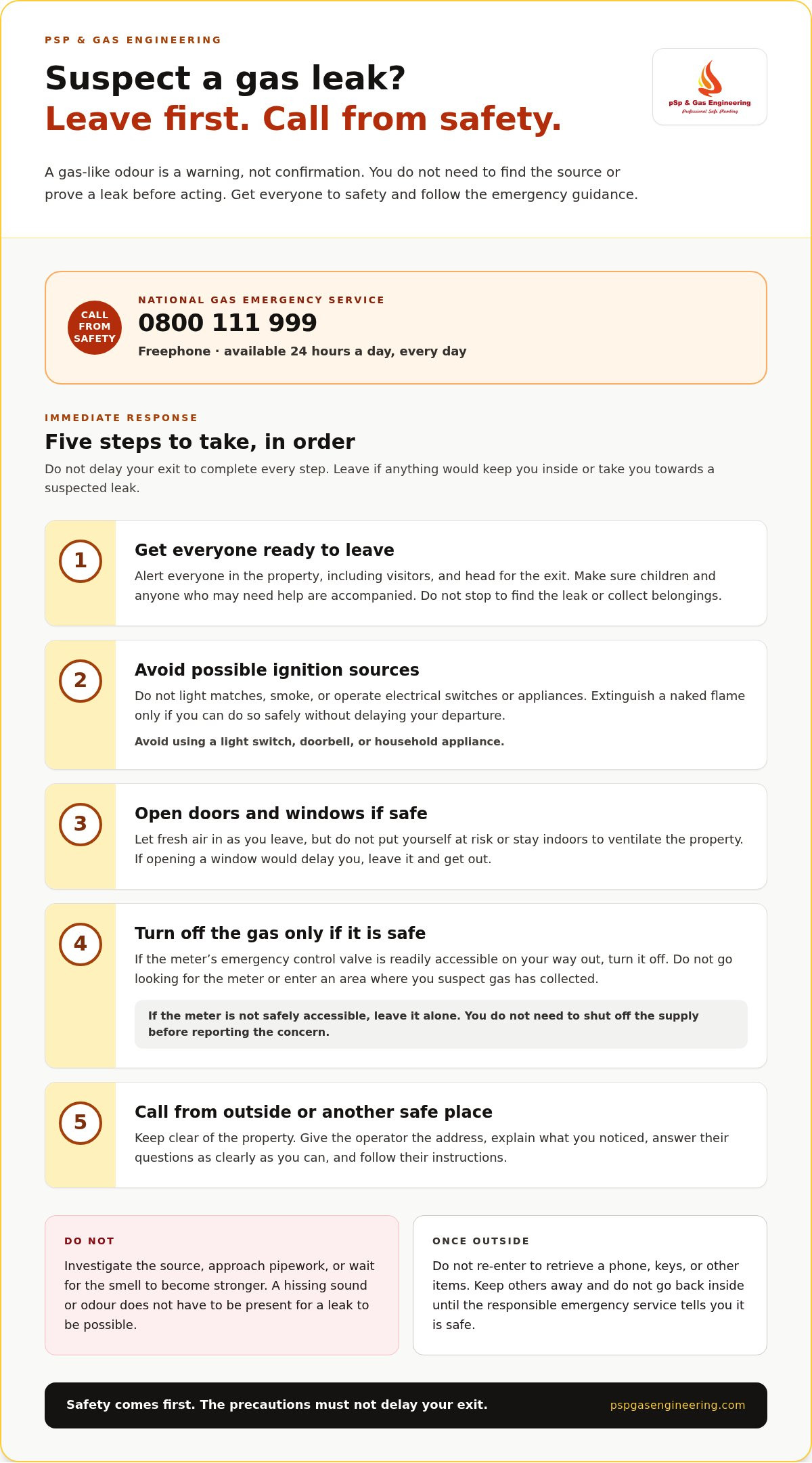
Act in order, but don’t delay leaving to complete every step. If you’re searching for what to do if you smell gas in your home, follow this sequence and any specific instructions from the National Gas Emergency Service:
- Get people ready to leave. Alert everyone in the property, including visitors, and head for the exit. Don’t stop to find the suspected leak or collect belongings.
- Avoid possible ignition sources. Don’t light matches, smoke or operate electrical switches or appliances. Extinguish a naked flame only if you can do so safely without delaying your departure.
- Open doors and windows if safe. Let fresh air in as you leave, but don’t put yourself at risk or stay indoors to ventilate the property.
- Turn off the gas supply only if it’s safe. If the meter’s emergency control valve is readily accessible on your way out, turn it off. Don’t go looking for the meter or enter an area where you suspect gas has collected.
- Call from outside or another safe location. Keep clear of the property and follow the operator’s instructions.
These precautions must not delay your exit. If opening a window, extinguishing a flame or reaching the meter would keep you inside or take you towards a suspected leak, leave and call from safety instead.
Reduce immediate risks and leave safely
Move calmly but promptly. Make sure children and anyone who may need help to leave are accompanied. Alert other occupants as you go if you can do so without slowing your exit. Don’t use a light switch, doorbell or household appliance. Once outside, stay away from the suspected leak and don’t re-enter to retrieve a phone, keys or other items.
If the gas meter isn’t safely accessible, leave it alone. You don’t need to identify the source or shut off the supply yourself before reporting the concern. Getting everyone to safety comes first.
Make the emergency call from a safe place
The National Gas Emergency Service number is 0800 111 999, and it’s available 24 hours a day, every day. Call from outside the property or another safe location. Give the operator the address, explain what you noticed and answer their questions as clearly as you can. Follow their instructions, and don’t return indoors until the responsible emergency service tells you it’s safe.
Once the emergency service has addressed the immediate incident and the property is safe to assess, a Gas Safe registered engineer can carry out appropriate follow-up checks. For non-emergency follow-up in Croydon and Greater London, PSP & Gas Engineering’s gas safety inspections can assess gas appliances and related safety concerns. This follow-up does not replace the emergency call.
Gas smell, appliance fault or carbon monoxide: understand the difference
A gas odour, an appliance that isn’t working properly and possible carbon monoxide exposure are different concerns, although they can involve the same heating or cooking equipment. The signs can’t reliably identify the cause. Use the comparison below to understand what each may indicate, not to diagnose a fault or decide it’s safe to remain indoors.
| Concern | Possible signs | What to do |
|---|---|---|
| Suspected gas leak | A sulphur-like or rotten-egg odour, or a hissing sound near gas pipework. Neither sign has to be present. | Follow emergency guidance and report the suspected leak. Don’t investigate or test equipment. |
| Appliance fault | An appliance may stop working as expected or show signs of damage. These observations don’t establish the cause. | If there’s a gas smell, treat it as a suspected leak. Otherwise, stop using an appliance you’re concerned about and arrange a qualified assessment. |
| Possible carbon monoxide exposure | Carbon monoxide has no smell. Headache, dizziness or nausea can be possible warning signs, but they can also have other causes. | Move into fresh air and seek urgent official medical advice if exposure is suspected. |
A gas smell is not a carbon monoxide warning sign
A gas odour can warn of a possible gas leak, but it can’t detect carbon monoxide. No smell doesn’t rule carbon monoxide out. Carbon monoxide is odourless, so you can’t identify it by smell. The NHS lists headache, dizziness and nausea among possible symptoms of carbon monoxide poisoning, but symptoms alone don’t confirm the cause. If you suspect exposure, get everyone outside into fresh air and seek urgent medical advice. Read the NHS guidance on carbon monoxide poisoning for advice on symptoms and what to do.
Don’t wait for everyone in the household to feel unwell. If several people feel ill in the same place, or symptoms improve after leaving, take the concern seriously and seek urgent help. These clues still aren’t a diagnosis. If a gas leak is also possible, follow the emergency instructions for a suspected leak.
Don’t troubleshoot an appliance during a suspected leak
Don’t relight a pilot light, test a burner, switch an appliance on or dismantle equipment if you smell gas. Even if the odour seems to come from one boiler or cooker, don’t assume that appliance is the only source or try to confirm it yourself. Follow emergency guidance first. Fault-finding should wait until the property has been declared safe. A Gas Safe registered engineer can then assess the appliance and related gas installation concerns.
In short, deciding what to do if you smell gas in your home is separate from diagnosing an appliance or checking for carbon monoxide. Treat each concern seriously, but don’t use one sign to rule out another hazard.
After reporting a suspected gas leak: what happens next in Croydon?
After you report a suspected leak, the National Gas Emergency Service operator will explain what to do next. Instructions depend on the information you provide, so stay somewhere safe, keep your phone available if possible and follow the operator’s guidance. Don’t assume you can return just because the smell has faded or you can no longer hear anything unusual.
The emergency number, 0800 111 999, is for suspected gas leaks across Great Britain, including Croydon. It connects you with the National Gas Emergency Service, not a local gas engineer. Your location helps the operator understand the incident and advise you on the appropriate next steps. Don’t try to work out which network operator serves your area before calling.
What information to give the emergency operator
Give clear, factual information. Start with the full property address, including any flat or building details, then describe where you noticed the smell and when you first became aware of it. Mention any hissing, visible damage or appliance you suspect may be involved, but don’t go back inside or closer to the source to check.
Tell the operator if anyone needs help to leave or is feeling unwell. Answer their questions as accurately as you can, and follow their instructions. You don’t need to identify the cause or estimate how serious the leak is. If you’re unsure about a detail, say so rather than guessing.
When is it safe to go back inside?
Wait for explicit guidance from the responsible emergency service before re-entering. The fact that the odour has gone or the property has aired out doesn’t confirm it’s safe. Keep children, visitors and pets at a safe distance, and make sure everyone in your household knows not to go back in while you’re waiting.
If circumstances change while you’re outside, such as someone developing symptoms or needing help, tell the operator and follow their advice. Stay available for further instructions. If you’re unsure whether a direction applies to your situation, ask the operator to clarify rather than making your own assessment.
Once the emergency service has addressed the immediate incident and the property is safe to assess, routine gas safety work can be arranged separately. A Gas Safe registered engineer can carry out relevant follow-up checks. This isn’t a substitute for reporting a suspected leak. For homeowners and landlords planning routine checks after the incident, the gas safety compliance certificate checklist explains the paperwork and compliance points to consider. Croydon residents can also arrange a professional gas safety inspection after the emergency has been dealt with.
Once the immediate danger is over: arrange a professional gas safety check
After the emergency service has addressed the incident and confirmed the property is safe to assess, arrange any appropriate follow-up inspection or repair separately. A qualified professional can examine a gas appliance or related installation concern. A routine check isn’t an emergency response and must never take the place of calling the National Gas Emergency Service if you suspect a leak.
Keep any instructions or information from the emergency call to hand. Tell the engineer what happened, where you noticed the smell and whether the emergency service identified anything that needs further attention. Don’t restart or use an appliance you’ve been told to leave off until an engineer has assessed it.
What a qualified engineer can assess afterwards
A Gas Safe registered engineer can inspect relevant gas appliances and consider the safety concerns you report. Depending on the situation, this may include examining the appliance and related installation. If there’s a concern about an appliance’s flue or ventilation, a flue inspection may also be relevant. The appropriate assessment depends on the circumstances and can only be determined once the property is safe to inspect.
Share your observations without trying to reproduce the problem. For example, explain whether the smell seemed to be near a particular appliance or whether you noticed an unusual sound before leaving. Don’t relight a pilot light, test a burner or dismantle equipment to demonstrate the issue. An inspection can establish what further steps may be appropriate, but don’t assume in advance that a particular repair or outcome will be needed.
Keep future gas safety checks separate from emergency response
Periodic gas safety checks can help identify concerns with appliances and associated components, but they can’t guarantee that a leak won’t occur later. They also don’t provide an emergency assessment. If you smell gas again or suspect another leak, contact the National Gas Emergency Service rather than waiting for a booked inspection or contacting a routine engineer first.
For rented homes, landlords have specific gas safety responsibilities. A routine inspection and its related records are part of ongoing property management, not a substitute for urgent action when a leak is suspected. The landlord gas safety guide explains the compliance context for rented properties.
Knowing what to do if you smell gas in your home includes knowing when follow-up work is appropriate: only after the emergency service has dealt with the immediate risk and the property is safe to assess. PSP & Gas Engineering provides gas safety inspections in Croydon and the wider Greater London area, carried out by Gas Safe registered engineers.
For follow-up gas safety support once the emergency has been resolved, contact PSP & Gas Engineering.
Take a considered next step for your home
A suspected gas leak can be unsettling, but knowing what to do if you smell gas in your home helps you respond calmly and leave the technical assessment to the right professionals. Once the emergency service has confirmed the property is safe to assess, note what you observed and any instructions you were given. This can help an engineer understand your concern without you needing to test an appliance or investigate the source.
Arrange an inspection for any further gas safety or flue concerns only after the immediate emergency has been addressed. PSP & Gas Engineering’s gas work is carried out by Gas Safe registered engineers, with gas safety and specialist flue inspection services available in the Croydon area.
Arrange follow-up gas safety support with PSP & Gas Engineering once the property is safe to assess.
Frequently Asked Questions
What number should I call if I smell gas in my home?
Call the National Gas Emergency Service on 0800 111 999. It’s free to call and available 24 hours a day, every day across Great Britain, including Croydon. Make the call from outside or another safe location, not from inside the property. Give the operator your address and a clear description of what you noticed, then follow their instructions. Don’t delay the call to search for the source or consult a routine engineer.
Can I turn off the gas meter if I smell gas?
Turn off the gas supply at the meter only if its emergency control valve is safely accessible and you can reach it without delaying your exit or approaching a suspected leak. Don’t enter a risky area or spend time looking for the meter. If you don’t know where the valve is, leave it alone. Getting everyone outside and reporting the suspected leak are more important than shutting off the supply yourself.
Should I open windows if I suspect a gas leak?
Open doors and windows as you leave only if you can do so safely and without slowing your exit. Don’t stay indoors to ventilate each room or go back inside to open a window you missed. For example, leave a window alone if it’s upstairs or near where you suspect gas. Once outside, follow the emergency operator’s advice rather than returning to make further changes.
Can I use my phone inside if I smell gas?
Don’t use your phone inside the property while a gas leak is suspected. Leave first, then call 0800 111 999 from outside or another safe location. Avoid operating electrical switches and appliances as you leave, and don’t stop in a potentially affected area to make the call. If your mobile is indoors, don’t go back for it. Use another phone once you’re safely away.
How can I tell whether the smell is gas or something else?
You can’t reliably identify the source by smell alone. A sulphur-like or rotten-egg odour can warn of a gas leak, but it isn’t proof; other smells can also be difficult to distinguish. If you’re concerned, treat it as a possible leak rather than trying to confirm it. Knowing what to do if you smell gas in your home means reporting the concern without investigating or testing an appliance yourself.
What should I do if I smell gas in a communal area or block of flats?
Leave the affected area and call the National Gas Emergency Service from a safe place. Give the operator the building’s address and explain where the smell is, such as a shared corridor, stairwell or meter cupboard. Don’t enter a suspected affected space to investigate or operate equipment. If you can alert neighbours while leaving without putting yourself at risk, do so. Otherwise, tell the operator others may be nearby.
Can I go back into my home once the gas smell has gone?
No. A fading or absent smell doesn’t confirm that the property is safe. Wait for explicit guidance from the responsible emergency service before going back inside, and keep household members, visitors and pets away until re-entry is authorised. If you’re unsure whether you’ve been given clearance, contact the emergency service again from a safe location and ask for clarification rather than making your own assessment.
Does carbon monoxide smell like gas?
No. Carbon monoxide has no smell, so you can’t detect it by smelling the air. A gas odour can’t confirm or rule out carbon monoxide either. Possible symptoms include headache, dizziness or nausea, but these can have other causes and aren’t a diagnosis. If you suspect carbon monoxide exposure, get everyone outside into fresh air and seek urgent medical advice. Treat any suspected gas leak as a separate emergency concern.


