
An old boiler isn’t automatically unsafe, but age alone can’t tell you whether yours is safe. If you’re asking, “is my old boiler safe to use?”, look for warning signs such as a yellow or orange flame, black marks around the appliance or a pilot light that keeps going out. If you smell gas, leave the property and call the National Gas Emergency Service on 0800 111 999.
It’s understandable to worry that an older boiler may need replacing, especially when poor performance and safety concerns can look similar. This guide explains which signs need urgent action, how safety differs from reliability and efficiency, and how a qualified assessment can help you decide what to do next.
You’ll also learn when to stop using the appliance and how a Gas Safe registered engineer can assess the boiler and, where needed, its flue. The findings can help you make a decision based on the appliance’s condition, not its age alone.
Key Takeaways
- To answer “is my old boiler safe to use?”, separate safety concerns from reliability, heating performance and energy efficiency.
- Learn which visible faults, unusual smells, leaks or abnormal noises call for prompt professional advice.
- Use the boiler’s assessed condition and fault history to weigh repair or replacement, rather than relying on age alone.
- Follow a step-by-step checklist to decide when to stop using the appliance and what action to take next.
- Find out how a Gas Safe engineer’s boiler and flue assessment, including specialist video inspection where appropriate, can help clarify concerns in Croydon and Greater London.
Is my old boiler safe to use? Start with safety, not age
If you’re asking, “is my old boiler safe to use?”, its age alone can’t provide the answer. Two boilers of the same age may be in very different condition, depending on how they were installed, maintained and used. Age can be a reason to arrange an assessment, but it isn’t proof that an appliance is dangerous or must be replaced.
An appliance’s age is a reason to assess it, not a safety verdict. Safety, reliability, heating performance and energy efficiency describe different things. A boiler might heat the home reliably but still need a safety check. Another may be safe but break down repeatedly or use more energy than a newer model. Poor performance deserves attention, but it doesn’t on its own establish a safety fault.
What does safe to use mean for an older boiler?
A safety assessment considers whether the boiler burns fuel correctly, whether gas can escape and whether combustion fumes are removed safely through the flue. These components work together, so a fault may not be obvious from the boiler’s day-to-day operation. For a general overview of how boilers work and their safety considerations, see Boiler safety and components.
An appliance can switch on and provide hot water while still needing a qualified assessment. Equally, a fault code or intermittent heating problem needs investigation but doesn’t automatically prove the boiler is unsafe. A Gas Safe registered engineer can assess its condition and identify whether the boiler or flue needs further attention.
Does boiler age automatically mean replacement?
No single age threshold determines whether every boiler should be replaced. An older appliance may continue to operate, while a younger one can develop faults or deterioration. Age is useful context, especially if the service history is incomplete or performance has changed, but it isn’t a universal replacement deadline.
The practical distinction is between age without symptoms and evidence of a fault. If an older boiler works consistently and has no known warning signs, its age alone doesn’t establish that it needs replacing. If it has recurring faults, visible deterioration or concerns about combustion or the flue, arrange a professional assessment rather than relying on normal operation as reassurance.
Base the next step on findings about the appliance’s actual condition. Depending on the assessment, further work may be needed, or replacement may be considered. A gas safety inspection can clarify the safety position. Specialist flue and video inspections can help investigate concerns about the flue’s internal condition. This separates an immediate safety question from later decisions about reliability, comfort or efficiency.
Old boiler warning signs: which symptoms should you take seriously?
When asking “is my old boiler safe to use?”, look at what it’s doing, not just how well it heats the house. Some signs may indicate immediate danger; others suggest a fault or declining performance that still needs attention. A symptom can’t identify the cause or confirm that an appliance is safe, so use it to guide your next step rather than attempting a diagnosis.
Signs that may point to an immediate safety concern
If you smell gas, treat it as an emergency. Don’t operate electrical switches, light flames or smoke. If it’s safe to do so, turn off the gas at the meter, open doors and windows, leave the property and call the National Gas Emergency Service on 0800 111 999. Follow the service’s current instructions.
Black soot or scorching around the boiler, a yellow or orange flame, or a pilot light that repeatedly goes out should prompt urgent professional advice. If you can see an abnormal flame without opening the appliance, don’t remove the casing or inspect internal parts. Stop using the boiler until it has been assessed. If you suspect gas or fumes are escaping, leave the property and follow emergency guidance.
Carbon monoxide cannot be reliably identified by smell or sight. Headache, dizziness, nausea, weakness or confusion can have many causes, but if symptoms occur alongside concern about a fuel-burning appliance, get everyone outside into fresh air and seek urgent help. Call 999 for severe symptoms or collapse. Don’t return to the property until you’ve been advised it’s safe.
Signs of wear, faults or reduced performance
Not every warning sign means immediate danger, but recurring or worsening symptoms deserve a qualified assessment. Note when they happen and whether they affect heating, hot water or both. Useful details include:
- Leaks or dampness: Water beneath the boiler or around pipework may point to a fault. Don’t touch wet electrical parts.
- Unusual noises: Repeated banging, whistling, gurgling or vibrating can indicate a problem that needs investigation.
- Unreliable operation: Repeated shutdowns, frequent resets, or heating and hot water that come and go shouldn’t be ignored.
- Slow heating or higher bills: These can reflect performance or efficiency issues, but don’t prove a safety fault on their own.
Make a note of any displayed fault code, but don’t remove the casing or repeatedly reset a boiler that keeps shutting down. A Gas Safe registered engineer can assess the appliance and investigate concerns about its flue. If symptoms recur or remain unexplained, arrange a gas safety inspection with PSP & Gas Engineering.
Repair or replace an old boiler? Compare safety, condition and performance
Deciding whether to repair or replace an older boiler starts with its condition, not a rule based on age. If there’s a possible safety concern, have the appliance assessed and follow any urgent safety instructions before weighing up convenience, energy efficiency or future costs. Use the table to match the situation to a practical next step.
| Situation | What it may mean | Next step |
|---|---|---|
| Possible safety concern | A fault involving combustion, gas escape or the flue needs prompt attention. Symptoms alone don’t establish the cause. | Stop using the boiler if advised or if danger is suspected, follow emergency guidance where relevant, and arrange a Gas Safe assessment. |
| Recurring fault | Repeated breakdowns or resets may point to an unresolved or worsening problem. | Ask for the fault and overall condition to be assessed before deciding whether repair is appropriate. |
| Poor performance | Slow heating, inconsistent hot water or higher bills can affect comfort and efficiency, but don’t by themselves prove a safety fault. | Investigate the cause and compare options once the boiler’s condition is understood. |
| Age without symptoms | Age is useful context, but it doesn’t establish that the boiler is unsafe or due for replacement. | Consider its maintenance history and arrange an assessment if its condition is uncertain. |
When is a repair assessment the sensible next step?
If the boiler has a specific fault, an engineer can investigate the symptom, assess its safe operation and explain what the findings indicate. A single issue may have a different significance from faults that keep returning. Share any fault codes and a clear history of when the problem occurs. Don’t assume a repair will make the appliance safe before it has been examined.
A fuller review is sensible if breakdowns are becoming more frequent, performance is deteriorating or previous work hasn’t resolved the issue. A gas safety inspection can establish the appliance’s condition and identify whether further work is needed. That gives you a firmer basis for comparing repair with replacement, rather than deciding from one symptom alone.
When should replacement be considered?
Replacement may be considered if an assessment finds a significant safety or condition issue, or if repeated faults make continued repairs unsuitable. The decision should reflect inspection findings, repair history and how reliably the boiler meets household needs. This is separate from emergency action: don’t keep using an appliance suspected to be dangerous while comparing replacement options.
If replacement is being considered, the boiler installation cost guide for Croydon can help you understand the factors involved. A flue concern may also need investigation; it doesn’t mean every older boiler needs relining. Read the London flue relining and safety guide for more context on when flue work may be relevant.
Old Boiler Safety Checklist: Spotting Warning Signs
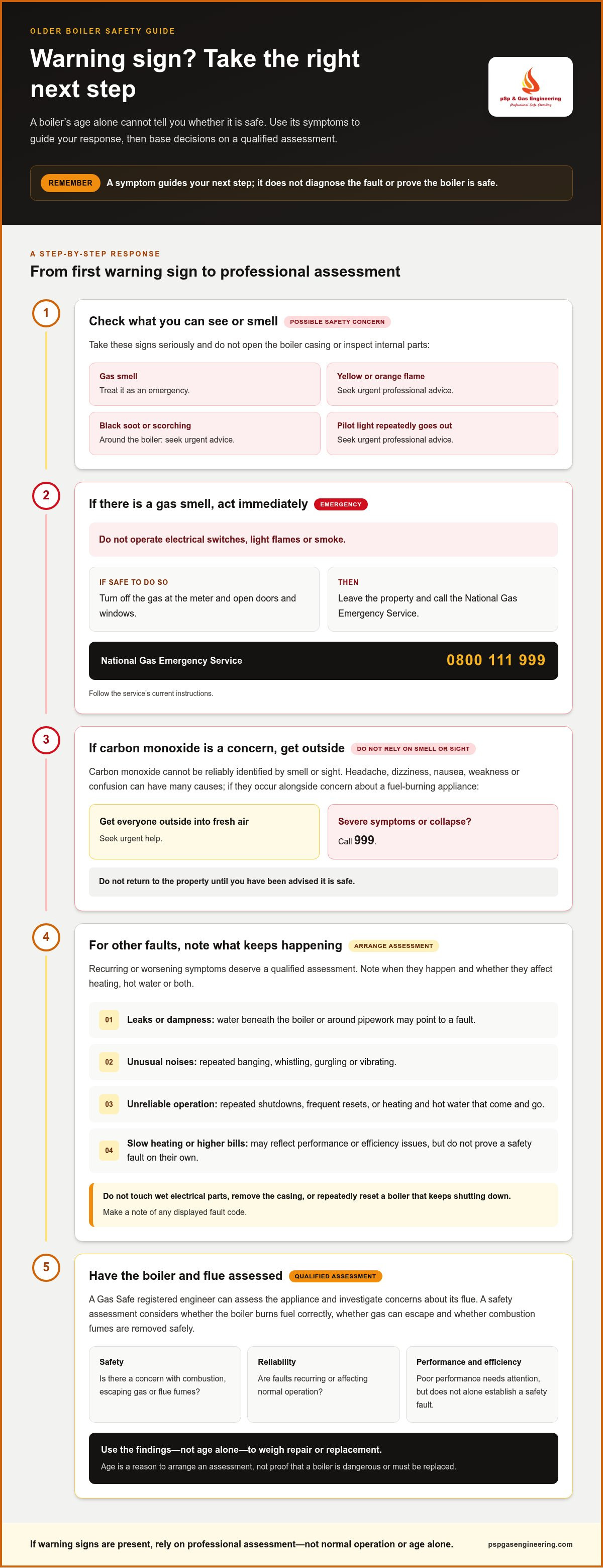
Use this checklist to decide what to do next, starting with immediate danger. If you’re wondering “is my old boiler safe to use?”, don’t try to settle the question by inspecting or adjusting the appliance yourself. Symptoms can’t confirm the cause; a Gas Safe registered engineer can assess the boiler and relevant flue concerns.
If you suspect gas or carbon monoxide danger, get everyone outside first and call for the appropriate emergency help from a safe location.
What to do if you smell gas or suspect carbon monoxide
Follow these steps in order. Don’t delay leaving the property to investigate the boiler, find a suspected leak or gather belongings.
- Gas smell: Don’t smoke, light a flame or operate electrical switches. Leave the property, taking others with you, and call the National Gas Emergency Service on 0800 111 999 from outside. Follow the service’s current instructions.
- Possible carbon monoxide exposure: Get everyone outside into fresh air. Carbon monoxide has no smell, so the absence of an unusual odour doesn’t rule it out. Don’t go back inside until you’ve been advised it’s safe.
- Serious symptoms: If anyone is seriously unwell, collapses or is having difficulty breathing, call 999. Symptoms such as headache, dizziness, nausea or confusion can have different causes, so don’t try to diagnose carbon monoxide exposure yourself.
- Do not investigate: Don’t remove the boiler casing, attempt repairs or use a flame to check for a leak. Leave inspection and remedial work to a qualified professional.
What to do when the concern is not an emergency
If there’s no immediate danger, take practical steps to help an engineer understand what has changed. Don’t keep using the appliance if a qualified person has told you to stop, or if you suspect immediate danger. Avoid repeated resets or adjustments to see whether the symptom disappears.
- Record the symptoms: Note what you noticed, when it happened, how often it occurs and whether heating or hot water was affected.
- Write down changes: Include any fault code shown on the display, recent changes in performance, or visible water around the appliance. Record what you can see without touching internal parts or opening the casing.
- Arrange an assessment: Have a Gas Safe registered engineer assess the boiler. If the concern involves the flue, mention what you observed so its condition can be considered as part of the investigation.
- Keep the outcome: Ask for the findings and recommended next steps to be explained clearly, so you know whether further work is needed.
A gas safety inspection provides a structured assessment of the appliance and relevant certification. For a non-emergency concern in Croydon or the Greater London area, arrange a gas safety inspection with PSP & Gas Engineering.
Get an older boiler assessed by a Gas Safe engineer in Croydon
If you’re still asking “is my old boiler safe to use?”, a qualified inspection is the practical way to assess it rather than drawing a conclusion from its age or a symptom alone. PSP & Gas Engineering serves Croydon and the Greater London area, carrying out gas safety inspections through Gas Safe registered engineers. The inspection can clarify the boiler’s condition and whether a concern needs further investigation or work.
What a professional boiler and flue assessment can clarify
An engineer can assess the boiler’s safe operation and consider the issue you’ve noticed. If the concern relates to how fumes are vented, or to the flue’s condition or integrity, further flue investigation may be relevant. The right checks depend on the concern and findings; an assessment doesn’t predetermine whether repair, flue work or replacement will be recommended.
Where a flue’s internal condition needs investigation, specialist video inspection can help examine it. This is more informative than judging the boiler by age or appearance alone. The findings can help establish whether further attention is needed, without assuming every older boiler has a flue fault or requires relining. For related property compliance context, see the Gas Safe compliance certificate checklist.
A gas safety inspection includes an assessment and relevant certification. The engineer can explain the findings and recommended next steps, helping you distinguish a safety concern from a fault affecting reliability or performance. That gives you a clearer basis for decisions about the appliance, rather than relying on a general age guide or trying to diagnose the problem yourself.
How to arrange help in the Croydon area
For a non-emergency concern, contact PSP & Gas Engineering or request a quote online. Describe what you’ve observed, when it occurs and whether the issue involves the boiler, flue, heating or hot water. These details give useful context for the assessment. You don’t need to open the appliance or attempt a repair before seeking professional advice.
Keep routine enquiries separate from emergencies. If you smell gas or suspect carbon monoxide exposure, leave the property and follow the emergency instructions in the checklist above. Don’t wait for a routine appointment or use an online quote enquiry in place of emergency help.
For older boilers in Croydon and Greater London, PSP & Gas Engineering provides a clear route from concern to professional assessment. Contact the team or request a quote online to discuss a non-emergency boiler or flue concern and arrange the appropriate next step.
Take the next step with confidence
If you’re still weighing up “is my old boiler safe to use?”, base your next decision on an assessment of the appliance, not assumptions about its age. Clear findings can help you understand what needs attention now and what can be considered as part of longer-term plans for your home.
Before arranging an assessment, note any symptoms and keep details of previous faults or work to hand. This can make the discussion more focused. If there’s an immediate concern about gas or carbon monoxide, follow emergency guidance first rather than waiting for a routine enquiry.
For a non-emergency boiler or flue concern in Croydon or Greater London, PSP & Gas Engineering can help arrange a professional assessment. Arrange a boiler or flue assessment with PSP & Gas Engineering and take a clear, considered step towards deciding what your home needs next.
Frequently Asked Questions
Is a 20-year-old boiler safe to use?
It might be, but age alone can’t establish that. If you’re asking “is my old boiler safe to use?”, the answer depends on its present condition, installation, maintenance and inspection findings. A boiler that still heats the home isn’t necessarily free from a safety concern. Arrange an assessment if its history is unclear, it has developed symptoms or it hasn’t been checked for some time. Don’t decide on replacement from age alone.
Can an old boiler give off carbon monoxide without a smell?
Yes. Carbon monoxide has no smell, so you can’t use your sense of smell to rule out a leak or exposure. Headache, dizziness, nausea, weakness and confusion can have other causes, but take them seriously if there’s a concern about a fuel-burning appliance. Get everyone outside into fresh air. Call 999 if anyone is seriously unwell, and don’t return until you’ve been advised it’s safe.
How often should an old boiler be serviced?
As a practical routine, arrange a boiler service once a year and follow the manufacturer’s instructions for your model. Regular servicing can help identify developing issues, but it isn’t a substitute for seeking advice when a fault appears between appointments. If you rent out a property, remember that the landlord’s gas safety check is separate from routine boiler servicing. Keep service records so an engineer can review the appliance’s maintenance history.
What should I do if my boiler smells of gas?
Leave the property and call the National Gas Emergency Service on 0800 111 999 from outside. Don’t light flames, smoke or operate electrical switches. If you can do so safely, turn off the gas at the meter, but don’t delay leaving to find it. Follow the emergency operator’s instructions and don’t re-enter until advised. Treat a gas smell as an emergency, not a routine service enquiry.
Does an old boiler have to be replaced in the UK?
No, there isn’t a universal replacement deadline based only on a boiler’s age. An older appliance may be suitable to keep using if its condition and safety have been assessed, while a newer one can still develop a fault. Base the decision on professional findings, its repair history and how it performs for your household. If replacement is recommended, ask for the reason to be explained in relation to the boiler’s condition.
Can I use my boiler if it is leaking or making unusual noises?
Don’t assume it’s safe to keep running. A water leak or new banging, whistling or gurgling noise can have different causes, and the symptom alone can’t show how serious the fault is. If water is near electrical parts, keep clear and don’t touch them. Stop using the boiler if danger is suspected or an engineer has told you to do so, then arrange an assessment.
What happens during a Gas Safe boiler safety inspection?
A Gas Safe registered engineer assesses the appliance and considers relevant safety concerns, including the condition of the boiler and, where needed, its flue. Explain any symptoms, fault codes or previous work so the inspection can address your concern. The engineer will communicate the findings and recommended next steps. Gas safety inspections include an assessment and relevant certification; the outcome depends on what the inspection finds.
Is a yellow flame on a boiler always dangerous?
A yellow or orange flame doesn’t by itself prove a specific fault or confirm that carbon monoxide is present, but it is a warning sign that needs prompt professional attention. Don’t remove the boiler casing or try to adjust the burner to investigate. If you can see an abnormal flame without opening the appliance, stop using it and seek advice from a Gas Safe registered engineer. If you also smell gas, leave and call 0800 111 999.


