
Most homeowners believe that removing an old heating system is a simple demolition job, but treating it as such is a dangerous legal gamble. It's understandable to feel anxious about potential gas leaks or the threat of rogue traders cutting corners whilst you're upgrading your home. You want to ensure your property remains gas-tight and fully compliant with UK Building Regulations without the stress of navigating complex disposal laws alone. Professional boiler decommissioning services are not just about clearing space; they are a critical safety isolation procedure designed to protect your household's integrity.
By reading this guide, you'll discover exactly what the decommissioning process involves, why technical safety compliance is non-negotiable, and how to transition to a new heating system without any hidden risks. We will walk you through the essential role of a Gas Safe registered engineer, the legalities of disposal in 2026, and the methodical steps required to guarantee a safe, professional result for your property. Whether you're preparing for a heat pump transition or a modern boiler installation, understanding these standards is the first step toward a secure home.
Key Takeaways
- Understand that professional decommissioning is a permanent safety isolation of your gas appliance, ensuring your property remains gas-tight and compliant with UK Building Regulations.
- Learn how professional boiler decommissioning services involve a methodical step-by-step process, including gas tightness testing and safe electrical isolation by Gas Safe registered engineers.
- Discover why decommissioning is the critical first step when transitioning from traditional gas heating to modern, energy-efficient renewable systems.
- Identify your legal responsibilities regarding the disposal of old heating units and how to safely manage potential hazards like asbestos amongst older appliances.
- Recognise the importance of local expertise in managing complex London flue systems and the benefits of integrating video inspections for total system integrity.
What is Boiler Decommissioning and Why is it Essential?
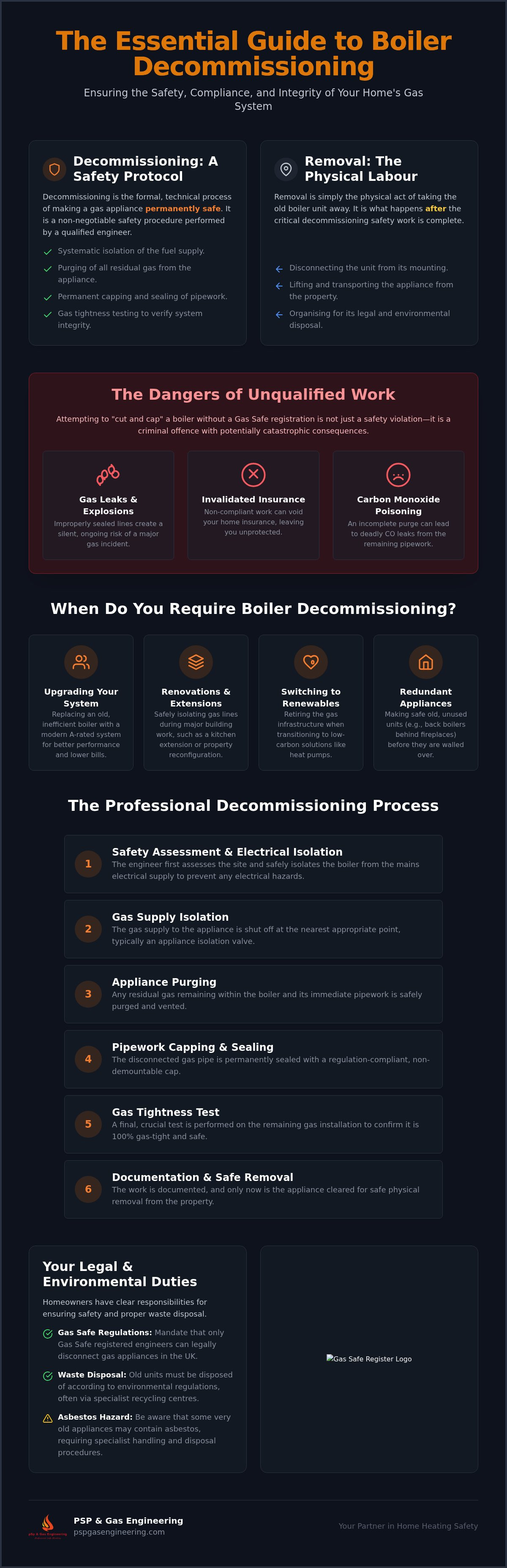
Decommissioning is the formal process of making a gas appliance permanently safe. It's far more involved than simply turning off a valve or switching off the power. Professional boiler decommissioning services involve the systematic isolation of the fuel supply, the purging of residual gas, and the permanent capping of pipework to ensure the property remains gas-tight. Whilst a temporary isolation might be used during repairs, decommissioning is a finality, usually performed when an appliance has reached the end of its operational life or is being replaced by a modern alternative.
In the UK, these standards are strictly overseen by the Gas Safe Register. Any attempt to "cut and cap" a boiler by an unqualified person isn't just a minor oversight; it's a significant safety violation and a criminal offence under gas safety laws. Unqualified work often leaves live gas lines exposed or improperly sealed, creating a silent risk of explosion or carbon monoxide poisoning that could remain hidden for years. Hiring a certified expert ensures that every technical detail is handled with the precision required to protect your home and family.
The Difference Between Removal and Decommissioning
It's easy to confuse the physical removal of a unit with the technical act of decommissioning. Removal is the physical labour required to take the appliance away from the wall, but decommissioning is the safety protocol that must always precede it. A professional engineer ensures that the remaining gas pipework in the property is protected and tested for integrity before the boiler is even touched. This methodical approach prevents uncontrolled gas releases and ensures the remaining system stays safe for future use.
The Legal Framework: Gas Safety (Installation and Use) Regulations
For homeowners and landlords in 2026, legal duties are clear. The Gas Safety (Installation and Use) Regulations mandate that only Gas Safe registered engineers can disconnect gas appliances. This is critical as the phase-out of fossil fuel boilers encourages many London residents to switch to renewable alternatives. Non-compliance risks invalidating home insurance and breaching Building Regulations, making professional boiler decommissioning services essential for your peace of mind and long-term security.
When Do You Require Boiler Decommissioning Services?
Professional boiler decommissioning services are required at several critical milestones in a property's lifecycle. While a total system failure is the most obvious trigger, many London homeowners seek these services during proactive upgrades or structural changes. In older Thornton Heath and Croydon terrace houses, for instance, it's common to find redundant back boilers tucked away behind fireplaces. These legacy units must be professionally isolated and made safe before they are walled over or removed during a modern renovation. Failure to do so can leave live gas connections in vulnerable positions, creating a significant hazard for future occupants.
Transitioning from gas to renewable energy is another primary driver for decommissioning. If you're moving toward a low-carbon future with a heat pump, your existing gas infrastructure must be safely retired. This isn't just about disconnecting a pipe; it involves ensuring the entire gas run is sealed according to current safety standards. This ensures that no residual gas remains in the internal pipework, providing total peace of mind as you switch to a different heating medium.
Upgrading to Energy-Efficient Systems
When you upgrade from an ageing, inefficient unit to a modern A-rated system, decommissioning the old appliance provides a clean slate for the new installation. This is particularly important when transitioning from old gravity-fed systems, which often involve complex networks of cold water tanks and heavy cylinders. Ensuring the old flue system is safely managed is a priority, especially in London's diverse property stock where flue integrity can be compromised over time. A professional assessment ensures your new installation isn't hampered by the remnants of an outdated and potentially dangerous setup.
Renovations and Property Extensions
Major building work, such as a kitchen extension or a utility room reconfiguration, often necessitates the relocation or removal of a boiler. Safely isolating gas lines whilst building work is carried out nearby is vital for site safety. If a boiler is being moved to a different floor or room, the original pipework must be decommissioned at the source rather than simply capped off at the wall. This prevents the creation of "dead legs", which are lengths of pipework containing stagnant water or gas that can lead to corrosion or bacterial growth. Dealing with redundant pipework inside walls or under floorboards requires a methodical approach to prevent accidental damage by other trades. If you are planning a layout change, consulting a Gas Safe registered specialist ensures your renovations proceed without technical risk or regulatory non-compliance.
The Professional Decommissioning Process: Step-by-Step
Professional boiler decommissioning services are defined by technical precision rather than brute force. Unlike general waste removal, this process requires a deep understanding of fluid dynamics and gas safety protocols. Every project begins with a comprehensive safety assessment and a gas tightness test of the entire property. This baseline measurement ensures that the existing infrastructure is sound before any alterations begin, allowing the engineer to identify any pre-existing leaks that might complicate the disconnection.
Once the system’s integrity is confirmed, the engineer moves to the isolation phase. This involves more than just turning a handle; it requires the permanent disconnection of the fuel line and the electrical supply. For gas boilers, this means the supply pipe must be cut back to a suitable point and sealed with a permanent fitting, typically a soldered copper cap or a threaded plug, to ensure it remains gas-tight for the life of the building. This methodical approach ensures that the high standards of safety expected in 2026 are met without compromise.
Isolating Gas and Water Supplies
Ensuring the gas line is purged and capped according to current standards is the most critical safety step. Purging is the removal of gas from a pipe using air or inert gas. This step is vital to prevent any residual gas from lingering in the pipework, which could pose a combustion risk during future building works. Following gas isolation, the engineer must manage the water drainage. The primary heating circuit and the domestic hot water system are drained completely. This is a controlled process designed to prevent any water damage to floors or furniture, especially in London properties where boilers are often located in tight cupboards or finished kitchens.
Flue and Ventilation Safety
The flue system presents its own set of risks during decommissioning. A redundant flue terminal left open in an external wall can allow damp to enter the property or provide a nesting site for birds. More seriously, in shared chimneys or blocks of flats, an unsealed flue can become a conduit for carbon monoxide if other appliances are still connected to the same stack. Engineers ensure that all external terminals are removed and the voids are professionally sealed and made weather-tight. They also verify that no debris remains in the ventilation paths, ensuring the property’s air quality and structural integrity are maintained. This attention to detail is what distinguishes professional boiler decommissioning services from a simple removal task.
Compliance, Waste Disposal, and Environmental Duties
Professional boiler decommissioning services extend beyond the technical isolation of gas lines. They encompass a legal and ethical duty to manage waste responsibly. In 2026, the UK continues to replace approximately 1.6 million boilers annually, making the environmental impact of disposal a significant concern. Boilers are classified under Waste Electrical and Electronic Equipment (WEEE) regulations, meaning they cannot simply be tossed into a standard skip. Homeowners must ensure their old units are handled by licensed waste carriers to avoid severe penalties. Fly-tipping a boiler is a criminal offence that can result in personal fines of up to £50,000, whilst organisations face much steeper consequences for improper disposal.
Sustainability is a core component of modern decommissioning. A typical domestic boiler contains between 15 and 25 kilograms of valuable recyclable metals, including copper, brass, and high-grade steel. Recovering these materials reduces the demand for virgin resources and lowers the carbon footprint of your heating upgrade. A professional engineer ensures that the unit is transported to a specialised facility where these components are salvaged and the remaining hazardous elements are neutralised.
Handling Hazardous Materials Safely
Older heating units, particularly those installed before the early 2000s, may contain hazardous materials that require specialist handling. Asbestos-based gaskets or insulation are sometimes found amongst legacy appliances in London’s older property stock. Professional engineers are trained to identify these risks before dismantling begins, preventing the release of dangerous fibres into your home. Additionally, the liquid waste within a system, including old central heating sludge and chemical inhibitors, must be drained and disposed of without contaminating local water systems. This careful management protects both your property and the wider environment.
Certification and Record Keeping
Receiving a formal job sheet or certificate of decommissioning is a vital part of the process. This documentation serves as a permanent record that the gas supply was isolated by a Gas Safe registered professional and that the waste was disposed of legally. This paperwork is essential for landlord audits and is frequently requested by solicitors during property sales to prove the safety of the gas infrastructure. Maintaining a clear service history ensures there are no ambiguities regarding the status of redundant pipework. If you require expert assistance with a compliant system retirement, you can book our Gas Safe registered engineers to manage the entire process from isolation to legal disposal.
London's architectural diversity presents specific challenges that only a specialist can navigate. Professional boiler decommissioning services in London require more than just technical skill; they demand an intimate understanding of the capital's unique building layouts. In areas like Croydon and Thornton Heath, many properties feature ageing gas infrastructures that have been modified multiple times over several decades. These complex environments require a "safe pair of hands" to ensure that redundant components don't become future liabilities. At PSP & Gas Engineering, we bring a methodical, safety-first mindset to every project, ensuring that every isolation is performed with engineering precision.
Specialist Flue Inspections for London Properties
The interaction between an old boiler and its flue is often overlooked during removal. In many London terrace houses, flues are routed through shared chimneys or internal voids that are difficult to access. We integrate video technology into our decommissioning process to inspect these redundant flues before they are permanently sealed. This allows us to identify structural faults, such as crumbling masonry or blockages, that could compromise gas safety if a new appliance were to be installed in the future. Using high-definition video surveys provides a clear view of the system's internal condition, removing the guesswork from complex flue management. This level of detail is essential for maintaining the structural integrity and safety of older London homes.
Your Local Gas Safe Experts in Croydon
Choosing a Thornton Heath-based engineer ensures a rapid and reliable response to your heating requirements. Our team is Gas Safe registered and deeply committed to the welfare of the local community, providing a comprehensive service that covers everything from technical safety assessments to complete system retirements. We don't just view decommissioning as a standalone task; we see it as a vital part of your property’s long-term maintenance strategy. Whether you require standalone boiler decommissioning services or a full system replacement, we provide the technical expertise needed for a safe result. Our project-based approach means we can manage the transition from an old unit to a modern installation seamlessly, ensuring all work remains compliant with current Building Regulations. Contact PSP & Gas Engineering today for a free decommissioning quote.
Securing Your Home’s Heating Future
Decommissioning an old heating system is a technical necessity that ensures your property remains gas-tight and legally compliant. It's the vital first step before any modern installation or renovation, protecting your home from the risks of legacy pipework and hazardous materials. By choosing professional boiler decommissioning services, you guarantee that every isolation is handled with engineering precision and that all waste is disposed of according to WEEE regulations.
Our team provides a "safe pair of hands" for every project, combining the expertise of Gas Safe Registered Engineers with specialised video flue inspections to verify system integrity. We serve Croydon and Greater London with 24/7 emergency assistance, ensuring that your transition to energy-efficient heating is handled with professional calm and technical care. Whether you're planning a full system upgrade or a property renovation, we are here to provide the peace of mind you deserve.
Book your professional boiler decommissioning with our Gas Safe experts today to secure your property’s future.
Frequently Asked Questions
Do I need a Gas Safe engineer to decommission my boiler?
Yes, it's a legal requirement under the Gas Safety (Installation and Use) Regulations. Only a Gas Safe registered engineer can safely isolate and cap gas supplies. In Croydon, we ensure all decommissioning work meets these strict standards to protect your home and satisfy insurance requirements. Attempting this as a DIY task or hiring an unregistered trader is illegal and poses severe safety risks to your household.
How long does the boiler decommissioning process usually take?
A standard decommissioning usually takes between two to four hours depending on the complexity of the system. This timeframe includes the initial gas tightness testing, draining the primary heating circuit, and permanently capping the gas and water supplies. For older properties in London with complex pipework or back boilers, the process may take slightly longer to ensure every redundant connection is safely isolated and verified according to engineering standards.
Can I leave an old boiler in place if I am not using it?
You can leave a boiler in place provided it has been professionally decommissioned and the gas supply is permanently isolated. However, leaving redundant appliances can take up valuable space and may hide structural issues or damp. For many Croydon homeowners, removing the unit entirely is the preferred option to create a clean slate for new installations or renovations, ensuring there are no live gas connections behind walls.
What happens to the gas pipework after the boiler is removed?
The redundant gas pipework is cut back to a suitable point and sealed with a permanent, gas-tight fitting such as a soldered copper cap. This prevents the creation of dead legs where stagnant gas could linger. Our engineers perform a final gas tightness test on the remaining system to ensure the property is safe. This methodical approach is a core part of our boiler decommissioning services provided across Greater London.
Is it safe to decommission a boiler during a house renovation?
It's not only safe but highly recommended to decommission redundant appliances before major building work begins. Isolating the gas and water supplies early prevents accidental damage by other trades, such as builders or electricians, who may not be aware of live pipework. We work alongside renovation projects in Thornton Heath and Croydon to ensure the site remains safe and compliant throughout the duration of your home improvements.
Does boiler decommissioning include the removal of the old flue?
Standard decommissioning focuses on the safe isolation of the appliance, but flue removal is typically part of a comprehensive service. We ensure that external flue terminals are removed and the voids are professionally sealed to prevent damp or pest ingress. In London terrace houses, we often use video inspections to check the condition of shared flues or chimneys before they are permanently retired or reused for modern systems.
Will I receive a certificate after my boiler is decommissioned?
Yes, you will receive a formal job sheet or certificate confirming that the appliance has been safely and legally decommissioned. This documentation is crucial for your property records, especially if you are a landlord or planning to sell your home in the future. It provides proof that a Gas Safe registered engineer carried out the work, which is often a requirement for building insurance and property surveys in Croydon.
Can you decommission a back boiler without removing the fireplace?
Yes, it's possible to decommission a back boiler whilst leaving the fireplace and surround intact. This involves isolating the gas supply at the source and draining the internal heat exchanger. However, the appliance must be made permanently safe to prevent any future risk. Our boiler decommissioning services include a thorough assessment of these legacy units, ensuring they are isolated correctly without requiring a full chimney breast demolition or fireplace removal in your Croydon home.


