
A chimney liner is not a one-size-fits-all choice. For flue relining in Croydon, the right option depends on the appliance and chimney condition. Flexible stainless-steel liners are commonly used with wood burners, while other systems may suit different appliances. Relining may be appropriate when an older flue is damaged, the chimney has poor draught or a new appliance needs a compatible lining.
It’s understandable to want a clear answer before arranging work, particularly when chimney condition and liner types are difficult to assess from the ground. This guide explains how stainless-steel and twin-wall options differ, when relining may be appropriate and which factors affect the choice.
You’ll also learn how a video inspection can help assess the flue, and how Ubiflex can provide weatherproofing as an alternative to lead. The aim is to clarify your next decision, with the work guided by the chimney and appliance rather than a one-size-fits-all recommendation.
Key Takeaways
- Understand which factors determine the right liner for a chimney and appliance, so you can see why material alone isn’t enough.
- Learn what Ubiflex can offer as an alternative to lead for weatherproofing around a chimney.
- Recognise the signs that a chimney may need relining, and how an inspection helps establish its condition.
- Find out why UK building requirements matter when selecting and fitting a chimney liner.
Stainless steel and twin-wall flue liners
For flue relining in Croydon, the appliance and chimney condition guide liner selection. Flexible stainless-steel liners are commonly used with wood burners.
Stainless-steel, pumice and cast-in-situ liners differ in material and installation method. Flexible stainless steel can suit an existing chimney, while pumice and cast-in-situ systems offer alternatives. The right option depends on the appliance, flue dimensions and condition, not material alone. For example, a wood burner may suit a flexible stainless-steel liner.
Planning permission and building control approval are separate considerations in Croydon. Whether either applies depends on the property and the proposed work. A quote should describe the work and identify any approval requirements relevant to the project.
A useful quote sets out the inspection findings, proposed liner type and installation scope. It should clarify what is included and put any guarantee or warranty terms in writing. These details help you compare the proposed work with the chimney’s condition and the appliance’s requirements. Don’t assume a warranty or guarantee applies unless the quote states it.
Relining process and timescale
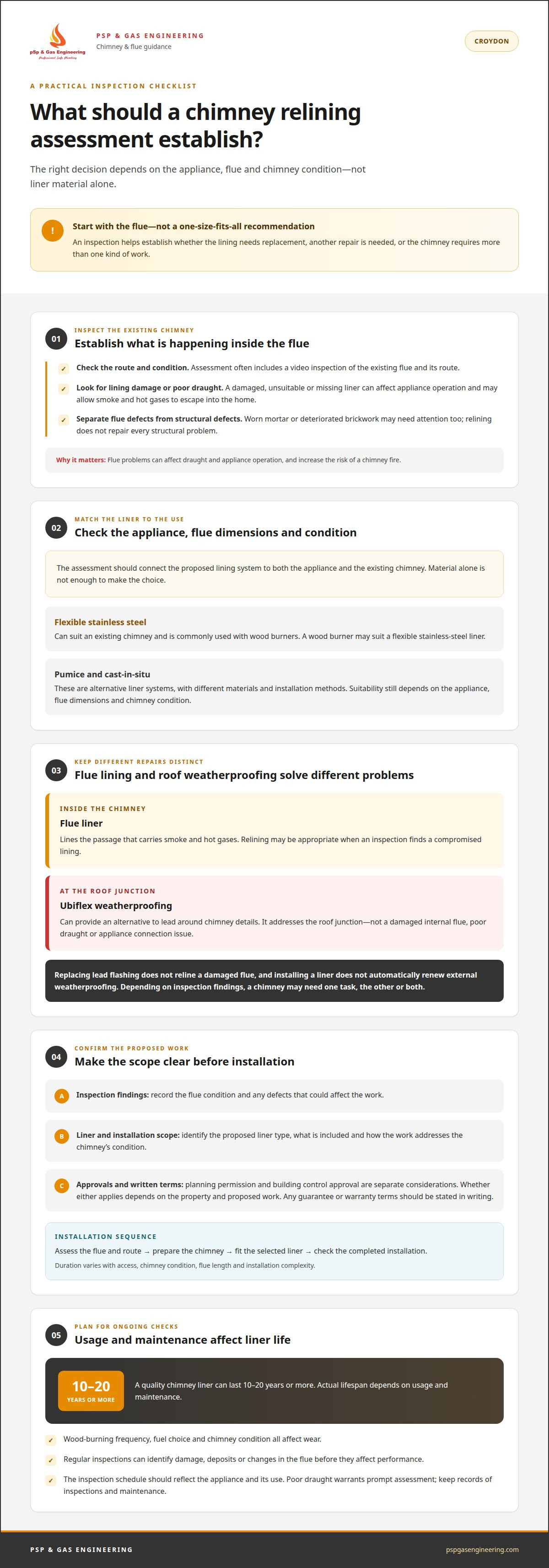
The process starts by assessing the existing flue and its route, often with a video inspection. The findings help determine whether the lining needs replacement and which system suits the appliance. The installer then prepares the chimney, fits the selected liner and checks the completed installation. Duration depends on access, chimney condition, flue length and installation complexity, so timings vary from home to home.
Liner lifespan and maintenance
A quality chimney liner can last 10-20 years or more, depending on usage and maintenance. Wood-burning frequency, fuel choice and the condition of the chimney all affect wear. Regular inspection helps identify damage, deposits or changes in the flue before they affect performance. The inspection schedule should reflect the appliance and its use; signs such as poor draught warrant prompt assessment. Keep records of inspections and any maintenance carried out.
Ubiflex as an alternative to lead
Ubiflex provides weatherproofing and is presented as a lower-cost alternative to lead around chimney details. It addresses the roof junction, not the internal passage that carries smoke and hot gases. Replacing lead flashing does not reline a damaged flue, and installing a liner does not automatically renew external weatherproofing. A Croydon chimney may need one task, the other or both, depending on defects and inspection findings.
Lead flashing creates a weather-resistant junction where a chimney meets the roof. If damaged, it can allow water to enter around the stack and affect nearby materials. Ubiflex can provide an alternative for this weatherproofing role and may help prevent lead theft. Its purpose is to replace exposed leadwork, not to resolve poor draught, a damaged liner or an appliance connection issue. An inspection helps distinguish these problems.
Before selecting Ubiflex, the installer assesses the existing flashing, chimney masonry and roof junction. The proposed work should identify the section to be replaced and explain how the material will form a weatherproof seal. For example, damage beside a chimney stack may call for work limited to that junction, while deteriorated masonry may need attention too. The material alone cannot correct a defect outside the flashing.
After fitting, visually assess the completed junction for gaps where water could enter. The scope should distinguish leadwork replacement from flue relining, so the work addresses the actual defect. A written description of the findings and proposed work explains why Ubiflex suits that roof detail and whether the internal flue needs separate attention.
For a professional assessment of chimney weatherproofing, explore chimney weatherproofing options.
When relining is suitable
An inspection helps establish whether a Croydon chimney needs a new liner or another repair. The appliance, flue condition and chimney structure all influence the decision.
Applicable regulations and standards
UK building regulations and relevant standards inform how chimney relining is planned and carried out. The applicable requirements depend on the property, appliance and work involved. For example, a new stove may have different flue requirements from an existing appliance.
The assessment should match the proposed liner to the appliance and existing chimney. It should identify defects that could affect installation, such as worn mortar or a damaged flue. A clear scope records the findings, selected approach and work required, giving the homeowner a practical account of how the installation addresses the chimney’s condition.
Regulatory considerations are part of the installation, but they do not replace an assessment of the flue itself. The chimney’s route, condition and intended use all matter. If a Croydon home is getting a different appliance, the installation plan needs to account for the change rather than assume the old arrangement remains suitable.
Damaged or unlined flue risks
A damaged flue can allow smoke and hot gases to escape into the home instead of travelling safely up the chimney. An unsuitable or missing liner can also contribute to poor draught. These problems can affect appliance operation and increase the risk of a chimney fire.
Older chimneys may have deteriorated brickwork or mortar, particularly if maintenance has been insufficient. These defects can weaken the chimney and may occur alongside damage inside the flue. Relining may be appropriate when an inspection finds a compromised lining, but it does not repair every structural defect.
Consider a Croydon property where a new stove is planned. Its requirements may mean the existing flue needs a suitable liner before the appliance is used. A video inspection can show the flue’s condition and help distinguish lining damage from other concerns. This supports a decision based on the actual chimney, not its age alone.
Relining is not automatically the answer to poor performance. Inspection findings, appliance requirements and masonry condition determine whether a liner, separate repairs or both are appropriate. Addressing these factors helps reduce the risk of smoke escaping and supports safer chimney operation.
What UK building regulations and standards apply to chimney relining?
For a Croydon chimney, applicable building requirements depend on the proposed work and the appliance served. A like-for-like liner replacement differs from changing a flue route or installing a different appliance. First define the scope, then establish which building control requirements and technical standards apply. Not every relining project follows the same approval route.
Building Regulations provide the framework for building work in England, but no single provision covers every chimney. The property, existing installation and proposed changes all affect what needs to be considered. A competent assessment records the chimney’s condition, appliance connection and intended liner system. Those details help define the work and its regulatory context.
For a useful project record, make sure the installation documentation addresses:
- The existing chimney and flue condition, including defects identified during inspection.
- The appliance type and its requirements for the flue serving it.
- The proposed liner material, route and connection to the appliance.
- Any building control steps relevant to the specific work.
These points distinguish relining from related work, such as repairing masonry or changing the appliance. For example, an altered flue route at a Croydon property calls for an assessment that accounts for the change. The installation record should explain what was inspected, what work was completed and how the chosen system suits the appliance. Clear documentation supports future maintenance and provides a useful reference if the chimney is altered again.
Before work begins, establish the project scope and the applicable compliance route with the professional undertaking it. A written quotation can describe the inspection, liner system, installation tasks and any associated approval steps. This gives you a clear basis for understanding what the work covers, without treating a general description of UK requirements as a substitute for project-specific assessment. Arrange a chimney flue assessment to discuss your relining requirements.
In England, Building Regulations provide the framework, while applicable requirements and technical standards depend on the proposed work and appliance. A like-for-like liner replacement may involve different considerations from changing the flue route or appliance, so assess the compliance route for the specific project.
PSP & Gas Engineering: Flue Relining
PSP & Gas Engineering provides flue relining for Croydon properties when an inspection identifies a damaged lining, poor draught or an appliance change that requires a suitable flue. A video inspection helps assess the chimney’s internal condition and inform the recommended work. It is a practical next step when the cause of a chimney problem is unclear or an older flue needs assessment before a new stove is used.
The right approach depends on the chimney, appliance and inspection findings. Relining may not address separate defects in brickwork or mortar, so the work should reflect the observed condition. PSP & Gas Engineering’s Gas Safe registered engineers carry out the company’s work in line with UK safety standards.
For a professional assessment of your chimney, contact PSP & Gas Engineering.
Plan the next step for your chimney
Before arranging work, gather any previous inspection findings and details about the appliance using the chimney. This gives the discussion a useful starting point and keeps the focus on the property’s needs. If you’re considering flue relining in Croydon, the decision should follow an assessment of the flue and its intended use, not a material preference alone.
PSP & Gas Engineering offers flue relining, boiler installations and gas safety inspections. These services can be relevant when chimney work forms part of wider appliance planning or a property’s gas safety needs. The next step depends on the work required, and an inspection can help clarify the chimney’s condition.
With the key details ready, you can discuss the issue and the suitable way forward. Contact PSP & Gas Engineering to talk through your chimney requirements and take the next step with confidence.
Frequently Asked Questions
Need a Chimney Lining Specialist in Croydon?
Yes. PSP & Gas Engineering provides flue relining for Croydon homes, with video inspections to assess the flue’s internal condition. This can help when an older chimney has unexplained performance problems or before fitting a different appliance. Share the appliance type and any previous inspection findings when discussing the work, so the assessment can focus on the chimney’s intended use.
What is Ubiflex and why should I consider it?
Ubiflex is an alternative to lead for weatherproofing around a chimney, not a liner inside the flue. It may suit a roof junction where existing leadwork needs replacing and can help address concerns about lead theft. Damp near the roof-to-chimney junction, for example, may point to a flashing issue rather than a problem with the smoke passage. Identifying the defect’s location is important.
What does chimney flue relining involve and when is it needed?
Flue relining involves assessing the existing passage and fitting a suitable lining when damage, poor draught or a new appliance’s requirements make the current arrangement unsuitable. It is not automatically the answer to every chimney fault. Worn mortar, for example, may need separate attention. A video inspection can help distinguish an internal flue problem from a defect in the chimney structure.
Which flue liner types are suitable for wood burners, gas fires and open fireplaces?
Flexible stainless-steel liners are commonly used with wood burners. The right option for gas fires or open fireplaces depends on the appliance and chimney configuration. Pumice and cast-in-place systems are alternatives, but no single material suits every flue. A professional assessment should match the liner to the appliance, flue dimensions, route and condition, rather than selecting a material based on fireplace type alone.
How do I find a HETAS-registered or Gas Safe-registered flue relining installer in Croydon?
For gas-related work, choose a Gas Safe registered engineer. PSP & Gas Engineering’s work is carried out by Gas Safe registered engineers. The appropriate credentials depend on the appliance and work involved, so registration should match the installation being assessed. For a gas-flue concern in Croydon, a video inspection can help establish the chimney’s condition and inform the next step.
How do stainless steel, pumice and cast-in-place flue liners compare?
Stainless-steel, pumice and cast-in-situ liners differ in material and installation method. Flexible stainless steel is commonly used in existing chimneys with wood burners, while pumice and cast-in-situ systems are alternatives. The suitable choice depends on the appliance, flue dimensions and condition.


