

A quick plumbing fix can turn a small leak into hidden damage if you start before you know where the water is coming from or how to isolate it. The DIY plumbing mistakes to avoid often begin with rushing into a repair without understanding the pipework, the fitting or the risks involved.
It’s understandable to want to deal with a dripping tap or slow drain promptly. Some simple maintenance may suit a confident homeowner, but work involving gas appliances, unvented hot water systems or water near electrical equipment calls for particular care and qualified help.
This checklist covers practical ways to avoid common errors, from choosing unsuitable fittings to overtightening connections. It also explains when to stop, what to observe and how to take safe first steps if a leak develops, including isolating the water supply when it’s safe to do so.
Good DIY plumbing starts with knowing your limits. A clear plan can help you avoid making a manageable fault worse and decide when professional support is the safer option.
Key Takeaways
- Use this checklist of DIY plumbing mistakes to avoid before starting. Assess the problem instead of rushing into a repair.
- Forcing or misaligning fittings, or choosing unsuitable parts and sealants, can cause leaks and hidden damage.
- Separate low risk observation and preparation from work involving concealed pipework or safety critical systems.
- Before a suitable task, identify the issue, locate the water shut off and protect the work area and belongings.
- Recurring leaks or uncertainty about the pipework are reasons to pause and seek professional plumbing support.
DIY plumbing mistakes to avoid before you start a repair
Many plumbing problems get worse because of rushed preparation. A few minutes spent observing the symptoms, identifying hazards and preparing the area can help keep a manageable fault from becoming a larger repair.
This section covers common water related issues, such as a drip around a tap or dampness beneath a sink. It doesn’t cover work on gas appliances or electrical systems. Leave gas appliance work to a Gas Safe registered engineer. If water is near electrical equipment, don’t touch the equipment or enter the wet area to investigate.
A DIY plumbing mistake is an avoidable action that increases the risk of damage, a leak or injury. Use this checklist before dismantling a fitting or opening a wall. A basic understanding of how plumbing systems connect can help you look beyond the spot where water first appears.
Starting without identifying the source of the problem
Visible water doesn’t always show where a leak began. It can travel along a pipe, the underside of a worktop or a wall before collecting somewhere lower down. Water beneath a sink, for example, may be running from a connection above the wet patch. Observe the area first, and don’t dismantle fittings or open walls while the source is uncertain.
A single drip after using a tap is different from dampness that returns, spreads or appears without an obvious cause. Note when water appears and which nearby fixtures have been used. Recurring moisture, a musty smell or unexplained damage to a cupboard or wall may point to a concealed issue. Don’t assume the most visible wet spot is the source.
Skipping preparation and making assumptions
Before any suitable repair, locate the relevant water shut off and make sure you can reach it safely. Clear the work area, move belongings and plan how to contain any water. Without suitable tools, clear access or protection for nearby surfaces, a small task can become wet and difficult to manage.
Don’t guess what a pipe or fitting is made from, or assume a previous repair used standard parts. Materials, connection types and the condition of older work can vary. A part or sealant that looks as though it fits may still be unsuitable. If you can’t identify what you’re looking at, stop before buying or forcing components into place.
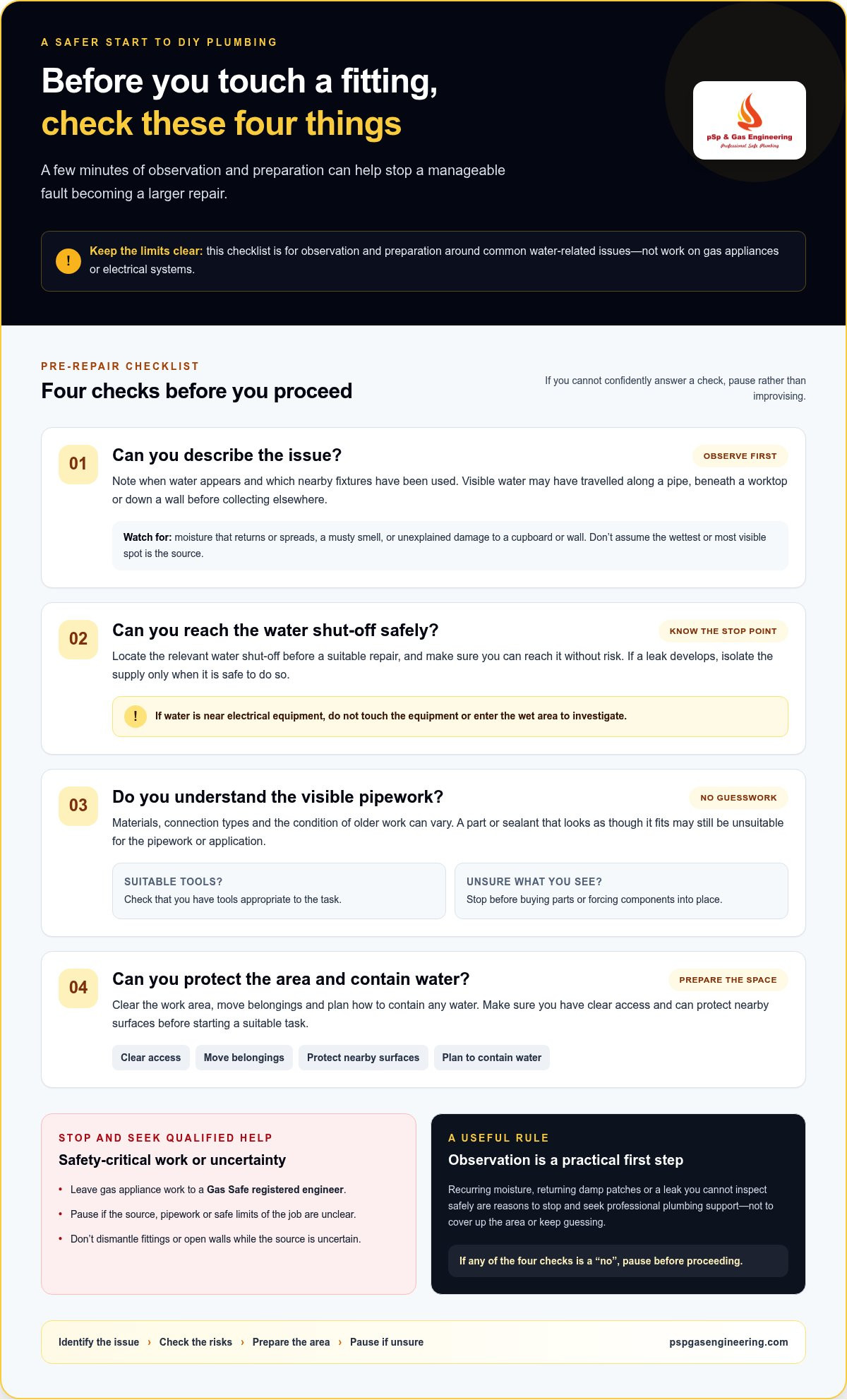
Before proceeding, ask yourself:
- Can I describe the issue and when it occurs?
- Can I locate the water shut off and reach it without risk?
- Do I understand the visible pipework and have suitable tools?
- Can I protect nearby belongings and contain water safely?
If any answer is no, pause rather than improvising. Assessing the fault is a practical first step, not a failure to handle the repair. Uncertainty about the source, pipework or safe limits of the job is a reason to seek professional plumbing support.
Common DIY plumbing errors that can cause leaks or hidden damage
A connection can look secure and still be under strain. Forcing parts together, overtightening a fitting or pushing components into alignment can damage threads, distort a seal or stress nearby pipework. The result may be a slow leak rather than an obvious burst, giving moisture time to spread.
A rushed plumbing repair can turn a visible fault into concealed water damage that’s harder to find and assess. A joint behind a panel or beneath flooring might continue leaking out of sight. Don’t cover or enclose a connection just because it looks dry at first. If you can’t be sure it’s sound, pause and have the fault assessed before it becomes inaccessible.
Using the wrong fittings, materials or sealant
Fittings and materials need to suit the existing pipework, connection and intended use. A part that looks similar may be a different size, made from a different material or designed to join in another way. A sealant intended for one application may not suit another. Adding more sealant or force won’t make an incompatible connection reliable. It may hide a poor fit or cause further damage.
WRAS approval can help homeowners identify products and materials assessed for use with water fittings, but a product mark doesn’t mean a component is suitable for every situation or that it has been installed correctly. The Water Supply (Water Fittings) Regulations 1999 govern fittings and materials in contact with public drinking water. If you’re unsure whether a part suits the pipework or application, don’t rely on appearance alone.
Ignoring signs that a problem is getting worse
Repeated drips, returning damp patches, discolouration, swelling or a musty smell can indicate that water is spreading beyond the visible surface. A small mark on a ceiling, for instance, may be caused by moisture from pipework or a connection elsewhere. The stain’s position doesn’t necessarily reveal the source.
Painting over a damp patch, replacing a panel or covering a joint without finding out why it became wet can make the underlying problem harder to detect. Note changes over time, but don’t dismantle concealed pipework or continue if the source or extent is unclear. Stop and seek professional help if moisture returns, spreads or appears somewhere you can’t inspect safely.
Before closing up a repaired area, consider whether you can observe the connection safely and whether any moisture remains. If you’re uncertain, leave the area accessible until it has been assessed rather than concealing a potential leak.
When a repair is beyond safe DIY limits, professional plumbing support can help identify the cause and address the issue without guesswork.
DIY plumbing or professional help: know where to draw the line
A fault can look minor without being straightforward to fix. A small wet patch may come from concealed pipework, while a boiler issue can involve gas as well as water. Don’t judge a job by the size of the visible symptom alone. Knowing which DIY plumbing mistakes to avoid includes recognising when the cause or risks are beyond what you can assess safely.
Use this comparison as a guide, while considering the specific situation:
Situations where stopping is the safer decision
Suspected gas leaks, boiler faults and work on gas appliances are outside ordinary DIY plumbing. Stop if you suspect a gas leak. Don’t operate electrical switches or use a naked flame. Leave the property and follow official gas emergency guidance from outside. If water reaches electrical equipment, keep clear instead of trying to inspect or move it. Unfamiliar concealed pipework, a worsening leak or repeated failed repairs are also reasons to pause and arrange a professional assessment.
Understanding the gas and plumbing boundary
Water plumbing and gas work require different skills. A task that appears to involve a pipe may relate to a gas appliance or gas supply, so don’t proceed if you can’t confidently identify the system. Gas work must be carried out by an engineer registered with the Gas Safe Register and qualified for the relevant type of work. Gas registration relates to gas work. It doesn’t mean every plumbing task is automatically within that engineer’s scope.
If you’re uncertain about a boiler or gas appliance, leave it untouched and use the Gas Safe compliance checklist for related safety guidance. For water plumbing, consider whether the fault is visible, whether it is worsening and whether you can identify its source without opening walls or disturbing unfamiliar pipework. If the answers aren’t clear, stop. A qualified plumbing assessment can help establish what’s happening before a small looking fault develops further.
A practical checklist for safer DIY plumbing decisions
A calm, ordered assessment is more useful than rushing to the tool kit. This checklist helps you decide whether a water plumbing issue is suitable to tackle, what to prepare and when to stop. If a step raises uncertainty, don’t treat the remaining steps as permission to proceed.
Before touching a pipe or fitting
Start with what you can observe safely. Don’t dismantle anything to identify the fault. The aim is to understand the symptoms and immediate risks, not to diagnose concealed pipework by guesswork.
- Identify the affected fixture. Note where water appears, which nearby tap, toilet or appliance was in use, and whether the fault is a one off or recurring.
- Assess immediate hazards. Consider whether water is close to electrical equipment, whether the issue could involve a gas appliance, and whether there are signs of a suspected gas leak. Keep clear of electrical hazards. If you suspect a gas leak, stop, leave the property and follow official UK gas emergency guidance from outside.
- Decide whether the work is within your ability. If you can’t identify the source, pipe material, fitting or scope of the repair, don’t proceed. Gas appliances and gas pipework aren’t DIY plumbing tasks.
- Prepare the area. If it’s safe, locate the relevant water shut off. Clear access, move belongings away and plan how to contain water. Don’t start if you lack suitable tools or can’t reach the area safely.
- Set a clear stopping point. Before a minor task, decide what would make you stop, such as a worsening leak, unexpected pipework or a connection that won’t sit correctly. Don’t force parts or improvise with materials.
After a minor repair or when something goes wrong
Keep the area accessible so you can see whether moisture returns. Don’t cover a joint, close a panel or paint over dampness while the result is uncertain. Stop if a leak worsens, the fault persists or new symptoms appear. If it’s safe, use the relevant shut off to limit water flow, keep clear of electrical hazards and arrange professional assistance.
For recurring symptoms, record when they occur, which fixture was in use and what you observed. A clear note, or a photograph taken from a safe, dry position, can help a professional understand the pattern. Avoid repeated attempts to fix a fault when the cause remains unclear.
Save this pre-repair check: identify the fixture and symptoms; assess water, gas and electrical risks; stop if the source or scope is unclear; locate the shut off if safe; clear and protect the work area; keep any repaired area visible; stop and seek help if the leak returns or worsens.
If the issue falls outside safe DIY limits, arrange professional plumbing support rather than risking further damage.
When Croydon homeowners should call a plumbing professional
Some faults need more than a cautious DIY approach. Arrange a professional assessment if a leak keeps returning, dampness is spreading, water appears without a clear source, or the pipework is concealed or unfamiliar. If a repair hasn’t resolved the problem, stop rather than making repeated attempts. These warning signs can indicate an issue that isn’t visible at the surface.
PSP & Gas Engineering provides plumbing services in Croydon and across Greater London. If a water plumbing fault is worsening or you’re unsure what lies behind it, pausing the repair can help limit further risk. For gas appliances or suspected gas leaks, don’t treat the issue as ordinary plumbing. Follow appropriate gas safety guidance and use a Gas Safe registered engineer for gas work.
What information to have ready when seeking help
Clear observations can help an engineer understand the issue and plan an assessment. Note which fixture is affected, when the problem began and whether it happens continuously or only after particular use. Describe visible dampness, discolouration or repeated leakage, and mention whether the symptoms are getting worse. You don’t need to open a wall, remove a panel or dismantle a fitting to provide useful information.
If it’s safe, keep the area accessible and make a brief record of when the symptoms occur. For example, note whether a damp patch appears after using a particular tap or water returns after the area has dried. Don’t touch wet electrical equipment or attempt further repairs to gather details. A straightforward account of what you’ve observed is more useful than a speculative diagnosis.
A measured next step for Croydon plumbing problems
Stopping an uncertain repair isn’t a DIY failure. It’s a considered decision that can help avoid damage from guesswork, especially if the leak keeps returning or its source can’t be identified. If the issue is urgent, contact PSP & Gas Engineering for assistance. For other plumbing problems, request a quote and explain the symptoms you’ve noticed.
Knowing which DIY plumbing mistakes to avoid includes recognising when a qualified assessment is the safer next step. PSP & Gas Engineering provides local plumbing support in Croydon and across Greater London. Share what you’ve observed so the team can take the next step towards assessing the issue.
Request a plumbing quote or contact PSP & Gas Engineering.
Make your next plumbing decision with confidence
A sensible outcome isn’t always a completed repair. Sometimes it means recognising that the next step needs more knowledge or equipment than you have. Use what you’ve learned about DIY plumbing mistakes to avoid to make a measured choice instead of letting urgency or an online tutorial set the pace.
If you’ve stopped because the fault is unclear, you can still move things forward. Keep the affected area accessible, note any changes and explain what you’ve observed when seeking help. There’s no need to attempt a more invasive investigation or feel that pausing means you’ve failed. Protecting your home starts with decisions that fit the risks.
For a plumbing issue that needs professional attention, PSP & Gas Engineering can provide a clear next step. Request a plumbing quote or contact PSP & Gas Engineering to discuss the issue. Share the facts you know and let a considered decision guide what happens next.
Frequently Asked Questions
Can I fix a leaking pipe with tape?
Tape shouldn’t be treated as a lasting repair for a leaking pipe. Some products are designed for temporary pipe repairs, but whether one is suitable depends on the pipe, leak and product instructions. Ordinary household tape may not withstand water pressure. If water is escaping, isolate the supply if you can do so safely, protect nearby belongings and arrange a proper assessment rather than relying on a temporary patch.
Is it safe to use chemical drain cleaner?
Only use a drain cleaner if its label says it’s suitable for your pipework and the type of blockage, and follow all safety instructions. Never mix drain products with each other or with household chemicals, as this can create dangerous reactions or fumes. If you’ve already poured a product into the drain, tell anyone assessing it what you used and when, and don’t add another chemical.
Can I replace a tap myself?
Replacing a tap may be manageable if you can safely isolate the water, identify compatible fittings and work comfortably in the available space. A full tap replacement can involve different connections from a simple washer change, and poor alignment may cause a slow leak inside a cupboard. If the shut off won’t operate, the connections are unfamiliar or access is difficult, use a qualified plumber.
What happens if a DIY plumbing repair causes a hidden leak?
A hidden leak can keep wetting plaster, flooring or timber before it becomes visible, and persistent damp may encourage mould growth. Look for new staining, a musty smell, lifting finishes or moisture returning around the repair. Don’t cover the area or keep using a fitting if you suspect it’s leaking. If you can’t safely locate the source, arrange a professional assessment so the underlying issue can be investigated.
Do I need a Gas Safe registered engineer to work on a boiler?
Yes. Work involving a boiler’s gas components must be carried out by a Gas Safe registered engineer qualified for that type of work. A boiler combines systems that aren’t suitable for trial and error DIY, so don’t remove its casing or attempt gas related adjustments. Registration relates to gas work, not every water plumbing task. If the boiler has a fault, leave it untouched and arrange appropriate professional help.
When should I stop a DIY plumbing repair?
Stop if the leak worsens, a repair fails, the pipework is concealed or unfamiliar, or water is near electrical equipment. If you suspect a gas leak, leave the property and follow official gas emergency guidance from outside. Don’t continue just because you’ve already started. Croydon homeowners can seek plumbing support from PSP & Gas Engineering when a water plumbing problem needs professional assessment.


