
The coldest radiator in the house may be warning you about more than a chilly room. Uneven heating, rising energy bills or a leak can all prompt the same question: is repair the sensible choice, or is it time for a replacement? The right radiator repair and installation work can restore comfort while helping protect the wider heating system.
It’s understandable to want a clear answer before committing to work, particularly when a leak could cause water damage or an inefficient system is adding to household costs. Not every fault means a radiator needs replacing. Some problems can be resolved through maintenance or repair; others may make a new radiator the more practical long-term option.
This guide explains common radiator faults, what you can safely check yourself and when to call a qualified heating engineer. You’ll learn how to weigh repair against replacement, understand the role of system maintenance and recognise why professional diagnosis matters. PSP & Gas Engineering’s Gas Safe registered engineers take a whole-system approach to radiator work, with safety and technical precision at the centre of every assessment.
Key Takeaways
- Check for cold spots, particularly at the bottom of a radiator, as they may indicate sludge affecting heat circulation.
- Understand how room volume, windows and insulation inform BTU calculations and help determine suitable radiator output.
- Use the radiator’s condition and fault type to weigh repair against replacement, rather than assuming every problem requires a new unit.
- See why careful draining, refilling and airlock prevention matter during professional radiator repair and installation.
- Learn how PSP & Gas Engineering’s whole-system expertise supports methodical radiator work in Croydon and South London.
Common Radiator Faults: Identifying the Signs of Inefficiency
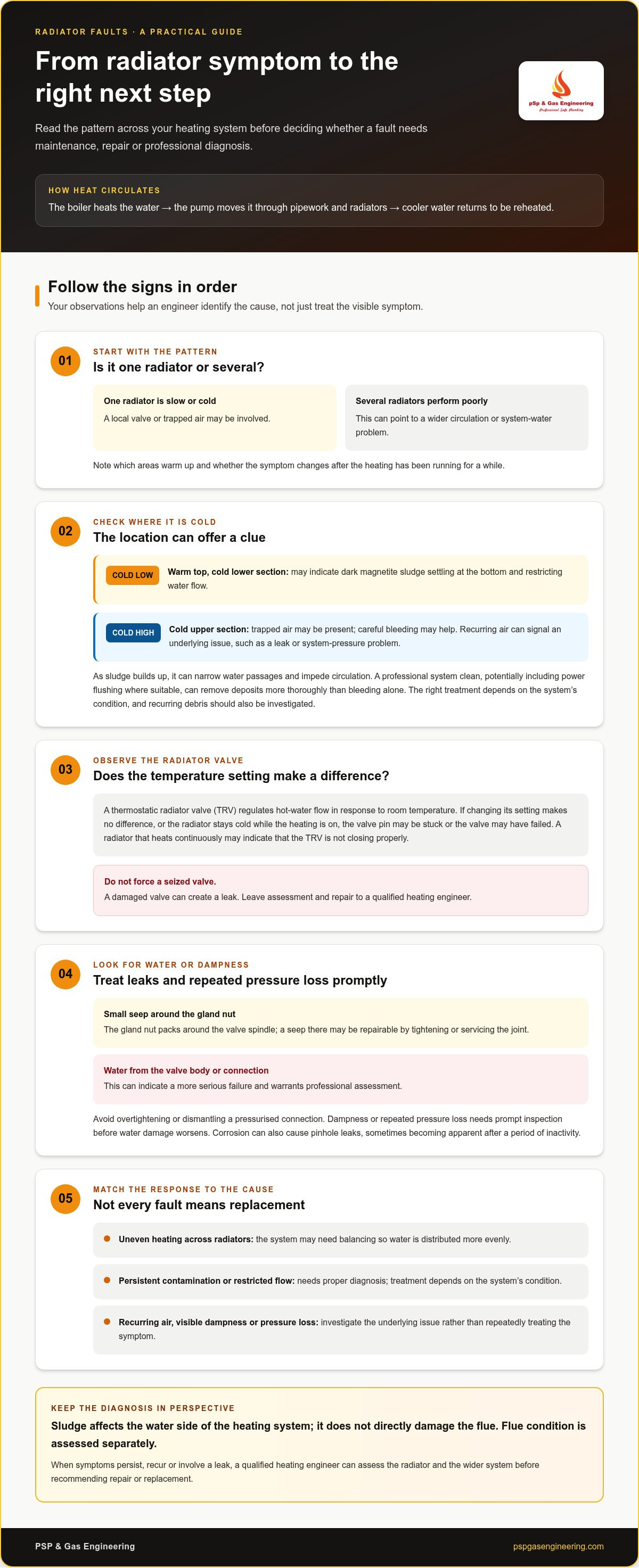
A radiator transfers heat from the circulating system water into a room. In a typical wet central-heating circuit, the boiler heats water, the pump moves it through pipework and radiators, and cooler water returns to be reheated. The Radiator (heating) article explains how these heat emitters work and how their designs vary. If circulation is restricted or a component fails, a radiator may warm unevenly, take longer to heat or remain cold.
Look for patterns across the home. One slow radiator may have a local valve or air issue; several radiators performing poorly can point to a wider circulation or system-water problem. Note which parts heat up and whether the symptom changes when the heating has been running for a while. These observations help an engineer diagnose the fault rather than treating only its visible symptom.
The Impact of Sludge on Your Heating System
Dark magnetite sludge forms as iron-containing parts of a heating system corrode. It can settle at the bottom of a radiator, where a cold lower section alongside a warm top is a common warning sign. As deposits accumulate, they can narrow water passages and impede circulation. The pump may have to work against greater resistance, whilst the boiler’s heat exchanger may experience additional strain if flow is poor.
Sludge does not directly damage the flue, which carries combustion gases away from the boiler. It affects the water side of the system; flue condition is assessed separately. Persistent contamination or restricted flow needs proper diagnosis. A professional system clean, potentially including power flushing where suitable, can remove deposits more thoroughly than bleeding alone. The appropriate treatment depends on the system’s condition, and the cause of recurring debris should also be investigated.
Recognising Valve and Thermostat Failures
A thermostatic radiator valve (TRV) regulates hot-water flow in response to room temperature. If turning its setting makes no difference, or the radiator stays cold despite the heating being on, the valve pin may be stuck or the valve may have failed. Don’t force a seized part; a damaged valve can create a leak. A radiator that heats continuously may also indicate that the TRV is not closing properly.
Water around a valve needs prompt attention. A small seep from the gland nut, the packing around the valve spindle, may be repairable by tightening or servicing the joint. Water escaping from the valve body or connection can indicate a more serious failure and warrants professional assessment. Avoid overtightening or dismantling a pressurised connection.
Not every cold room has a faulty radiator. If some radiators heat quickly whilst others lag, the system may need balancing so water is distributed more evenly. Air trapped at the top can cause a cold upper section and may respond to careful bleeding, but recurring air suggests an underlying issue, such as a leak or a problem with system pressure. Corrosion can also create pinhole leaks that become apparent after a period of inactivity. If you see dampness or repeated pressure loss, arrange a prompt inspection before water damage worsens. Correct diagnosis is central to safe radiator repair and installation.
The Science of Sizing: BTU Calculations for New Installations
A radiator needs to deliver enough heat to offset the heat a room loses. BTU, or British Thermal Unit, is a measure of heat energy; radiator output is commonly given in BTU per hour. Choose a unit with too little output and the room may struggle to reach its set temperature. The thermostat can continue calling for heat, keeping the heating system working for longer. An oversized radiator can cost more to buy and may make temperature control less precise, although the effect on energy use also depends on how the whole system is controlled.
Sizing starts with the room, not the radiator’s appearance. Measure its length, width and height to estimate its volume, then consider how quickly heat escapes. A large room with high ceilings generally has more air to warm than a compact one. Single glazing, draughts, external walls and limited insulation can increase heat loss; modern double glazing and better insulation can reduce it. Room use and desired temperature matter too.
Use these details with a reputable heat-loss calculator or a heating professional’s assessment. Treat the result as a room-specific requirement, then compare it with the radiator’s stated output at the relevant operating conditions. Output figures are only useful when compared on the same basis. If a room has more than one radiator, their combined output needs to meet the room’s requirement.
Choosing the Right Material and Style
Steel panel radiators are a widely used, practical option in British homes. Column and designer models can suit a particular interior, but their appearance alone doesn’t establish their suitability: check the output for the exact size and configuration. Aluminium transfers heat readily and has less thermal mass than cast iron, so it can warm up and cool down more quickly. Material is one factor, not a substitute for sizing the room correctly.
TRVs and Smart Heating Controls
A thermostatic radiator valve (TRV) adjusts hot-water flow according to the temperature around its sensor, allowing different rooms to be managed individually. Smart thermostats can add scheduled control, but compatibility and the wider heating setup matter. Controls work best when radiator output suits the room and the system is correctly balanced.
The lockshield valve, usually fitted at the opposite end to the TRV, helps regulate flow through each radiator. An engineer adjusts it as part of balancing, so water is distributed around the circuit rather than favouring the easiest route. Poor balance can leave distant rooms slow to heat even when the radiators are correctly sized.
For radiator repair and installation, sizing, valves and system performance should be considered together. PSP & Gas Engineering’s engineers understand how radiator choices relate to the wider gas and heating system. If you’re planning an upgrade, you can request a free online quote based on your requirements.
Radiator Repair vs. Replacement: A Cost-Benefit Analysis
A repair is often sensible when the radiator itself remains sound and the fault is confined to a replaceable part. A faulty valve, trapped air or a minor leak at a joint may be resolved without changing the whole unit. The key is identifying the source: repeated leaks, widespread corrosion or poor heat output despite appropriate maintenance may indicate a more fundamental problem.
Age can inform the decision, but it shouldn’t decide it alone. A radiator over 15 years old isn’t automatically beyond repair; however, if it needs repeated attention, has significant rust or struggles to heat the room, compare the likely repair effort with replacement. A single-panel radiator may also have less output than a suitable modern double-panel model of similar dimensions. An engineer can assess its condition and confirm whether the existing unit meets the room’s heating requirement.
Type 21 and Type 22 radiators use combinations of panels and convector fins to increase heat output within a given footprint. A Type 22 model, with two panels and two convector sections, will generally provide more output than a comparable Type 21, but exact performance depends on its dimensions and operating conditions. Choosing by type alone won’t ensure a better result: the replacement must be correctly sized for the room and compatible with the heating system.
The Longevity of Modern Radiator Designs
Manufacturing methods and protective finishes vary, so don’t assume every new radiator has a corrosion-proof internal coating. System water quality and ongoing maintenance also affect corrosion risk. Convector fins increase the surface area exposed to room air, helping transfer heat without requiring a wider or taller radiator. This can provide useful output where wall space is limited. A new unit may improve comfort if the old one is damaged or undersized, but reduced gas consumption isn’t guaranteed: savings depend on the whole system, controls and how the home is heated.
Aesthetic Upgrades and Property Value
In smaller London flats, a vertical radiator may use wall height where horizontal space is restricted. Check its heat output and clearances, not just its appearance. A well-chosen replacement can make a room feel more considered and complement period details found in South London homes, from traditional proportions to a more contemporary interior. It may support a tidy presentation for prospective buyers, but no radiator style guarantees an increase in a property’s value.
Before deciding, compare the radiator’s condition, repair history, heat output and suitability for its room. A one-off valve repair is a different proposition from recurring leaks or substantial corrosion. For radiator repair and installation, a whole-system assessment helps distinguish a local fault from an issue that a new radiator alone won’t resolve.
Professional Installation: What to Expect from a Specialist
A radiator swap involves more than removing one unit and connecting another. Pipework, valves, system water and circulation all need to be considered so the new radiator operates as part of the wider heating circuit. A methodical installation also helps limit the risk of leaks, trapped air and uneven heat distribution.
The process usually follows a clear sequence:
- Assess the system. The engineer checks the radiator, connections, valves and available wall space, then confirms the replacement is suitable for the room and pipework.
- Isolate and drain. The relevant section or system is isolated and water is drained in a controlled way to protect flooring and furnishings.
- Remove and fit. The old radiator is disconnected, the new one is mounted securely, and the valves and pipe connections are fitted and checked.
- Refill and protect. The system is refilled carefully, air is released and appropriate corrosion inhibitor is added according to system requirements.
- Test and balance. The engineer checks for leaks, confirms the radiator heats correctly and adjusts flow as needed to support even circulation.
Draining and refilling deserve particular care. Air left in the circuit can create cold areas, noise or interrupted circulation, while hurried filling may make it harder to remove trapped air properly. Chemical inhibitor helps limit corrosion within the system, protecting metal components from the processes that can produce damaging debris. It must be used at a suitable concentration for the system; adding it is not a substitute for addressing existing contamination or leaks.
Preparing Your Home for Installation
Before work begins, clear furniture and belongings from around the radiator and make the route to it accessible. Protecting the floor is especially useful near pipework, where residual water may escape during disconnection. Older cast-iron radiators can be exceptionally heavy, so removal requires careful handling and a safe plan for moving the unit. During commissioning, expect the engineer to refill, vent and test the system, then check that connections remain dry as the radiator warms.
The Importance of Gas Safe Oversight
Radiator work sits within a heating system, so an engineer who understands boilers can consider how a change affects overall operation. A new radiator adds water volume; system pressure and expansion capacity should be assessed where relevant. Gas Safe registered engineers can also identify when a radiator symptom may relate to wider boiler performance, rather than assuming the radiator is the only cause.
For homeowners comparing heating work in the area, this guide to boiler installation in Croydon provides related context on the boiler’s role in the system. Professional radiator repair and installation should finish with practical checks: the new unit heats, valves operate, air is cleared and the system remains stable. For a methodical assessment of your radiator work, request a free online quote from PSP & Gas Engineering.
Expert Radiator Services in Croydon and South London
Radiator faults can affect comfort throughout a home, and a leak needs careful attention to limit the risk of water damage. PSP & Gas Engineering is based in Thornton Heath and serves Croydon and Greater London, bringing local knowledge to radiator repairs, replacements and wider plumbing issues. Being locally based helps make communication and job planning more practical, although the time needed to attend depends on the circumstances.
Radiators are part of a connected heating system, not isolated appliances. Our engineers take a methodical approach, looking at the radiator, valves, pipework and boiler together to identify the likely cause before recommending work. This whole-system perspective can help distinguish a local fault from an issue affecting circulation or heating performance elsewhere in the home.
That systems approach is relevant across plumbing work. For example, the diagnostic thinking behind commercial plumbing services in London also relies on understanding how components and pipework interact, even though a domestic heating fault requires an assessment suited to the home.
Emergency Radiator and Pipework Repairs
A burst pipe or substantial leak calls for prompt action. PSP & Gas Engineering provides 24/7 emergency assistance for leaks. If water is escaping, keep clear of wet electrical equipment, contain water only where it’s safe to do so, and use the appropriate isolation point if you know how. Our engineers use system diagnostics to investigate faults such as cold radiators, unusual noises or leaks, then identify a suitable course of action. The priority is to manage the plumbing fault and reduce the risk of further damage.
A “Safe Pair of Hands” for Your Home
PSP & Gas Engineering’s Gas Safe registered engineers understand the wider gas system connected to your heating. Their work is guided by safety, technical precision and attention to compliance, with checks and recommendations based on the condition of the system. This provides a considered basis for deciding whether repair, adjustment or replacement is appropriate, rather than treating a symptom in isolation.
For homeowners in Croydon and South London, a clear assessment can make the next step easier to understand. Whether a radiator is leaking, failing to heat evenly or due for an upgrade, our team can explain the work required and provide a free online quote for radiator repairs or improvements. Request a free, no-obligation radiator quote from PSP & Gas Engineering to discuss your home’s heating needs.
Take the Next Step Towards Reliable Home Heating
A comfortable home starts with a heating system that suits its rooms and is working as intended. If you’re unsure whether a radiator needs attention or an upgrade, the next step is a professional assessment that considers the unit alongside the wider system. That gives you a clearer basis for deciding what work is worthwhile, without committing to a replacement before the cause is understood.
PSP & Gas Engineering provides radiator repair and installation support with a careful, safety-led approach. Share the issue you’ve noticed and your plans for the space, and the team can help you move towards a practical solution for your home in Croydon and the surrounding area.
Start with a clear plan for restoring dependable warmth. Request a free radiator quote from PSP & Gas Engineering and take the next step with confidence.
Frequently Asked Questions
How much does it cost to install a new radiator in London?
There isn’t one fixed price for installing a radiator in London. The total depends on the radiator’s size and type, the work needed on pipework or valves, access to the installation area and whether the system needs draining or other adjustments. A like-for-like swap may involve different work from relocating a radiator. For a cost specific to your home in Croydon, request a free online quote based on the job details.
Can I change a radiator myself or do I need a professional?
A straightforward radiator change may look simple, but it involves isolating pipework, managing heating-system water and making secure connections. A mistake can cause leaks, damage flooring or leave the system unable to circulate properly. Professional radiator repair and installation is the safer option if you’re unfamiliar with the system, if pipework needs alteration, or if the radiator is heavy. Leave boiler or gas-appliance work to appropriately qualified engineers.
Why is my radiator cold at the bottom but hot at the top?
A cold lower section with a warm top can indicate sediment restricting heat circulation through the radiator. Check whether the same pattern affects other radiators, and note whether the problem persists after the heating has run. That information can help distinguish a local issue from a wider system concern. Avoid dismantling connections or attempting a chemical clean yourself; an engineer can inspect the system and recommend suitable treatment.
How often should I bleed my radiators to maintain efficiency?
There’s no set bleeding schedule that suits every home. Bleed a radiator when it shows signs of trapped air, such as a cool area at the top or gurgling as it heats. Turn the heating off and let the radiator cool before using a radiator key, following the valve manufacturer’s instructions. If air returns repeatedly, or you’re unsure how to check system pressure afterwards, arrange a professional assessment.
What is the best type of radiator for a small bedroom?
The best choice is the model that meets the room’s heat requirement and fits the available wall space. A compact horizontal radiator may suit a clear section beneath a window; a vertical design could work where wall width is limited. Compare each model’s stated heat output, dimensions and connection positions before choosing. In a small bedroom, also consider furniture placement so curtains or large items don’t obstruct heat circulation.
How long does a typical radiator installation take?
Installation time depends on the scope of the work. Replacing a radiator in the same position can be more straightforward than moving it, changing pipework or addressing a fault elsewhere in the heating circuit. The radiator’s weight, access and the work needed to refill and test the system also affect the job. A project-specific assessment is the best way to understand what the installation involves and plan around it.
Do I need to turn my boiler off when repairing a radiator leak?
For a leak, switch off the heating and allow the system to cool if it’s safe to do so. Don’t loosen a joint or remove the radiator whilst the system is hot or under pressure. If you can safely operate the radiator valves, closing them may limit water flow, but don’t force a stuck valve. Keep away from wet electrical equipment and arrange prompt plumbing assistance, especially if water is spreading.
Will a new radiator make my house warmer or just save money?
A new radiator can improve comfort if the existing one is damaged, poorly sized or unable to deliver enough heat to its room. It won’t automatically lower energy bills: savings depend on the radiator’s suitability, heating controls, boiler operation, insulation and how you use the system. A correctly selected replacement may help the room reach its intended temperature more effectively, whilst an oversized model alone won’t fix heat loss or poor system control.


