
Could a cold patch on your radiator be a sign of trapped air, or is something else affecting the heating? Knowing how to bleed radiators effectively starts with recognising the signs: trapped air often leaves the top of a radiator cooler than the bottom, but not every cold radiator needs bleeding. Checking the pattern first helps you avoid an unnecessary repair.
If you’re unsure how to bleed radiators effectively, take care. Water may be hot, and forcing a bleed valve can cause damage or a leak. This guide explains common signs of trapped air and walks you through a careful process, so you can check the result confidently.
You’ll also learn what to do if the radiator stays cold, heats unevenly or shows signs of a leak. Persistent or system-wide heating problems may need a different diagnosis. In Croydon and Greater London, PSP & Gas Engineering’s Gas Safe registered engineers provide professional help when the issue goes beyond routine bleeding.
Key Takeaways
- Cool areas near the top or gurgling may indicate trapped air, but they don’t confirm it is the cause.
- Bleeding releases trapped air through the radiator’s bleed valve; it won’t resolve every heating problem.
- Before starting, switch off the heating, let radiators cool and prepare a radiator key, cloth, towel and small container.
- Follow the steps for how to bleed radiators effectively, turning the valve carefully and stopping if it resists or begins to leak.
- After restarting the heating, check the valve for drips and follow your boiler manufacturer’s instructions for any pressure checks.
How to tell whether your radiator needs bleeding
A radiator that feels warm at the bottom but cool near the top, takes longer than usual to heat or makes gurgling and bubbling sounds can be frustrating. These signs are useful clues, but they don’t prove that trapped air is the cause. Check the pattern across the radiator and around your home before deciding what to do next.
Radiator bleeding means releasing trapped air through the radiator’s bleed valve. The valve, sometimes called a bleed screw, lets air escape from the heating system. If air is stopping water from filling the radiator evenly, releasing it may help restore more consistent warmth. It won’t correct every cause of poor heating.
Which radiator symptoms can point to trapped air?
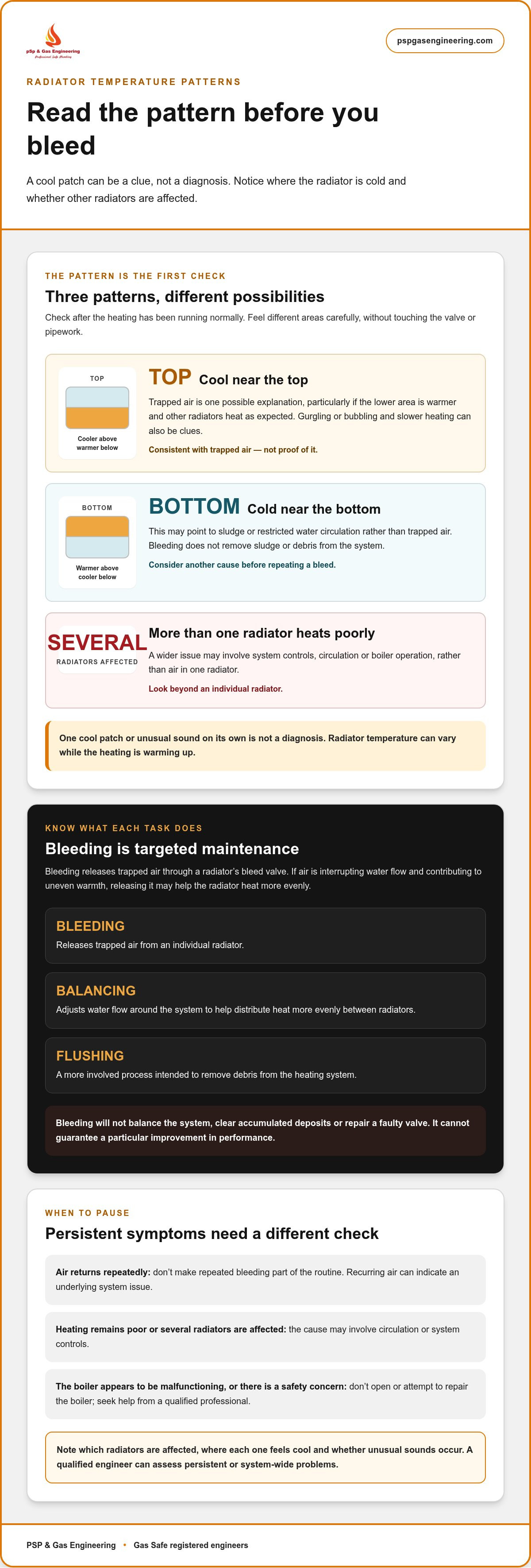
Assess the radiator after the heating has been running normally, rather than immediately after switching it on. Carefully feel different areas without touching the valve or pipework. A cooler patch near the top, while the lower area is warmer, is consistent with air collecting inside and is a reason to investigate further.
Gurgling or bubbling may also occur as water moves around air in the system. Slow heating can be another clue, particularly if the same radiator has become less effective than it used to be. Consider these signs together: one sound or cool patch on its own isn’t a diagnosis, and radiator temperature can vary while the heating is warming up.
When might a cold radiator have another cause?
A radiator that is cold at the bottom, rather than mainly at the top, may point to sludge or restricted water circulation. One radiator that heats poorly while the others work normally may have a local valve or flow issue. If several radiators across the home remain cool, the cause could involve system controls, circulation or boiler operation rather than air in one radiator.
- One radiator, cooler at the top: trapped air is one possible explanation, especially if other radiators heat as expected.
- One radiator, cold at the bottom: consider sludge or restricted circulation as alternative causes.
- Several radiators heating poorly: look beyond an individual radiator; a wider system issue may be involved.
These patterns help you decide whether the steps for how to bleed radiators effectively are likely to be relevant, but they can’t confirm the fault. Note which radiators are affected, where each one feels cool and whether there are unusual sounds. If the problem persists after bleeding, affects multiple radiators or raises a safety concern, stop and seek professional help. A qualified engineer can assess the heating system and identify whether it needs a different solution.
What bleeding a radiator does, and what it cannot fix
Bleeding is a targeted maintenance step, not a general repair for every cold radiator. It releases trapped air through a small valve, allowing water to fill more of the radiator. If air is interrupting the flow and contributing to uneven warmth, letting it out may help the radiator heat more evenly. The result depends on the cause, so bleeding alone can’t guarantee lower energy use or a particular improvement in performance.
The distinction matters before you reach for a radiator key. Bleeding won’t remove sludge or debris from the system, and it won’t repair a faulty valve. If the symptoms suggest another issue, repeating the same step may delay the right diagnosis rather than solve the problem.
Bleeding, balancing and flushing: what is the difference?
These terms describe different tasks. Bleeding releases air from an individual radiator. Balancing adjusts water flow around the system so heat is distributed more evenly between radiators. Flushing is a more involved process intended to remove debris from the heating system. Bleeding one radiator won’t balance the system or clear accumulated deposits.
Consider both the symptoms and the scale of the problem. If one radiator has signs consistent with trapped air while the rest heat as expected, bleeding may be a reasonable first step. If some radiators heat quickly and others remain slow or cool, flow distribution could be relevant. A persistent cold area at the bottom may point towards debris or restricted circulation, which bleeding cannot address.
Why bleeding may not solve every heating problem
If air returns repeatedly after bleeding, don’t make endless releases part of the routine. Recurring air can indicate an underlying system issue that needs investigation. Keep a note of which radiators are affected and how soon the symptoms return. That pattern can help a qualified engineer assess what is happening.
Problems affecting several radiators, or heating that remains poor after a radiator has been bled, may involve circulation or system controls. If the boiler itself appears to be malfunctioning, treat that separately from radiator maintenance. Don’t open or attempt to repair the boiler; seek help from a qualified professional, particularly if you have a safety concern.
- Bleeding: releases trapped air from a radiator.
- Balancing: adjusts flow to help distribute heat around the system.
- Flushing: removes system debris through a more involved process.
Understanding these differences helps you decide whether how to bleed radiators effectively is relevant to the problem, or whether it’s time to investigate further. If persistent or system-wide symptoms point to a plumbing or heating issue, PSP & Gas Engineering’s plumbing services in Croydon and Greater London provide professional support. The company’s work is carried out by Gas Safe registered engineers.
What to check before you bleed a radiator
A few minutes of preparation can help you handle the valve carefully and protect the work area. Before starting, make sure you have the right tool for the valve, something to catch any water and enough room to work without reaching awkwardly. If anything looks damaged or you’re uncertain about the valve, pause rather than forcing it.
Tools and simple precautions to prepare
Many radiators use a radiator key, but valve designs can differ, so check that your key fits before turning anything. Have a cloth, a towel and a small container ready. The cloth can help you grip or wipe the area, while the container catches water released from the valve. Keep children and pets away from the radiator and tools while you work.
- Suitable radiator key: Use one that fits the bleed valve without slipping.
- Cloth and towel: Keep these within reach to catch drips and protect nearby surfaces.
- Small container: Position it beneath the valve to collect any water.
Clear the floor around the radiator and place the towel beneath the valve area. Make sure you can see and reach the valve comfortably, rather than stretching across furniture or working in a cramped position. Good access makes it easier to control the key and notice any drips.
Check the radiator and heating controls first
Turn the heating off using its normal controls, then wait until the radiator is cool to the touch. This reduces the risk of contact with hot surfaces or water. Find the bleed valve, which is usually near the top of the radiator, often at one end. Check that you can identify the valve clearly before fitting the key.
Look closely before you begin. If the valve appears damaged, badly corroded or already damp, don’t try to turn it. Stop as well if it won’t move with gentle pressure. Forcing a stuck valve can damage it or lead to a leak, so don’t use pliers or attempt to repair or replace the valve as part of routine bleeding.
Use this quick check before deciding whether you’re ready to follow the steps for how to bleed radiators effectively:
- The heating is off and the radiator has cooled.
- The bleed valve is accessible and can be identified clearly.
- The key fits the valve, and the cloth, towel and container are ready.
- The valve looks intact and there’s no sign of a leak.
If any item isn’t in order, resolve the access or equipment issue first. If the valve is damaged, corroded, leaking or stuck, leave it alone and seek professional help. A careful stop is safer than applying extra force to a component that may need attention.
How to bleed radiators effectively, step by step
Once you’ve prepared the area and the radiator is cool, work slowly and keep the container beneath the bleed valve throughout. The aim is to let trapped air escape, not to remove the valve or release more water than necessary. If you’re bleeding more than one radiator, complete the process on each one and check it before moving on.
Release trapped air without opening the valve too far
Fit the radiator key securely and use small, controlled movements. On many radiator valves, turning anti-clockwise opens it, but stop if the key doesn’t fit or the valve behaves unexpectedly. Keep a firm hold of the key and watch the valve as you turn it.
- Position the cloth and container. Place them directly below the bleed valve to catch any water and protect the floor.
- Fit the key. Make sure it sits securely on the valve so it won’t slip as you turn.
- Open the valve slightly. Turn it slowly, usually anti-clockwise, just enough to hear air escaping. Don’t unscrew or remove the valve.
- Listen and watch. A hiss indicates air is escaping. Keep the opening small and controlled, with the container in place.
- Close the valve gently. When the hissing stops and water begins to emerge steadily, turn the key back gently to close the valve. Don’t overtighten it.
Stop if the valve leaks, resists or appears damaged. Don’t apply extra force or continue if water is escaping around the valve rather than from its outlet; seek professional help instead.
Restart the heating and assess the result
Remove the key, wipe the area dry and check the valve and surrounding radiator for visible drips. Restart the heating using its normal controls, then allow the system time to warm before checking the radiator again. Avoid judging the result immediately, as the radiator needs time to heat.
Once it has warmed, carefully compare the temperature across its surface. Note whether the area that was cool now feels warmer, or whether the same unevenness remains. Bleeding can help if trapped air was the cause, but it can’t confirm or resolve every heating fault. If the radiator is still cold, the valve drips or several radiators are affected, don’t keep repeating the procedure. The problem may need a different diagnosis.
If bleeding hasn’t resolved the issue or you’re concerned about a leak, arrange professional plumbing support from PSP & Gas Engineering. Its Gas Safe registered engineers serve Croydon and Greater London.
After bleeding: checks to make and when to get help
Once the heating has restarted, check the bleed valve and the area beneath it for drips. A small amount of water released during bleeding can be wiped away, but continued dampness or water appearing around the valve needs attention. Don’t keep turning the valve to try to stop a leak. If it’s leaking, stop and arrange professional help.
What if the radiator is still cold afterwards?
Give the heating time to circulate and the radiator time to warm before deciding whether bleeding has helped. Then compare the temperature across the radiator. If it remains uneven or cold, trapped air may not have been the cause. A stuck radiator valve, restricted flow, sludge or a wider heating-system issue could also affect performance.
Look at the pattern across the home. One radiator that remains cold may point to a local valve or flow problem, while several radiators heating poorly suggests a broader issue. If air returns repeatedly after bleeding, don’t continue releasing it without investigating why it keeps building up. Make a note of which radiators are affected and whether the symptoms return; this can help a qualified engineer assess the fault.
Check system pressure safely
Bleeding may affect pressure in some sealed heating systems, but the right check and any adjustment depend on your boiler type and the manufacturer’s instructions. Consult the relevant guidance for your model rather than relying on a universal pressure figure. Don’t remove the boiler casing or attempt internal checks or repairs. If you’re uncertain how to check the system safely, leave it to a qualified engineer.
Stop and seek professional help if the bleed valve is damaged, water continues to leak, air keeps returning or radiators remain cold. These symptoms can point to a problem that routine radiator bleeding won’t resolve. Boiler operation and diagnostics should also be left to a qualified engineer, rather than treated as a DIY extension of bleeding.
When a Croydon heating issue needs professional attention
For Croydon households, PSP & Gas Engineering provides plumbing services across Croydon and Greater London, with work carried out by Gas Safe registered engineers. If symptoms persist, affect several radiators or raise a safety concern, professional assessment is a sensible next step. A replacement boiler may be relevant only if an engineer identifies a boiler fault that makes replacement appropriate; a cold radiator by itself doesn’t mean a new boiler is needed.
Use the checks in this guide to understand whether bleeding may have addressed the issue, but don’t keep repeating the process when the evidence points elsewhere. A clear description of what’s cold, whether the valve drips and whether air returns can help an engineer focus on the underlying cause.
Take the next step towards reliable heating
Knowing how to bleed radiators effectively can help you address trapped air, but recognising when the fault needs a different solution is just as valuable. If the heating problem persists, treat it as useful information rather than a reason to keep adjusting valves. A clear account of what you’ve noticed can help a professional identify what needs attention.
For ongoing radiator or heating concerns in Croydon and Greater London, contact PSP & Gas Engineering for professional plumbing support. The company’s work is carried out by Gas Safe registered engineers.
Take a measured approach, stop if anything appears unsafe, and leave persistent problems to a qualified professional. With the right assessment, you can move towards a dependable solution with greater confidence.
Frequently Asked Questions
How do I know if my radiator needs bleeding?
Uneven warmth, especially a cooler upper area, or gurgling may suggest trapped air, but neither confirms it. Check the radiator after the heating has been running normally and compare the top and bottom. If the lower section is cold, or other radiators are also underperforming, bleeding may not address the cause. Note the pattern before acting, as this can help distinguish an isolated radiator issue from a wider heating problem.
Can I bleed a radiator while the heating is on?
No, switch the heating off before bleeding. With the system running, water in the radiator can be hot and moving, increasing the risk of burns or splashes. Turn the heating off using its normal controls and wait for the radiator to cool before handling the bleed valve. Don’t use a hot radiator as a shortcut, even if you’re only planning to open the valve briefly.
How long should I leave the heating off before bleeding a radiator?
There isn’t one set waiting time for every heating system. Leave the heating off until the radiator is cool to the touch, and take care around nearby pipework, which may retain heat. Larger radiators or a system that has been running for a long period may take longer to cool. If you can’t safely tell whether the radiator is cool, wait longer before beginning.
What should I do if water comes out straight away when bleeding a radiator?
Close the valve gently if water emerges immediately without a sustained hiss of escaping air. This can mean there was little or no air to release. Don’t keep the valve open to drain water or try to improve the heating by releasing more. Wipe the area dry, then check for drips. If water continues to escape after the valve is closed, stop and arrange professional attention.
How often should radiators be bled?
Bleed radiators when signs suggest trapped air, rather than relying on a rigid schedule. If a radiator heats evenly and makes no unusual bubbling or gurgling sounds, routine bleeding may not be necessary. Keep track if the same radiator needs bleeding repeatedly, as recurring air can indicate an underlying issue. Repeatedly releasing air without investigating the cause isn’t a substitute for a proper system assessment.
Is it safe to bleed radiators yourself?
Bleeding can be a straightforward household task if the radiator has an accessible, intact valve and you follow careful precautions. Make sure the heating is off, the radiator is cool and you have a suitable key and container. Don’t force a stuck or corroded valve, and stop if it leaks or appears damaged. If you’re unsure about safe operation, leave the task to a qualified professional.
What happens if my radiator is still cold after bleeding?
If it remains cold after the system has had time to warm, trapped air may not be the cause. A local valve or restricted flow could affect one radiator, while several cold radiators may indicate a broader system problem. Don’t keep bleeding it without a reason. For persistent heating problems in Croydon, PSP & Gas Engineering provides professional plumbing support and can assess whether further attention is needed.


