
The most expensive mistake you can make with a redundant heating system isn't the cost of the work itself, but failing to decommission it correctly before it becomes a legal liability. For many homeowners, the prospect of back boiler removal London projects feels like an invitation for chaos, dust, and structural uncertainty in the heart of their main living space. It's perfectly natural to feel anxious about disturbing decades-old pipework or wondering if a heavy cast-iron unit should simply be left in situ to avoid a major renovation.
We agree that your home's safety and cleanliness shouldn't be compromised for the sake of a technical upgrade. This professional guide provides the clarity you need to handle decommissioning whilst ensuring absolute Gas Safe compliance and adherence to the latest building regulations. You'll learn the essential steps for a clean, gas-tight removal, how to manage redundant flues in Victorian terraces, and the most cost-effective methods to transition your property into a modern, energy-efficient home that is fully prepared for a smooth future resale.
Key Takeaways
- Understand why professional decommissioning requires a Gas Safe registered engineer to safely isolate gas and water feeds, ensuring your home remains compliant with building regulations.
- Compare the benefits of leaving a redundant unit in situ versus full extraction to manage the balance between cost-effectiveness and the physical disruption of your living area.
- Navigate the unique complexities of back boiler removal London projects, including the management of shared chimney stacks and older flue systems common in Victorian terrace houses.
- Learn how to identify and safely address potential asbestos risks in older boiler gaskets and flue linings to maintain a secure environment during the decommissioning process.
- Gain insight into the long-term energy savings and property value benefits of upgrading from an inefficient back boiler to a modern, A-rated heating system.
What is Back Boiler Decommissioning and Why is it Necessary?
A back boiler is a compact heating unit traditionally installed behind a gas fire or an open hearth. To understand the origins of this technology, one can look at What is a Back Boiler? and how it once served as the primary heat source for thousands of UK homes. Today, these systems are largely redundant. Decommissioning is the technical process of permanently disconnecting the appliance from the mains gas and water supplies. It's not a DIY task. Current 2026 safety standards dictate that only a Gas Safe registered engineer should perform this work to ensure the property remains compliant and secure.
The Legacy of London’s Back Boilers
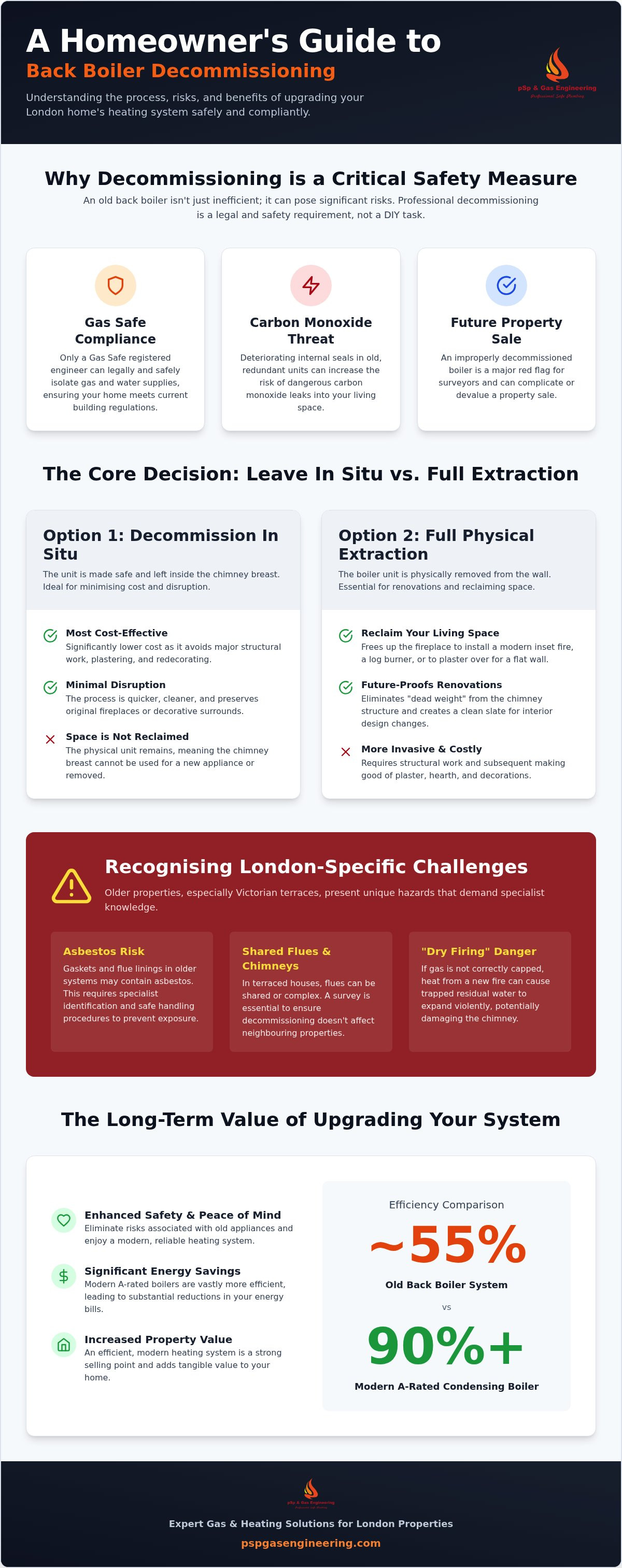
London’s architectural history is visible in its heating systems. In areas like Thornton Heath and Croydon, the transition from coal to gas back boilers was once a major technological leap for Victorian terrace owners. However, these units have long outlived their intended lifespan. They operate at significantly lower efficiency levels than modern A-rated boilers, often wasting a large portion of the energy they consume. Beyond the financial drain, the gradual deterioration of internal seals increases the danger of carbon monoxide entering the living area. This is a risk that requires immediate professional attention.
Decommissioning vs. Physical Removal
Choosing the right approach for back boiler removal London depends on your long-term plans for the property. Isolation involves making the unit safe by capping the gas and water feeds whilst leaving the cast iron structure inside the chimney breast. This is often the most cost-effective route if the fireplace is not being renovated. Full removal involves physically extracting the appliance, which is essential if you want to reclaim the fireplace space or install a new focal point.
Leaving a redundant unit connected to live gas lines is a violation of current safety protocols. A Gas Safe engineer must ensure the gas line is purged and capped at the source. This prevents the risk of "dry firing". This is a dangerous scenario where heat from a secondary source causes residual water or air trapped in the boiler to expand rapidly, potentially causing a structural failure of the chimney breast. For any back boiler removal London project, ensuring the gas pipework is verified as gas-tight is the first step toward a safe, modern home environment.
Removing a Back Boiler: Leave in Situ or Full Extraction?
Choosing between decommissioning a unit in place or opting for full extraction is a decision that balances cost, structural impact, and future renovation plans. For many London properties, especially those with intricate original fireplaces, the choice isn't always straightforward. While decommissioning is a purely technical task focused on safety, full extraction is a significant engineering project that changes the structural footprint of your chimney breast.
From a surveyor's perspective, a redundant boiler that hasn't been professionally isolated is a major red flag during property sales. They look for clear evidence of Gas Safe compliance. If you plan to sell your home, having the correct certification is often more important than whether the physical unit remains in the wall. However, if your goal is a complete aesthetic overhaul, full back boiler removal London allows you to reclaim valuable floor space and create a clean slate for modern interior design.
The Case for Decommissioning in Situ
Decommissioning in situ is often the preferred route for homeowners who wish to preserve original 1920s features or decorative surrounds. This method involves the permanent isolation of all services without disturbing the fireplace masonry. Our engineers ensure the unit is safely purged and vented. Proper venting is crucial; it prevents internal corrosion and the build-up of condensation within the redundant heat exchanger. This approach minimises mess and avoids the need for extensive plastering or hearth reconstruction. If you are unsure which path suits your property, consulting with a specialist for a Gas Safety Inspection can provide the necessary technical clarity.
When Full Removal is the Right Choice
Full extraction is the superior choice when you intend to install a modern inset gas fire or want a flat, plastered wall. Removing the heavy cast iron unit eliminates "dead weight" from the chimney structure, which is particularly beneficial during wider house renovations. This process is more invasive and requires a plan for disposing of the heavy materials. It also necessitates a thorough check for asbestos risks, as older boiler gaskets and flue linings often contain hazardous fibres that must be managed under strict safety protocols. By choosing full back boiler removal London, you ensure that your new central heating upgrade isn't compromised by legacy hardware left behind in the chimney breast.
The Professional Removal Process: Step-by-Step Safety
Executing a back boiler removal London project requires a methodical engineering approach that prioritises the structural and gas integrity of your property. Unlike standard appliance replacements, these units are integrated into the very fabric of the building. The process begins with a comprehensive gas tightness test. This initial diagnostic step confirms the integrity of the property’s existing pipework, ensuring that no pre-existing leaks are present before the decommissioning work commences. It establishes a safety baseline that protects both the engineers and the residents throughout the duration of the project.
Once the system's integrity is verified, the focus shifts to the safe isolation of the gas supply line leading to the fireplace. This involves more than just turning a valve. Engineers must ensure the line is fully purged and then capped using permanent, industry-approved fittings. Following the gas work, the redundant primary heating circuit is drained. This is a critical stage to prevent the accidental spill of stagnant central heating sludge, which can cause permanent damage to floorings and furniture if not handled with professional equipment. Every step is documented to ensure full Gas Safe compliance, providing you with the necessary certification for your home records.
Isolating the Gas and Water Supplies
Purging is defined as the safe removal of gas from pipework using air or an inert gas to ensure the environment is non-combustible before cutting into the lines. Beyond the gas supply, engineers must carefully manage the "dead leg" of redundant water pipework. These are sections of pipe that no longer have a flow of water; if left incorrectly, they can become a breeding ground for harmful bacteria, including Legionella. To maintain a healthy domestic water system, these pipes are cut back and capped as close to the main run as possible. Additionally, the electrical supply to the old circulator pump is safely disconnected and made redundant to prevent any live wires from remaining hidden within the chimney breast or floor voids.
Structural Considerations and Mess Protection
Professional back boiler removal London specialists use heavy-duty, waterproof sheeting and industrial vacuum systems to protect your living area from the corrosive nature of central heating sludge. When it comes to the physical unit, the boiler casing is dismantled with precision. It's vital to ensure the chimney lintel, which supports the weight of the brickwork above, remains undisturbed during the extraction. A failure to respect these structural boundaries can lead to cracks in the chimney breast or even partial collapse. The final stage of the process involves a thorough check of the redundant flue. We often use video inspection technology to confirm the flue is clear of debris and that no gas pockets or blockages remain, ensuring the chimney is safe for its next purpose.
London Terrace Challenges: Shared Flues and Asbestos
London’s Victorian and Edwardian terraces, particularly in areas like Croydon and Thornton Heath, present unique engineering hurdles for back boiler removal London. Many of these properties feature shared chimney stacks where multiple flues run parallel within the same masonry. This shared infrastructure creates a specific risk of carbon monoxide seepage. If a partition is compromised during the extraction of an old unit, combustion gases from a neighbouring property's appliance could enter your living space. Ensuring the structural integrity of the chimney stack is a task that must be handled by a Gas Safe registered engineer who understands the nuances of London’s heritage housing.
Identifying asbestos-containing materials (ACMs) is another vital aspect of working on systems installed before the year 2000. Asbestos was frequently used in boiler gaskets and flue linings due to its heat-resistant properties. In 2026, there is a heightened regulatory focus on the enforcement of the Control of Asbestos Regulations 2012, particularly regarding the clear documentation of surveys before any structural disturbance. All work must also align with Building Regulations (Part J), which dictates the requirements for ventilation post-removal. Correctly sealing and venting the redundant stack prevents dampness and ensures the building's fabric remains sound for years to come. This is a non-negotiable step for any professional back boiler removal London project.
CCTV Flue Inspections: The "Safe Pair of Hands"
Video technology is the most reliable way to assess the internal condition of an aged chimney. By using high-definition CCTV, we can identify hidden blockages or structural collapses within the masonry that are invisible from the hearth. This "safe pair of hands" approach ensures that before any chimney is sealed, it is verified as clear and structurally stable. It also confirms that your new heating solution has an unobstructed venting path. For peace of mind regarding your chimney's condition, you can book our specialist Video Inspections.
Responsible Waste Disposal in London
Responsible disposal is a legal requirement under the duty of care for waste management. A cast iron back boiler is exceptionally heavy. It requires professional handling to remove it from the property without damaging your home's interior. We ensure all components, including electrical parts like circulator pumps, are disposed of in accordance with WEEE (Waste Electrical and Electronic Equipment) regulations. Scrap metal is recycled appropriately, reducing the environmental impact on the local London community whilst maintaining a clean and tidy site. This methodical approach ensures your home renovation proceeds without unnecessary environmental or structural risk.
Next Steps: Upgrading Your London Heating System
The completion of a back boiler removal London project marks the beginning of a more efficient and comfortable chapter for your property. Transitioning from an obsolete, G-rated back boiler to a modern, A-rated condensing combi boiler is one of the most impactful upgrades a homeowner can make. These contemporary systems are designed to provide instantaneous hot water and reliable heating while operating at much higher efficiency levels. According to current industry data, making this switch can lead to annual savings of up to £300 on your energy bills, significantly reducing the long-term running costs of your home.
Modern heating is also about precision and control. Integrating your new boiler with smart thermostats allows you to manage your home’s climate from a smartphone, ensuring you only use energy when it is actually needed. This is particularly beneficial for the fast-paced London lifestyle, where schedules can change unexpectedly. By moving the heat source from the fireplace to a more practical location, you reclaim the heart of your living room while benefiting from a system that is quieter, safer, and fully compliant with 2026 environmental standards.
Planning Your New Boiler Installation
Choosing the right location for your new appliance is a key part of the planning phase. Many homeowners opt for a kitchen cupboard or a loft installation to free up space in the main living area. Before the new unit is commissioned, a full system powerflush is essential. This process removes the accumulated sludge and magnetite from your existing radiators, ensuring that your new investment operates at peak performance without the risk of blockages caused by the legacy of the old back boiler. We manage the entire project with a methodical approach, moving from the initial decommissioning and structural checks to the final commissioning of your new system.
Contact Your Local Gas Safe Experts
As local specialists based in Thornton Heath, we provide a reliable, safety-first service across Croydon and the wider London area. Our team of Gas Safe registered engineers is dedicated to guiding you through every technical requirement of your heating upgrade. We take pride in being a "safe pair of hands" for complex Victorian terrace renovations, ensuring every project is handled with precision and care. You can request a free, no-obligation quote to understand the scope of your specific decommissioning and installation needs. Book your back boiler removal with PSP & Gas Engineering today.
Securing Your Home’s Future with Professional Decommissioning
Transitioning from an obsolete heating system to a modern solution is a vital step toward a safer, more efficient property. By prioritising Gas Safe compliance and addressing the specific structural challenges of shared chimney stacks, you ensure your home remains protected and fully aligned with current building regulations. Whether you choose to decommission the unit in situ or proceed with a full back boiler removal London project, the result is a gas-tight environment that supports your long-term renovation goals and future property value.
Our team of Gas Safe Registered Engineers brings expert knowledge of London terrace properties to every decommissioning task, ensuring that complexities like asbestos or compromised flues are managed with technical precision. Through specialised CCTV flue video inspections, we provide the clarity and security needed to modernise your heating system with confidence. If you're ready to upgrade your home’s safety and efficiency, get a professional quote for back boiler decommissioning in London today. Taking professional action now secures your peace of mind and paves the way for a more energy-efficient future.
Frequently Asked Questions
Do I legally have to remove my old back boiler?
You aren't legally required to physically extract a redundant unit, but you must ensure it is professionally decommissioned. It's illegal to install a new non-condensing back boiler under current building regulations. If the appliance is no longer in use, the gas and water supplies must be safely isolated by a professional. This ensures your property remains compliant with the Gas Safety (Installation and Use) Regulations and prevents potential hazards during future renovations.
Can a general builder decommission a back boiler?
No, only a Gas Safe registered engineer is legally permitted to work on gas appliances and pipework in the UK. While a builder can assist with the structural masonry work, they cannot isolate, purge, or cap the gas supply. Hiring an unregistered individual for gas works is a serious safety risk and will likely invalidate your home insurance. Always verify your engineer's credentials to ensure your property is in a safe pair of hands.
How much mess does removing a back boiler actually make?
The level of disruption depends on whether you choose decommissioning in situ or full extraction. Decommissioning is a technical process that focuses on pipework and is relatively clean. Full removal involves disturbing the chimney breast, which can release decades of soot and dust. We use industrial-grade protective sheeting and high-powered vacuum systems to contain debris. Our priority is protecting your home from central heating sludge and masonry dust throughout the process.
How long does the decommissioning process take for a London terrace?
A standard decommissioning project typically takes between four and six hours to complete. If you opt for full back boiler removal London extraction, the work can extend to a full day or more. London terraces often feature shared chimney stacks that require a methodical approach to avoid disturbing neighbouring flues. We provide a specific timeframe following our initial inspection, ensuring your heating upgrade stays on schedule without compromising on safety standards.
Is it safe to leave a back boiler in the wall if it is disconnected?
It is only safe if the unit has been professionally vented and all feeds are capped at the source. Leaving a sealed, redundant boiler behind a live fire can lead to a dangerous build-up of pressure. This is known as "dry firing" and can cause structural failure of the chimney breast. Our engineers ensure the redundant heat exchanger is correctly vented to prevent internal corrosion and moisture traps, maintaining the structural integrity of your home.
Do I need a Gas Safe certificate after removing my boiler?
Yes, you must receive official documentation confirming that the work was performed by a qualified professional. This certificate is a critical part of your home records and is essential when selling your property. London surveyors and solicitors will specifically look for this proof of compliance during the conveyancing process. It provides peace of mind that the back boiler removal London was handled correctly and that the property’s gas system is verified as gas-tight.
Can you remove a back boiler without taking out the fireplace surround?
Decommissioning in situ allows you to keep your original fireplace surround and heritage features completely intact. However, full physical extraction usually requires the removal of the surround to access the heavy cast iron unit. For homeowners in Croydon who wish to preserve 1920s features, we often recommend professional isolation. This makes the system safe while avoiding the structural upheaval and cosmetic repairs associated with a full extraction of the appliance from the masonry.
What happens to the old flue after the boiler is removed?
The old flue must be inspected to ensure it is clear of debris and gas pockets before being sealed or repurposed. If you intend to install a new gas fire, the flue may require relining to meet modern safety requirements. We often perform video inspections to check for structural collapses or blockages within the chimney stack. This ensures the redundant flue doesn't cause damp issues and that any new venting paths are clear and compliant with Building Regulations.


