

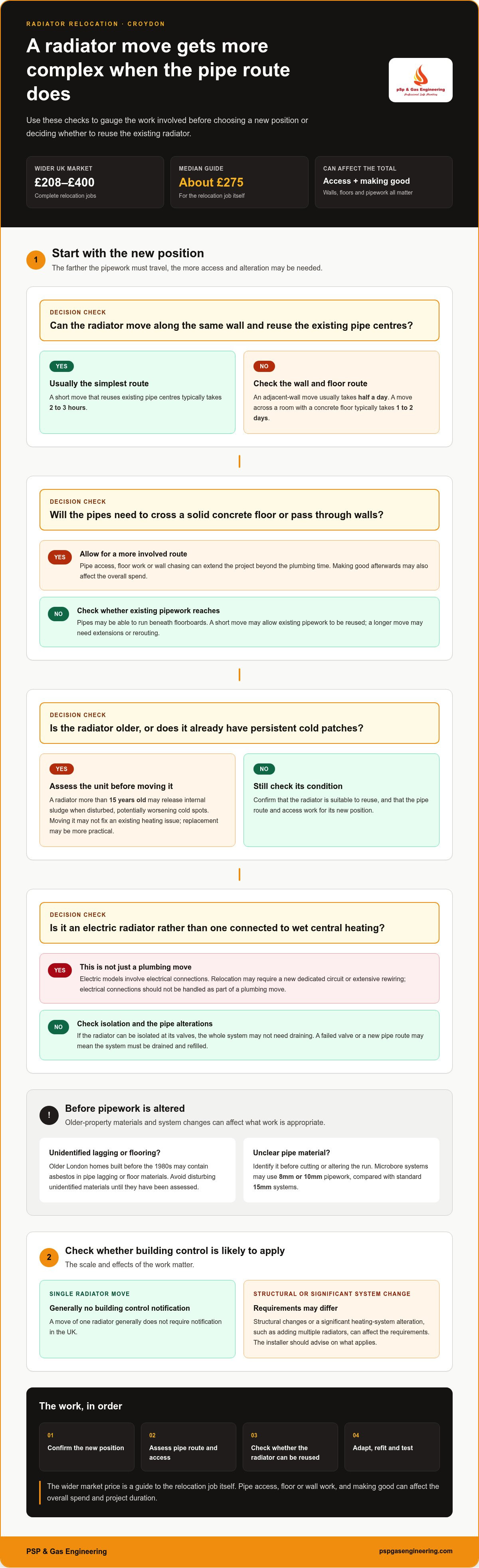
The pipe route, not just the radiator, determines whether a move is a straightforward plumbing job or a more involved project. On the wider UK market, complete radiator relocation jobs typically cost £208 to £400, with a median of about £275; the cost to move a radiator in Croydon depends on the distance, access to pipework and any work needed to make good walls or floors afterwards.
It’s understandable to consider doing the work yourself, especially if the radiator is only moving a short distance. But draining the system, altering pipework and safely lifting a heavy radiator all affect whether DIY is suitable. This guide explains what can affect the cost to move a radiator in Croydon, where the work becomes more complex and when a plumber is the practical choice.
You’ll also learn whether building regulations are likely to apply, which common mistakes can lead to extra work and how the project can extend beyond plumbing. By the end, you’ll have a clearer basis for planning a radiator move in Croydon.
Key Takeaways
- Assess the radiator’s condition before deciding whether to move or replace it; disturbing an older unit may release internal sludge and worsen cold spots.
- A single radiator move generally doesn’t require building control notification, but structural changes or a significant heating-system alteration can affect the requirements.
- DIY may be unsuitable if the job involves rerouting pipes or lifting a large radiator: some panel and cast-iron models weigh 50 to 100 kg.
- Use the wider market range of £208 to £400, with a median of about £275, as a guide to the relocation job itself; floor access and finishing work can affect the overall spend.
- Before planning the work, consider where the pipes need to run and whether floors or walls will need making good, as these factors can add time and complexity.
What are the most common mistakes when moving a radiator?
The main mistake is treating every relocation as a simple lift and refit. The new position, pipe route, radiator condition and heating system all affect the work.
Choosing a new radiator position
Choosing a new position means deciding where the radiator will sit and how its pipework will reach it. Moving it to an adjacent wall or across a room can involve more pipework and access work than shifting it along the same wall. A short move that reuses existing pipe centres typically takes two to three hours; an adjacent-wall move usually takes half a day.
Before settling on the location, consider whether the pipes can run beneath floorboards or need to cross a solid concrete floor. Moving a radiator across a room with a concrete floor typically takes one to two days. The new position should also suit the room’s layout, without obstructing furniture or doorways.
Assessing relocation difficulty
Relocation difficulty depends on the distance, pipe access, floor construction and condition of the radiator. This matters when deciding whether moving the existing unit makes sense or whether replacement is the more practical option. A radiator more than 15 years old may release internal sludge when disturbed, which can worsen cold spots.
Check the radiator’s condition as well as the pipe route: persistent cold patches can indicate sludge or poor circulation. Moving it may not resolve those problems, while replacing it gives the installer a chance to assess the unit. Don’t assume a new position alone will fix an existing heating issue.
Draining and timing the work
Whether the whole heating system needs draining depends on whether the radiator can be isolated at its valves and whether the pipework needs wider alterations. A failed valve or a new pipe route may mean the system must be drained and refilled. Sometimes, the radiator can be isolated without draining the whole central heating system.
A short move along the same wall typically takes two to three hours, while moving across a concrete floor can take one to two days. Plumbing time isn’t always the full project duration: wall chasing, floor access and making good can extend the work.
Another mistake is treating an electric radiator like a panel radiator connected to wet central heating. Electric models involve electrical connections, and relocating one may require a new dedicated circuit or extensive rewiring. Don’t handle electrical connections as part of a plumbing move.
A sound plan follows the work in sequence: confirm the new position, assess the pipe route and access through the floor or wall, then decide whether the existing radiator is suitable to reuse. The radiator is removed, pipework is adapted where needed, and the unit is refitted and tested. Skipping the condition check or overlooking access can turn a simple move into a more involved job.
Do building regulations apply when moving a radiator?
Moving one radiator generally doesn’t require notification to building control in the UK. However, the details matter if the job affects the building structure or significantly changes the heating system.
Pipework and radiator valve changes
Relocating a radiator can mean adapting its pipework, fittings and valves to suit the new position. Old connections may not align with the radiator, and existing valves may not suit the revised layout.
A plumber will need to assess whether the valves can be reused or need replacing, and whether pipe joints are accessible without disturbing floors or walls. After reconnecting the radiator and refilling the system, the joints and valves need checking for leaks. The work depends on the pipe material, connection type and access.
Pipework distance and condition
Distance describes how far the radiator moves from its existing connections; condition describes whether the pipework can remain in service. Both affect the route and amount of alteration needed, and therefore the complexity of the job.
A short move may allow existing pipework to be reused, while a move to another wall may need extensions or rerouting. Before work starts, inspect visible pipework for corrosion, damage or awkward joints. Older London homes built before the 1980s may contain asbestos in pipe lagging or floor materials. Avoid disturbing unidentified lagging or flooring until its material has been assessed.
Lead pipework also needs care in older properties. If the pipe material is unclear, identify it before cutting or altering the run. This helps determine suitable work and avoids treating an unfamiliar pipe as standard copper or plastic.
Reusing or extending pipework
Reusing pipework means adapting the existing run to connect the radiator at its new position; extending it means adding pipe to reach further. This distinction matters because extensions can require extra joints and access through flooring or walls.
Where existing pipework is sound and reaches the new location, it may be possible to retain it. If it falls short, a plumber can plan an extension or reroute, taking account of the floor construction and fittings. Microbore heating systems may use 8mm or 10mm pipework, compared with standard 15mm systems, so identifying the pipe size helps plan compatible connections.
Moving a single radiator generally doesn’t require building control notification in the UK. If the work alters the building structure or significantly changes the heating system, such as by adding multiple radiators, the installer should advise on applicable building regulations. This distinction helps separate a straightforward relocation from broader renovation work.
For changes involving several radiators or uncertain pipework, professional plumbing support can help assess the heating system and the work involved.
DIY suitability and when to hire a plumber
DIY is best suited to planning the new position and preparing the room, not altering unfamiliar heating pipework. Moving a radiator involves water, valves, brackets and a system that must work correctly after refilling. Measuring a new position along the same wall is very different from rerouting pipes through a floor.
In Croydon, plumbers and heating engineers charge different hourly rates, and London rates are higher than typical UK rates. Labour charges depend on the trade, the work involved and whether new pipework or access through walls or floors is needed.
Before deciding what to do yourself, separate the preparation from the plumbing:
- Measure the proposed position and check that furniture or bathroom fittings won’t obstruct the radiator.
- Clear access around the radiator and note where the existing pipes meet its valves.
- Leave draining, disconnecting and reconnecting pipework to someone competent with the heating system.
That division helps prevent a common DIY problem: starting a simple move, then finding that the pipes don’t reach the new brackets. Rerouting or installing new pipework can take more than a full day. A move to another wall may also involve lifting floorboards or chasing a wall, adding work beyond the radiator itself.
Hire a plumber if the move requires new pipework, the valves are difficult to isolate, or the system needs draining and refilling. A professional can assess the pipe route, fittings and radiator position as one job. This is especially relevant in a bathroom, where the new position must work with the layout and existing plumbing.
Don’t treat an electric radiator as a wet-heating unit. Relocating one can involve electrical wiring, and a new dedicated circuit or extensive rewiring calls for an electrician. Plumbing work alone won’t address that requirement. Be clear about the distinction before arranging the move.
Plan the work in sequence: choose the location, identify the pipe route, assess access, then decide whether the existing radiator and fittings can be reused. A move that keeps the same pipe positions may involve less alteration than one requiring new connections. If the new route crosses a solid floor, consider access and making good too.
A radiator move isn’t complete when the unit is back on its brackets. The heating system must be refilled as needed, connections checked for leaks and the radiator tested while the system runs. If you can’t confidently assess those steps, arrange professional plumbing work rather than risking a leak or a radiator that doesn’t heat properly.
Removing and replacing a radiator
Removing a radiator is not the same as relocating it or fitting a replacement. A quote can differ depending on whether it covers removal only, reconnecting the existing radiator, or supplying and fitting a new unit. Confirm what the work includes before comparing quotes.
For a like-for-like move, the existing radiator may be suitable if it’s in sound condition and fits the new position. Replacing it may make more sense if it’s damaged, corroded or no longer suits the room. A larger replacement changes the work too: its weight, connections and heat output need consideration, as does whether the existing pipe centres match.
Before removal, the heating system needs to be isolated and the radiator drained. Water can remain inside the unit, so use a suitable container and protect the floor from spills. Once disconnected, the pipe ends and valves need attention before the system is refilled. A poor seal at either connection can cause a leak when the heating is switched back on.
Replacing the unit adds decisions beyond removal. Radiators vary in size and material, and the new model must connect to the pipework and suit the room’s heating needs. Swapping a compact panel radiator for a larger model, for example, can mean adjusting pipe positions or fittings. A cast-iron radiator also needs careful handling because of its weight.
After reconnection, the heating system should be refilled and the radiator checked as it warms. Most domestic heating systems should have a cold pressure of 1 to 1.5 bar. The correct reading depends on the system, so use its pressure gauge and operating instructions rather than assuming every home has identical settings. Check around the valves and joints for signs of water.
Removal can also lead to follow-on work. Brackets may leave holes or marks, while moving connections can expose areas of wall or flooring that need repair. Plastering after a radiator move can need 24 to 48 hours to dry before painting; the full moving and decorating process can take 2 to 3 days. Plan room access around both the plumbing and finishing stages.
When comparing quotes, separate the radiator itself from labour, valves, pipework and making good. A quote for removing a unit may not include refitting it elsewhere or supplying a replacement. Ask for each item to be clearly identified, especially if the new radiator is a different size or the pipe route changes. This makes it easier to compare like with like and understand what work remains after the old unit is removed.
All-in cost to move a radiator in Surrey
On the UK market, a complete radiator relocation typically costs £208 to £400, with a median of about £275. Treat this as a guide to the relocation job, not a guaranteed all-in figure for every Croydon home.
The all-in relocation cost
An all-in figure should reflect the work needed to move the radiator and leave its new position usable. A straightforward move along one wall differs from a new route through flooring or a solid wall.
The main cost factors are labour, pipework, access, fittings and any making-good work. Moving a central heating radiator across a room with a concrete floor can take one to two days, while work beneath floorboards may involve a different access route. A kitchen move may also need planning around cabinets and flooring.
What a relocation quote includes
A relocation quote describes the work covered, such as draining and reconnecting the radiator, adapting pipework and testing the heating system. A plumbing quote may not include plastering, decorating or flooring repairs.
For a useful comparison, check whether materials, new valves, pipe extensions and making good are included. Ask for these tasks to be listed separately so the full project scope is clear.
The market range of £208 to £400 gives a useful starting point, but it doesn’t mean every Croydon relocation includes the same work. A short move with accessible pipes may be more straightforward than rerouting pipes under a concrete floor. The engineer’s time, materials and access requirements all affect the final amount.
Finishing work can change the overall budget. Plastering and patching, local decorating or flooring repairs may sit outside the plumbing quote. In a room with laminate flooring, for instance, lifting boards to reach pipework could mean additional repairs. Confirm which trades and finishing tasks are included before treating a figure as the whole project cost.
Also distinguish moving an existing radiator from adding a new one or fitting a larger model. Those jobs can involve different materials and heating-system adjustments. If the new position requires extensive wall chasing, pipework rerouting and system balancing, the work is no longer a simple relocation. The scale of the change is key when comparing quotes.
The price for a specific plumbing project depends on the work involved and is given after a quote request. For a radiator move, provide the current and proposed positions, describe the floor type, and note whether pipework is visible. Request a plumbing quote from PSP & Gas Engineering to discuss the relocation and its required work.
PSP & Gas Engineering: Boiler Installations
PSP & Gas Engineering provides plumbing services for radiator relocation involving pipework changes or reconnection to the heating system. If the project extends beyond moving one radiator, its Boiler Installations service may also be relevant when the boiler needs replacing as part of wider heating work.
For a radiator move, describe its current and proposed positions, the type of flooring and any visible pipework. These details help clarify the plumbing work involved. PSP & Gas Engineering also provides Gas Safety Inspections, Flue Relining and Video Inspections for other relevant property needs.
Contact PSP & Gas Engineering to discuss your plumbing requirements.
Plan the next step with confidence
Before arranging the work, decide what the room needs: more usable wall space, a different furniture layout or a replacement heating unit. That priority helps shape the scope and ties the proposed radiator position to how you use the room. The cost to move a radiator in Croydon depends on the work involved; pipe routing, access and making good all affect the scope and quote.
If your plans also involve wider heating or property work, consider how those tasks fit together. PSP & Gas Engineering offers plumbing services, Boiler Installations, Gas Safety Inspections and Flue Relining. These services address different needs, so choose the one that matches your property’s requirements.
Set out the radiator’s current and intended position, describe the flooring and note any other heating work planned. This gives a clear starting point for discussing the job. Contact PSP & Gas Engineering to talk through your requirements and take the next step towards a well-planned project.
Frequently Asked Questions
Can You Move a Radiator Yourself?
You can plan the new position and clear access yourself, but changing pipework is a different task. Moving a radiator beside a doorway, for example, may require adapting connections and securing brackets to a suitable surface. If you’re unsure how to isolate the radiator or manage water in the system, use a plumber. Electric radiators are different: moving one may involve wiring and require an electrician.
How do you test, bleed and balance the system afterwards?
After refilling, run the heating and check the radiator and its connections for leaks. If the radiator has cold areas or gurgling, trapped air may need releasing with a radiator key. Then check the boiler pressure against the system’s instructions; many domestic systems have a cold pressure of 1 to 1.5 bar. Balancing involves adjusting radiator valves so heat circulates more evenly around the home.
What Changes the Moving a Radiator Price?
The main cost factors are how far the radiator moves, whether existing pipework reaches the new position, and how easily floors or walls can be accessed. A short shift with exposed pipes differs from rerouting pipes beneath flooring or chasing into a wall. The radiator’s size, new fittings and any plastering, decorating or flooring repairs also affect the job’s scope.
How much does it cost to move a radiator in Croydon?
On the wider market, complete radiator relocation jobs typically cost £208 to £400, with a median of about £275. This is a market guide, not a fixed Croydon quote. The amount depends on the pipe route, access, fittings and whether making good is included. To understand a specific job’s scope, distinguish the plumbing work from repairs to walls, flooring or decoration.
What is the average UK cost to relocate a radiator?
The wider UK market range for a complete radiator relocation is typically £208 to £400, with a median of about £275. “Complete” can mean different things in different quotes, so compare what each figure covers. For instance, one may include plumbing and reconnection, while another may also cover making good. The final project scope depends on access, pipework and finishing requirements.
What factors affect the cost of moving a radiator, such as pipework, wall type and distance?
Distance affects how much pipework needs adapting, while wall and floor construction determine how easily the route can be reached. Timber floorboards may allow access from below; a solid concrete floor can require a more involved route. Other factors include pipe condition, valve compatibility, radiator weight and repairs after the work. A clear proposed position helps show whether connections can be reused or need extending.
How much extra does it cost to move a radiator to another wall or floor?
There isn’t one fixed extra amount: the difference depends on the route and access. Moving to an adjacent wall may need a shorter pipe extension than crossing a room, while a solid floor can make access more involved than lifting floorboards. Ask for the quote to list pipework changes and any flooring, plastering or decorating separately, so you can see what the overall job includes.
Do you need building regulations approval or a Gas Safe engineer to move a radiator?
Moving a single radiator generally doesn’t require notification to building control in the UK. If the work alters the building structure or significantly changes the heating system, such as by adding multiple radiators, applicable requirements need consideration. A radiator connected to water pipework is plumbing work; Gas Safe registration is relevant to gas work. If the project also involves a gas appliance or boiler, use a Gas Safe registered engineer for that work.


